
After a few days outside, camp grime turns into its own kind of layering system. Trail dust settles into socks and cuffs, campfire smoke hangs in hair and fleece, sunscreen mixes with sweat, and everything slowly builds up on skin. Fingertips feel a little gritty, and there’s a salty film across the forehead that never quite goes away. It’s a familiar tradeoff for long days in the mountains, high desert, or deep forest. 🌲
Traditional solutions are simple but rarely comfortable: a quick dunk in a cold river, a fast splash from a water jug, or a solar shower bag that promises “warm” water but usually turns lukewarm just as the air cools. Rinses become rushed and inefficient, and it’s easy to burn through precious water without ever feeling truly clean.
The Geyser Systems Portable Shower with Heater is built to change that routine. Instead of a basic gravity bag, it’s a compact, powered hot water system designed around efficiency, durability, and control. Using only a single gallon of water and a 12V power source, it delivers a surprisingly thorough wash with a built-in sponge head and controlled flow. For van lifers, overlanders, and committed car campers, that kind of setup can influence how long a trip stays comfortable. 🚐
This review takes a close look at how the Geyser is built, how it performs in real-world scenarios, and where it fits among other camp shower options—along with a clear look at what it does well and where it asks for tradeoffs.
First Impressions & Design Details: Built for the Bumps
At first glance, the Geyser doesn’t look like a typical camp shower. The main housing is constructed from rugged rotationally molded plastic—the same style of build used for high-end coolers and some whitewater kayaks. It feels solid in the hand and clearly aimed at life in the back of a truck, wagon, or van, where gear slides, stacks, and occasionally gets bounced down a washboard road. 💪
The core of the system is a 1-gallon (3.8 L) tank with an integrated pump, heating element, hose, and control interface. The footprint is relatively compact for what it does: 17.5 x 10.5 x 6.5 inches and just over 8 pounds empty, which makes it easy to stow upright in a gear drawer or alongside water jugs. A sturdy carry handle on top simplifies the walk from vehicle to campsite or a more private shower corner.
A few thoughtful design details stand out:
- A 16-foot 12V power cord that wraps neatly around the body, long enough to reach from the dashboard or rear power port to a good shower or wash zone.
- Integrated holders for the hose and sponge head, which reduce the chances of misplacing small parts in the grass or gravel.
- A clear LED dashboard showing when the unit is heating and when the water is ready, so there’s no guessing or constant checking.
Two elements define how the Geyser behaves in camp:
- The built-in heater. Plugged into a vehicle’s 12V outlet or a portable power station, the unit can bring water up to roughly 95–100°F. That range is warm enough to feel noticeably comfortable in cool air without venturing into scalding territory.
- The sponge attachment. Instead of a wide spray nozzle, the Geyser uses a patented sponge head that both scrubs and delivers water. This approach is designed to keep flow controlled and targeted, which is what makes a one-gallon tank feel surprisingly generous. 😊
An intuitive control valve on the hose allows instant on/off flow, so water runs only when needed. That makes it easy to pause for soaping up, scrubbing boots, or helping kids rinse hands without wasting anything.
For those who like to study specs before deciding, it can be helpful to check the current price and full specs on REI and compare them to existing camp systems or DIY setups.
Specs at a Glance
| Feature | Specification |
|---|---|
| Capacity | 1 gallon (3.8 liters) |
| Power Source | 12V DC |
| Power Draw | 9.8A (Heater + Pump) / 3.0A (Pump Only) |
| Weight | 8 lbs. 1.6 oz. (empty) |
| Dimensions | 17.5 x 10.5 x 6.5 inches |
| Heating Time | 15–45 minutes to 95°F |
These numbers matter, especially for those planning power budgets or long trips. The unit sits in a sweet spot between compactness and capability—small enough for most car camping kits, but robust enough to feel like a true appliance rather than a lightweight accessory.

Real-World Performance & Use Cases: More Than Just a Shower
The real test of any piece of camp gear is not how it looks on a table, but how it behaves when everyone is tired, dirty, and trying to move efficiently through camp chores. The Geyser tends to grow from “shower system” into a general-purpose hot water station that supports multiple parts of camp life. 🌄
Below are three common scenarios where the Geyser earns its keep and where its strengths—and limitations—become clear.
Scenario 1: The Post-Hike Hero in Moab 🏜️
Imagine finishing a long day on a dusty red rock trail, shoes full of sand and legs coated in fine powder. Air temperatures are dropping, and there’s a light breeze at camp. A cold jug rinse or a river dunk suddenly seems less appealing.
Here, the Geyser’s heated sponge design stands out. Fill the tank with a gallon of water, connect the power cord, and flip the “Heat” switch. Because the unit draws close to 9.8 amps when heating, this is a good time to connect it to a portable power station or run it off a vehicle with the engine idling. While the water comes up to temperature—typically 20–30 minutes from cool tap water—it’s easy to change into warm layers, prep a simple meal, or organize gear for the next day.
When the LED indicator turns solid, indicating that target temperature has been reached, the routine becomes straightforward:
- Wet the sponge head with warm water.
- Apply a small amount of biodegradable soap.
- Scrub face, arms, torso, and legs, then pulse the flow for efficient rinsing.
Because the sponge delivers targeted flow instead of a wide, free-running spray, a single gallon can handle a complete wash for one person, including hair, if used mindfully. The sensation is less like a trickle and more like a warm, steady stream where it matters. ✨
For frequent hikers, trail runners, and mountain bikers, that kind of full reset at the end of the day can keep a multi-day trip feeling comfortable and sustainable, especially when camping away from developed facilities.
Scenario 2: The Van Life Kitchen Assistant 🚐
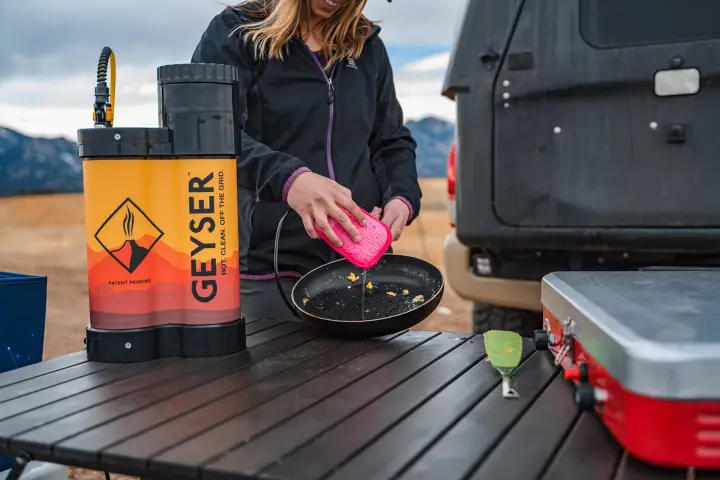
In small rigs—vans, SUVs with drawers, truck campers—hot dish water is often one of the biggest logistical challenges. Pots on the stove take time and fuel, and it is easy to overfill a wash basin and create more grey water than storage allows.
The Geyser can serve as a dedicated dish and kitchen cleanup station:
- Fill the tank with a gallon of water.
- Heat it during dinner or right after, using a portable power station or vehicle outlet.
- Remove the sponge head for a steady stream to pre-rinse plates and utensils.
- Reattach the red scrub sponge for tackling greasy pans and cookware.
Hot water cuts through oil and food residue quickly, so less soap and fewer passes are needed. With some care, a single gallon can often clean an entire meal’s worth of dishes for two or three people. This shift reduces fuel use, saves time hovering over the stove, and keeps grey water volume under control. 💧
For rigs without built-in plumbing, the Geyser can mimic some of the functionality of a small hot water system without requiring permanent installation. When paired with a steady power source like a Goal Zero Yeti Power Station, it becomes a plug-and-play solution that can move from inside the van to an outdoor camp kitchen as needed.
Scenario 3: The Family Camping Essential 👨👩👧👦
Family trips come with a different set of cleaning tasks: sticky fingers after s’mores, sandy feet after a lakeshore afternoon, or mud-covered shoes after a rainy-day hike. Without a convenient way to rinse off, tents and sleeping bags quickly become gritty and damp.
Set up near the main camp area, the Geyser works well as a clean-up hub:
- Before meals: Warm water for handwashing encourages everyone to wash thoroughly without rushing.
- After beach or lake time: Sandy or muddy feet can be rinsed right at the edge of the mat before kids step into the tent.
- Pre-bed routines: A quick, warm wipe-down can help children settle more comfortably into sleeping bags. 😊
The one-gallon capacity is ideal for these small, frequent tasks. It heats faster than a larger-volume system, making it easy to use in short bursts throughout the day. For more privacy, pairing the Geyser with a pop-up Privacy Shelter can create a dedicated shower and changing area even in busy campgrounds.
Families who prefer clean sleeping spaces and calm evening routines will likely find this multi-use water station especially helpful.
💡 Field Test Insight: At nearly 10 amps during heating, power draw is the main factor to plan around. For vehicle power, the safest approach is to run the heater with the engine on so the alternator supports the load. A small portable power station (300Wh or more) offers the most flexibility, allowing water to be heated away from the vehicle and avoiding concerns about draining a starter battery. Once heated, the pump alone uses much less power (around 3 amps), which is much easier on any system.
What We Loved & What Could Be Better
The Geyser System targets a specific type of camper: those traveling with a vehicle who value comfort, hot water, and efficient water use. It is not designed to replace every shower system for every style of trip. Here’s a balanced look at its strengths and where it asks for compromises. ⚖️
| What We Loved ✅ | What Could Be Better ⚙️ |
|---|---|
| Incredible Water Efficiency: Getting a thorough wash from a single gallon genuinely stands out. | Requires a Power Source: A 12V outlet or portable power station is mandatory; it is not a backpacking solution. |
| On-Demand Hot Water: Works in the morning, at night, and in cold or cloudy conditions—no dependence on sun exposure. | Premium Price Point: Costs more than simple gravity or solar shower bags and some DIY jug setups. |
| Rugged, All-in-One Design: Feels durable, with integrated hose and cord storage that reduces clutter and lost pieces. | Heating Time: Very cold starting water can take up to 45 minutes to reach comfortable temperatures, so planning ahead is important. |
| Highly Versatile: Suitable for showers, dishwashing, cleaning gear, and even washing pets or bikes. | Limited Capacity: One gallon works well for one person or a round of dishes; two back-to-back showers usually require a refill. |
For campers who mostly stay at developed campgrounds with access to showers, the Geyser may feel like more system than necessary. For those spending long stretches boondocking, touring national parks, or living in a vehicle full-time, the combination of durability, hot water, and water savings can make it a core piece of the kit rather than an occasional extra. 🌎
Comparisons & Alternatives: How Does It Stack Up?
The Geyser System sits in a unique space between solar shower bags and fully plumbed propane setups. It is more advanced and controlled than a basic bag, but more compact and portable than many RV-style systems.
Here’s how it compares to two common alternatives.
Geyser System vs. NEMO Helio Pressure Shower
The NEMO Helio Pressure Shower is a popular upgrade from basic gravity bags. It uses an 11-liter soft-sided tank pressurized with a foot pump, allowing it to sit on the ground instead of hanging from a branch.
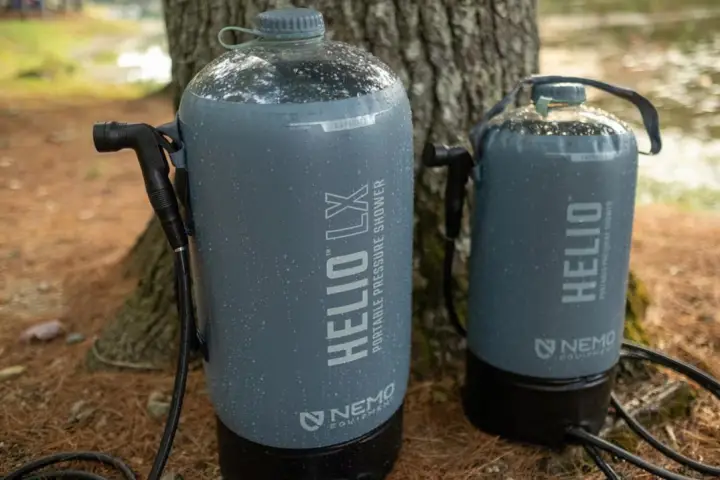
Key differences:
- Heat Source: The Helio is primarily a solar-heated system. It can achieve comfortable temperatures with several hours of strong sunshine but becomes less reliable in overcast weather, shoulder seasons, or shaded sites. The Geyser uses electric heating, providing consistent hot water regardless of sun exposure. ⛅
- Water Use: With nearly three times the water volume, the Helio can feel closer to a classic shower, but the spray nozzle also uses water more quickly. The Geyser’s sponge head encourages careful, efficient use, which is ideal when carrying limited water in jugs or small tanks.
- Ease of Setup: Both systems are straightforward, but the Helio requires pumping for pressure, while the Geyser relies on its internal pump and power.
Best For: The Helio is a strong option for campers who prefer a simpler, non-electric system and who often camp where water is easier to replenish. The Geyser is better suited to those who prioritize reliable hot water and strict water conservation, especially in remote or arid environments.
Geyser System vs. Camplux Portable Propane Water Heater
Portable propane heaters, such as Camplux models, sit at the more complex and powerful end of the camp shower spectrum. These units can deliver continuous hot water when connected to propane, a water source, and a pump.
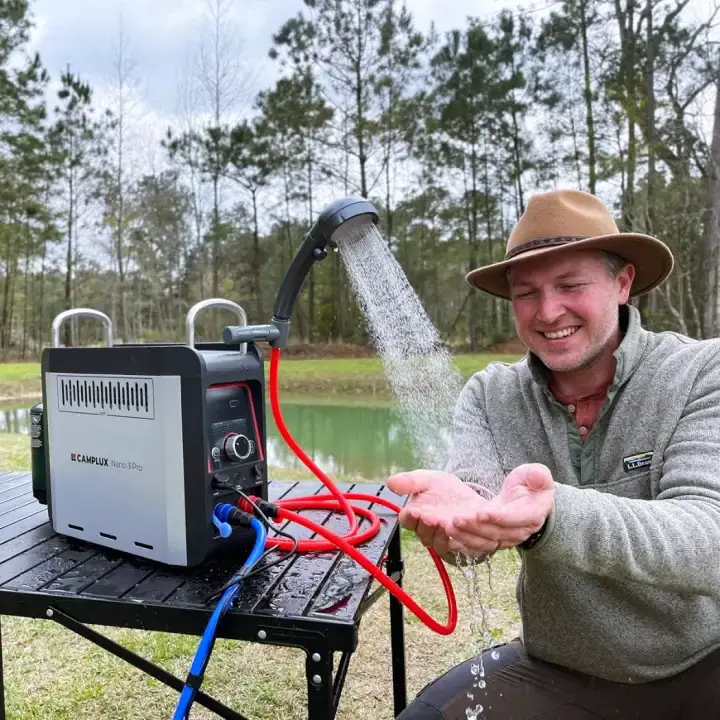
Key differences:
- Portability: Propane heaters tend to be bulkier and require multiple components—heater unit, propane cylinder, regulator, hoses, and pump. They are well suited to more permanent basecamps or larger vehicles with storage space. The Geyser is a single, compact unit with integrated components, making it easier to store and move.
- Water Use: Propane systems can flow at 1.5+ gallons per minute, which is excellent for long, comfortable showers but quickly drains small tanks or jugs. The Geyser is intentionally designed to minimize water use, which is a major advantage on longer, off-grid trips. 💧
- Setup Complexity: Propane setups require attention to gas safety, ventilation, and hose connections. The Geyser asks for power planning but keeps plumbing and gas management simple.
Best For: Propane heaters are ideal for larger groups, RVs with substantial water storage, or semi-permanent camp setups where convenience and continuous flow matter most. The Geyser excels for smaller vehicles, minimalistic rigs, and conservation-focused travelers who still want a comfortable hot shower.
In summary, the Geyser occupies a thoughtful middle ground—more comfortable and capable than basic bags, yet lighter and simpler than most propane-based systems.
Expert Tips & Maintenance 🧰
With a little attention, the Geyser can stay reliable over many seasons of use. These tips help maximize performance and extend the life of the system:
- Shorten Heating Time: Whenever possible, start with water that isn’t ice-cold. Fill from a sun-warmed container, or mix in a small amount of hot water heated on a stove. This can noticeably cut down heating time and reduce strain on power sources. 🔋
- Prime the Pump Correctly: Before the first use—and occasionally after long storage—prime the pump by placing the hose end inside the tank and running the pump for about 30 seconds. Removing air from the line helps maintain steady flow during showers or dishwashing.
- Plan Power Use: Treat the heater like other high-draw campsite electronics. If using a vehicle outlet, run the engine to support the load. A dedicated portable power station gives the most flexibility and keeps house and starter batteries separate.
- Rinse and Sanitize: At the end of a trip, fill the tank with clean water and run the pump briefly to clear out any remaining soapy or dirty water. For deeper maintenance, add a small amount of white vinegar to a full tank, run the pump, then rinse thoroughly. This helps manage mineral buildup and odors. 🧼
- Dry Completely Before Storage: After draining the tank, run the pump for a few seconds to push out remaining water from the lines. Store the unit with the lid open and hose detached in a dry, cool space. Allowing everything to dry fully reduces the risk of mildew and extends the life of seals and components.
Following these basic steps can keep the Geyser ready for last-minute weekend trips or long-planned road journeys.
The Final Verdict: Is The Geyser Shower Worth It?
The Geyser Systems Portable Shower with Heater is deliberately designed for a specific style of outdoor travel. It is not a fit for ultralight backpacking or fast-and-light missions, and it is overkill for quick overnights at campgrounds with full facilities. But for many vehicle-based adventurers, it fills an important gap between “roughing it” and full RV amenities.
It is especially well suited for:
- Van life and overlanding: Hot water for showers, dishes, and gear cleaning without installing a permanent water heater.
- Extended car camping trips: Efficient use of limited water supplies on long national park loops or dispersed camping routes.
- Family camping: A simple, warm, and kid-friendly way to manage sticky hands, sandy feet, and pre-bed cleanups. 😊
The key strengths—reliable hot water, tight control over water use, and rugged, portable construction—make it a meaningful quality-of-life upgrade for those who spend significant time outside with a vehicle as a basecamp.
The main tradeoffs—higher upfront cost, dependence on a 12V power source, and the need to plan around heating time—are real and worth considering. For many campers, especially those who already own a portable power station or spend long stretches away from hookups, the benefits can outweigh these constraints.
For travelers looking to move beyond chilly solar bags and quick splash rinses, while still respecting limited water supplies, the Geyser offers a thoughtful, well-executed solution.
Find the Geyser Systems Portable Shower with Heater on REI and decide whether this compact hot water system belongs in your camp kit on the next adventure.
Disclaimer: This post is for informational purposes only. Always verify product details and manufacturer warranties before purchase. Performance may vary with use and conditions.
Affiliate Disclosure: ChaseTheBigDream.com participates in affiliate programs (including REI, REI Outlet, Amazon, and other trusted partners). When you purchase through our links, we may earn a small commission — at no extra cost to you. These partnerships help keep our gear guides authentic, independent, and free for readers.
© 2025 ChaseTheBigDream.com | All rights reserved.