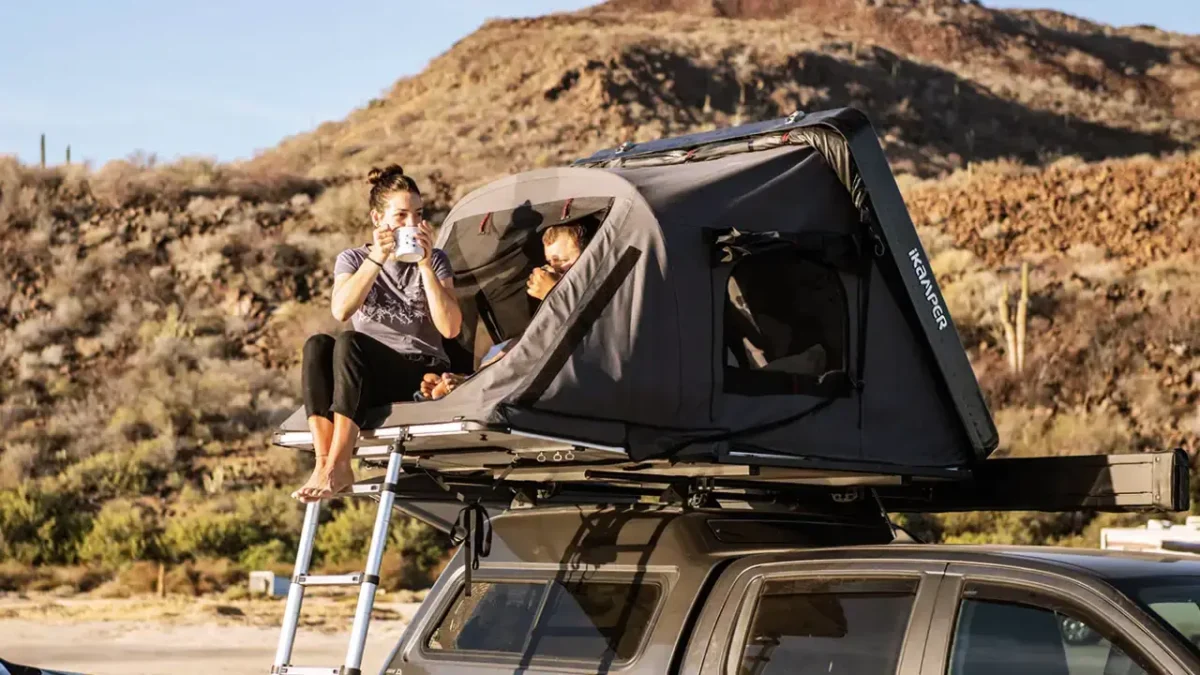
The sun is dropping fast behind the treeline. After a winding drive up a dusty forest service road, a quiet clearing finally opens up — a flat pullout, tall pines, and that soft glow of golden-hour light that makes every branch look sharper and every shadow deeper. The air feels cool, dry, and still. This is the exact kind of spot that makes a long workweek worth it. 🌅
Then comes the familiar friction: dragging out a ground tent, hunting for a flat spot between roots and rocks, threading poles, and racing daylight as the temperature drops. Anyone who has camped often enough knows that small knot in the stomach when camp still isn’t set and the light is fading.
Traditional camping can turn a quick overnight into something that feels like a chore — especially if bad weather rolls in or the ground is uneven, wet, or rocky. A great campsite can lose some of its magic when setup and takedown eat into the best hours of the trip.
The iKamper Skycamp 3.0 Mini is designed to remove that friction almost entirely. Mounted on the roof and ready at a moment’s notice, it promises a comfortable, weatherproof sleeping space in about a minute. Instead of wrestling with poles, the process becomes: stop, pop, climb in. For solo travelers and couples who chase quick escapes and flexible itineraries, that changes a lot. 🏕️
This review takes a close look at how the Skycamp 3.0 Mini actually performs on real roads and real trips — not just in a parking lot. If spontaneous weekend getaways, long overland routes, or national park road trips are part of your life, this compact hardshell rooftop tent deserves a careful look.
First Impressions & Design Details: Built for the Road Ahead
From the first glance, the Skycamp 3.0 Mini feels more like a well-designed piece of overland equipment than a simple tent. The double-layered fiber-reinforced plastic (FRP) hardshell has a smooth, aerodynamic profile that doesn’t look out of place on a daily driver. On a compact SUV or crossover, it sits low and neat, complementing the lines of the vehicle instead of overwhelming them.
The matte black exterior is both practical and subtle. It hides dust from forest roads, resists scuffs from low branches, and blends in well in parking lots or trailheads. There’s none of the flapping fabric or bulky soft covers that can whistle in the wind or collect road grime.
Opening the tent feels reassuringly solid. Two stainless steel latches hold the shell in place while driving; flip them open, and gas-pressurized struts do the rest. The lid rises in a smooth, controlled motion and the tent structure unfolds on its own, revealing the sleeping platform and canvas walls in seconds. There’s no need to heave or wrestle with the shell — the motion feels clean, smooth, and predictable. ✨
Inside, the 300gsm poly-cotton canvas immediately stands out. It’s thicker and more substantial than the lightweight fabric found on most backpacking tents. That extra heft translates into better durability, a quieter interior on windy nights, and improved insulation. The material does a good job dimming early morning light, which can make a real difference when camping in open or exposed areas.
A quilted interior liner adds another layer of comfort and warmth, while the printed world map on the ceiling gives the space a bit of personality. It’s a small detail, but it reinforces the sense that this tent is meant for repeated, long-term use on real trips, not just occasional weekends.
The floor uses insulated aluminum honeycomb panels — strong, flat, and impressively rigid. Combined with the 2.5″ high-density polyfoam mattress, the sleeping surface feels more like a minimalist bed than a camp pad. The design eliminates pressure points from rocks, roots, or uneven ground because the “ground” is now the roof of the vehicle. That simple shift dramatically upgrades comfort, especially for side sleepers who usually feel every lump in a traditional tent.
Every touchpoint — the ladder, window toggles, zippers, and hardware — comes across as intentionally built for regular use instead of occasional car-camping trips. There’s a sense that the tent is meant to stay on the vehicle for a full season or more, ready to go whenever time and weather line up.
https://alnk.to/g3epT05For those who like to compare specs directly before making a decision, checking the current price and details at ikamper.com is a good starting point, along with iKamper’s official site.
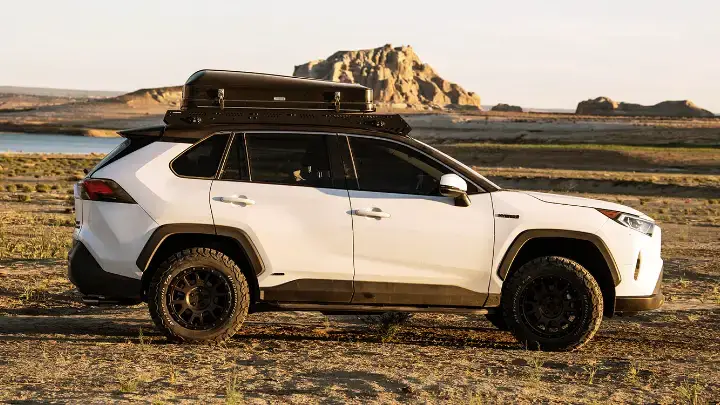
Specs at a Glance
| Feature | Specification |
|---|---|
| Capacity | 2 Adults |
| Weight | 125 lbs (57 kg) |
| Closed Dimensions | 55″ x 57.5″ x 13″ |
| Sleeping Area | 55″ x 83″ (31 sq ft) |
| Shell Material | Double-layered Fiber-Reinforced Plastic (FRP) |
| Fabric | 300gsm Breathable, Water-Resistant Poly-Cotton Canvas |
| Mattress | 2.5″ High-Density Polyfoam |
| Setup Time | ~60 Seconds |
These numbers tell only part of the story, but they do highlight the Skycamp Mini’s main identity: compact footprint, true two-person capacity, and a focus on quick deployment without sacrificing comfort.
Real-World Performance & Use Cases: Beyond the Driveway
A rooftop tent earns its keep far from pavement, where conditions rarely line up perfectly. Wind, rain, temperature swings, and tight arrival windows tend to reveal any weak points. The Skycamp 3.0 Mini is built with that reality in mind.
The Spontaneous Coastal Getaway 🌊
Consider a classic scenario: a Friday forecast shows clear skies and mild temperatures along the coast. Instead of weeks of planning, a flexible kit makes it easy to simply load basic gear, top off the tank, and go.
On winding coastal highways, the Skycamp Mini’s low, tapered profile feels stable and unobtrusive. There’s less of that “sail on the roof” sensation that comes with bulkier softshell tents. Drivers often report minimal additional wind noise and only a modest impact on fuel economy — an important factor for long scenic drives.
Locating a legal and scenic place to sleep becomes easier with solid navigation tools. Using a Gaia GPS Premium subscription, it’s possible to double-check land boundaries, track routes, and confirm whether a pullout or spur road is on public land. That kind of clarity reduces guesswork and helps avoid awkward nighttime moves. 📍
Once a spot is chosen — maybe a bluff above the ocean or a turnout near a quiet cove — setup is where the Skycamp Mini really stands out. Unlock, lift, drop the ladder, and the sleeping area is ready. When coastal fog pushes in and wind picks up, being able to climb into a fully deployed tent in under a minute feels like a luxury.
Inside, the hardshell and thick canvas combine to soften wind noise into something close to white noise. The tent keeps out damp, salty air effectively, and the elevated platform avoids the cold, moisture, and sand that often creep into ground shelters near the coast. Unzipping a side window in the morning to a wide view of ocean and sky is an experience that’s hard to replicate from ground level.
The High-Altitude Mountain Basecamp 🏔️
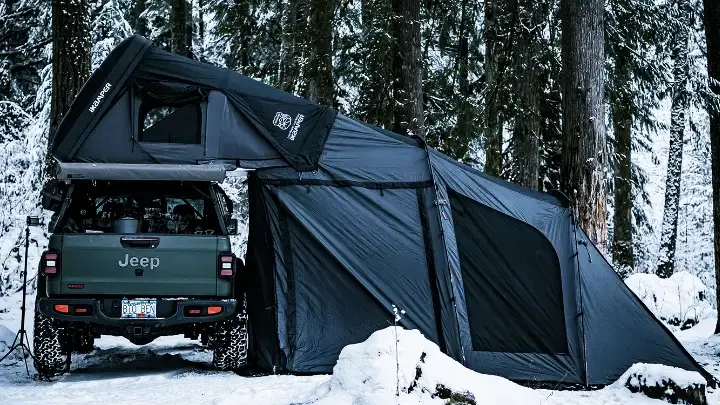
High-elevation campgrounds and trailheads put different demands on shelter. Temperatures can drop quickly after sunset, and morning frost is common even in shoulder seasons. For hikers using the Skycamp 3.0 Mini as a basecamp, warmth and quick transitions become especially important.
Imagine pulling into a reserved site at a mountain campground just before dark after a long drive and a full workday. A season of camping reservations through platforms like Campspot makes sure there’s a legal, reliable place to park for the night, often with nice bonuses like views, trees, or short paths to the water.
At around 9,000 feet, nighttime temperatures dropping into the 30s are common. Here the Skycamp Mini’s insulated floor and heavy poly-cotton canvas show their value. With a quality sleeping bag such as the REI Co-op Magma 15 (easily found at REI), most campers stay comfortable with a simple layer system and a beanie. The tent’s Skyview window overhead turns clear alpine nights into stargazing sessions from the warmth of the sleeping bag. ✨
Morning takedown is just as quick as setup. While neighboring campers shake out rainflies, fold poles, and sweep dirt, the Skycamp Mini can be closed, latched, and ready to roll in about two minutes. That time saved adds up over the course of a multi-night trip and often translates into earlier trail starts, less time in camp chores, and more energy left for hiking or driving the next leg.
💡 Field Test Insights:
- The updated telescoping ladder is a standout detail. Angled steps are easier on bare feet and feel stable even when climbing in and out multiple times a night.
- Adjusting ladder height to match different vehicle setups is straightforward, which helps when switching between rigs or changing tire size.
- Tension poles for the window awnings create small, protected spaces that let in fresh air without welcome rain. On drizzly mornings, these awnings keep the interior feeling bright and ventilated.
Overall, the Skycamp 3.0 Mini works especially well for:
- Weekend warriors who like leaving the tent mounted all season, ready for fast Friday departures.
- Overland travelers who value a compact footprint that still leaves rack space for recovery boards, water, fuel, or an awning.
- National park road-trippers who move camp frequently and want less time spent on setup and takedown.
- Van lifers who want a second “bedroom” for guests or a different sleeping option when the van interior feels cramped. 🚐
iKamper Skycamp 3.0 Mini: Pros and Cons
Even well-designed gear comes with tradeoffs. The Skycamp 3.0 Mini sits firmly in the premium category, so understanding both strengths and limitations is important before committing.
| What We Loved ✅ | What Could Be Better ⚙️ |
|---|---|
| Unbeatable Setup/Takedown Speed: The 60-second setup claim is realistic and transforms the arrival experience at camp. | Premium Price Point: Positioned as a top-tier rooftop tent, the cost will be a stretch for some budgets. |
| Exceptional Build Quality: Hardshell, canvas, and hardware feel robust and ready for years of use. | Two-Person Capacity: The “Mini” is best suited to solo travelers or couples; families should look at the full-size Skycamp 3.0. |
| Aerodynamic & Compact Design: Low profile helps reduce wind noise and fuel impact, and fits smaller SUVs and crossovers. | Weight: At 125 lbs, installation and removal are still a two-person job for safety. |
| All-Weather Comfort: Insulated floor and heavy canvas offer solid protection against wind, rain, and moderate cold. | Mattress Firmness: The 2.5″ mattress leans firm; some side sleepers may prefer adding a thin topper. |
| Stunning Views: Large windows and the Skyview panel make the interior feel open and connected to the surroundings. | Condensation Management: As with any canvas tent, consistent ventilation is important in cool, damp weather to reduce condensation. |
For many users, the convenience, comfort, and build quality more than justify the premium. For others, the price or two-person limitation might be the deciding factor. The key is matching the tent to the actual style and frequency of trips. 🙂
Comparisons & Alternatives
The rooftop tent market includes several strong contenders. Looking at comparable models helps clarify whether the Skycamp 3.0 Mini is the best match for a specific trip style.
1. Thule Tepui Foothill ($$)
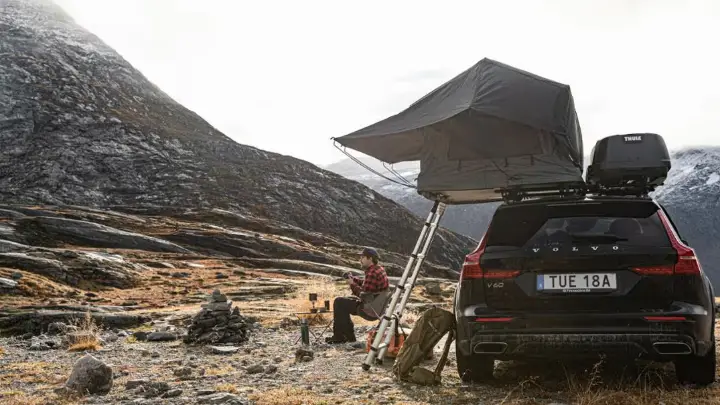
The Thule Tepui Foothill is a softshell rooftop tent with a clever half-width design that leaves room on the rack for bikes or boats. It’s a solid option for drivers who want to carry multiple bulky items on the roof.
- Where the Skycamp Mini has an edge:
- Faster, simpler setup with the hardshell clamshell-and-fold design.
- More robust weather protection due to the hard outer shell and thicker canvas.
- Less fabric exposure while driving, which can mean less long-term wear from UV and wind.
2. Roofnest Falcon 3 EVO XL Air ($$$)

The Roofnest Falcon 3 EVO XL Air is a low-profile clamshell rooftop tent built around a hybrid ABS/aluminum shell. It’s designed to stay sleek and aerodynamic on the highway while opening into a long, wedge-style sleeping space that can comfortably fit two campers, with room for a third in a pinch. The emphasis here is on a tough, streamlined hard shell, quick deployment, and a roomy feel at the head end of the tent.
Where the Skycamp Mini stands out:
- A fold-out design that creates a more boxy, “classic tent” interior instead of a wedge shape, which many campers find roomier side-to-side for two people.
- A softer, more canvas-forward feel with the Skyview window and multiple large openings, which keeps the space feeling airy and connected to the landscape.
- A compact footprint that still delivers a full-length sleeping platform, making it easier to pair with smaller SUVs and crossovers where extra-long clamshells can be harder to position.
For solo travelers and couples who care more about comfort, speed, and weather protection than shaving every inch of height, the Skycamp Mini sits in a very appealing middle ground.
Expert Tips & Maintenance 🧰
A rooftop tent at this level benefits from a bit of routine care. Simple habits go a long way toward keeping the Skycamp 3.0 Mini performing like new.
- Season the canvas before big trips.
Set the tent up at home, then gently soak the canvas with a hose and let it dry fully. This “seasons” the fabric by swelling the cotton fibers so they close up tiny needle holes from stitching. Afterward, water beads more effectively and overall weather resistance improves. - Never store it wet.
If a trip ends in rain or heavy dew, plan on opening the tent at home on a dry day. Let the canvas and mattress air out completely. This step helps prevent mildew, odors, and long-term fabric damage. 🌤️ - Clean gently.
For dust or light dirt, use a soft brush or sponge with cold water. Avoid harsh soaps, detergents, or high-pressure sprayers, which can strip away the fabric’s inherent water resistance. For tricky spots like tree sap, use methods recommended by iKamper to protect the canvas coatings. - Care for the hardshell like a vehicle finish.
The FRP shell responds well to the same care as automotive paint. A simple wash followed by a coat of wax a couple of times per season helps protect against UV damage and keeps road grime from sticking. A product such as Meguiar’s Gold Class Carnauba Wax is easy to find through Amazon and works well for this purpose. 🚙 - Keep zippers and hardware happy.
Dirt and sand can shorten the life of zippers. A quick brush-off before closing the tent, plus occasional zipper lubricant, keeps them running smoothly. Periodically inspecting bolts and brackets for tightness is also a smart habit when traveling on rough roads.
With these straightforward steps, the Skycamp 3.0 Mini can stay ready for many seasons of national park loops, forest road explorations, and long-haul road trips.
The Final Verdict: Is the iKamper Skycamp 3.0 Mini Worth It?
After many nights of testing in windy, wet, and mild conditions, a clear pattern emerges: this tent is built for travelers who value time, simplicity, and comfort in equal measure.
The iKamper Skycamp 3.0 Mini is especially worth the investment for solo adventurers and couples who want premium build quality, very fast setup, and the freedom to say “yes” to spontaneous trips.
This is not an entry-level rooftop tent. It belongs in the category of long-term adventure equipment — something that stays on the vehicle, ready for shoulder-season weekends, long cross-state drives, and extended national park circuits. For campers who often roll into camp near dusk, the one-minute deployment and elevated sleeping platform feel like major upgrades.
It’s a standout choice for:
- Travelers who head out after work on Fridays and want camp ready as soon as the vehicle is in park.
- Road-trippers who shift camp every night or two and don’t want to burn an hour every day setting up and breaking down.
- Overlanders who pair the tent with solid navigation, mapping tools, and smart packing for multi-day routes.
It may not be the best fit for:
- Families who need sleeping space for more than two people.
- Campers on tight budgets who are willing to spend more time on traditional setups to save money.
For the right user, though, the Skycamp 3.0 Mini does more than provide a place to sleep. It reduces friction at both ends of the day, turning more of each trip into actual time outside — walking a shoreline, catching a sunrise, or simply sitting quietly with a cup of coffee under the open hatch.
Those ready to upgrade a camping setup, streamline camp chores, and unlock a more spontaneous way of exploring can find the iKamper Skycamp 3.0 Mini at ikamper.com and compare current pricing and specs there.
Disclaimer: This post is for informational purposes only. Always verify product details, vehicle compatibility, and manufacturer warranties before purchase. Performance may vary with use and conditions.
Affiliate Disclosure: ChaseTheBigDream.com participates in affiliate programs (including REI, REI Outlet, Amazon, and other trusted partners). When you purchase through our links, we may earn a small commission — at no extra cost to you. These partnerships help keep our gear guides authentic, independent, and free for readers.
© 2025 ChaseTheBigDream.com | All rights reserved.