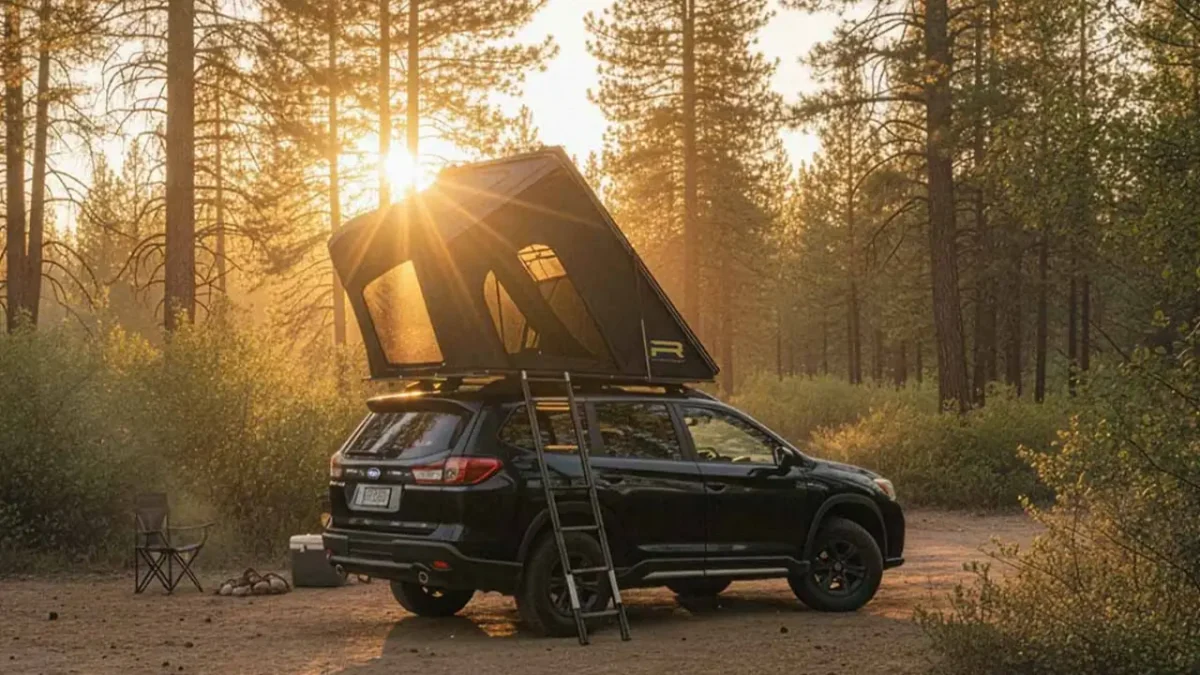
That “almost-dark” moment at camp is familiar: headlights fading, wind picking up, and the ground that looked fine from the driver’s seat suddenly turning into a lumpy puzzle of rocks, roots, and sloped dirt. Setting up a traditional tent in that window can feel like a second workout—especially after a long drive or a big hike. 🏕️
A rooftop tent changes that whole rhythm. Instead of negotiating the ground, the shelter lives above it: off the mud, away from puddles, and ready the moment the vehicle stops. The Roofnest Falcon 3 EVO XL Air is built for that kind of travel—quick setup, strong weather protection, and a sleep system designed to feel like a real bed (not a thin foam pad that leaves hips and shoulders complaining by midnight). 😴
This review walks through what the Falcon 3 EVO XL Air does well, where it asks for compromise, and who it actually makes sense for—so the decision is based on real-world use cases, not marketing buzz.
A quick note before diving in: rooftop tents aren’t magic—they’re a trade. The payoff is speed, comfort, and staying above wet ground. The cost is added weight up high, a taller vehicle profile, and the need for a solid rack system. When that trade matches the way trips actually happen, a rooftop tent can feel like the most practical upgrade on the rig. 🚐
For anyone renting a vehicle for a one-off road trip, it can also be worth testing the “rooftop tent lifestyle” before committing to a purchase. A platform like RVshare can make it easier to find an SUV or truck setup that’s already adventure-ready—useful for a trial run in real weather and real campground conditions.
First Impressions & Design Details: Built Like a Fortress
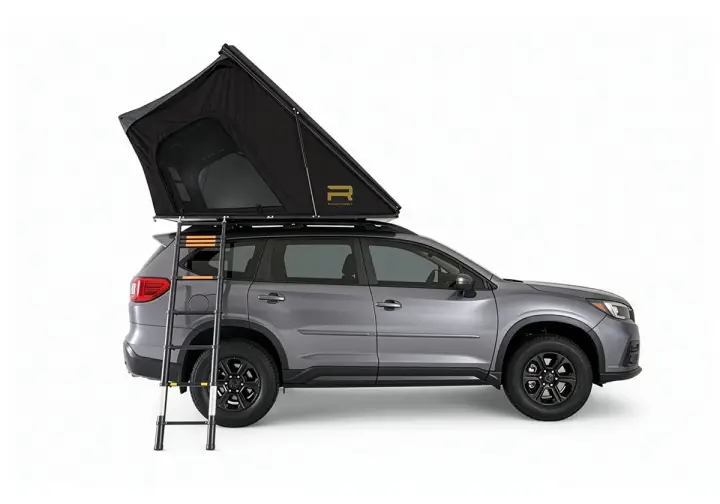
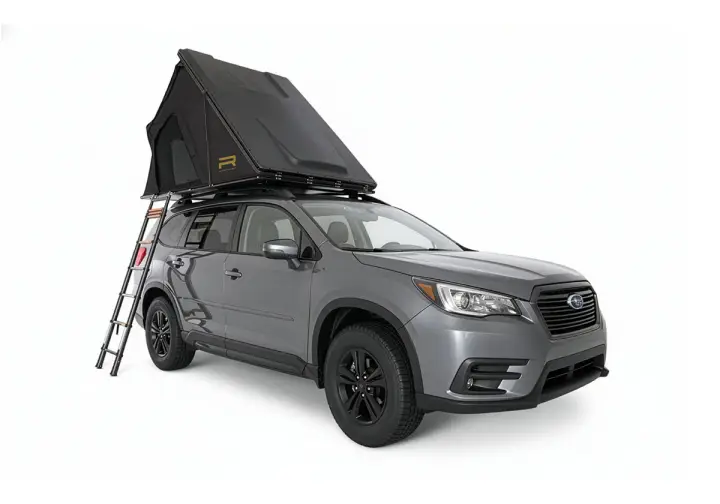
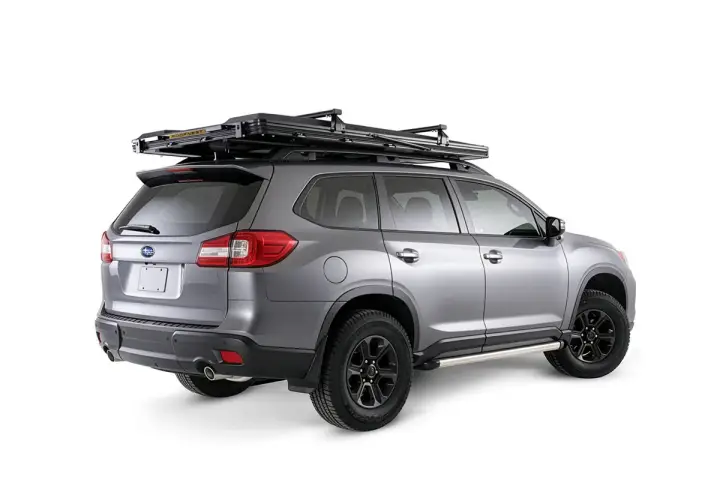
Mounted on the roof, the Falcon 3 EVO XL Air looks purpose-built—low profile, clean lines, and an expedition-ready vibe that doesn’t scream “extra” on the highway. The tent closes down to 8 inches tall, which helps with garage clearance, wind noise, and day-to-day drivability.
The shell is a hybrid design: a sturdy PC/ABS top shell reinforced with a protective LINE-X-style coating, paired with an aluminum frame and side rails. That combination is one of the big themes of this tent—durability where it matters, without adding more weight than necessary.
The “XL” part of the name matters, too. Compared to smaller clamshells, the XL footprint is built to feel less like a tight wedge and more like a legitimate sleeping space for two adults—plus a little extra room for a child or dog when needed. That extra space isn’t just about comfort; it makes the tent easier to live in when weather forces everything inside.
Roofnest also calls out the EVO’s U-bar design, which is meant to increase livable space compared to more traditional clamshell shapes. In practice, that means less of the “sloping ceiling” feeling at the foot end and a more usable interior when sitting up or moving around.
Deployment is classic clamshell simplicity. Release the latches, give the top a push, and the tent opens quickly with the help of internal struts. Roofnest lists setup time as under one minute, and that speed is the point: arriving late, getting hit by sudden rain, or simply wanting more time to cook and relax becomes much easier.
The EVO XL also leans hard into “basecamp modularity.” The aluminum side rails are designed to carry up to 45 pounds of gear per side, and optional crossbars can support additional gear on the roof when the tent is closed (useful for boards, light bins, or recovery essentials).
If the goal is building an overlanding setup piece by piece, it’s easy to picture this tent becoming the “roof hub” for the whole rig. For gear sourcing, it makes sense to price-check through trusted retailers like REI and, for deals on past-season essentials, REI Outlet. 🧭
Key Design Features at a Glance:
- Low-Profile Clamshell: 8″ tall when closed for better drivability and easier storage.
- Hybrid Shell + Aluminum Frame: PC/ABS shell with protective coating over an aluminum frame and side rails.
- Blackout Canvas: 280GSM poly-cotton canvas with blackout coating for darker mornings and more comfortable naps.
- Rest EZ Sleep System: 2″ self-inflating foamcore air mattress plus bamboo sheets and a puffy blanket.
- Bedding Storage When Closed: Designed to keep sleeping bags and pillows inside, saving time and car space.
- Interior Organization + Lighting: Gear grid/pockets and USB-powered dimmable LED light strips for a calmer camp setup.

Real-World Performance: Where It Truly Shines
A spec sheet looks great on a product page. What matters more is how the tent behaves when the road gets dusty, the wind gets loud, and camp happens at the end of a long day. 🧭
The Setup & Teardown: From Parked to Panorama in Minutes
This is the Falcon 3 EVO XL Air’s “why it exists” moment: quick, repeatable setup that doesn’t require perfect conditions.
The Scenario: A long day ends near a national park. The campground is booked through Campspot, the light is fading, and the goal is dinner—fast.
A typical routine looks like this:
- Release the latches. The tent opens from a clamshell, so there’s no floor panel to unfold.
- Lift and let the struts help. The top rises smoothly and holds its shape once open.
- Set the ladder. The included telescoping ladder is 7.5 feet, giving enough reach for most SUVs and many truck racks.
- Tidy bedding and climb in. With bedding stored inside, setup becomes more like making a bed than building a shelter.
Teardown follows the same logic: a quick tuck of fabric, pull the shell down, latch, and go. The benefit isn’t just speed—it’s energy. On trips with early starts, long hikes, or lots of driving, that extra buffer matters. 🔥
Campsite reality check: A rooftop tent still depends on the vehicle’s position. The goal is “close enough to level” rather than “perfectly flat ground.” When parking on a slope is unavoidable, orient the vehicle so the head end is slightly higher than the foot end, then fine-tune with small leveling blocks if needed. A few minutes here can be the difference between sleeping well and sliding toward the door all night. 😬
Ladder comfort tip: Angled rungs and correct ladder angle matter. Set the ladder so it’s stable and not too steep—think of it like a staircase, not a vertical climb. If the campsite surface is soft sand or loose gravel, placing a flat board or mat under the ladder feet can reduce sinking and wobble.
Quick tip: Keep one small “setup pouch” inside the tent—headlamp, earplugs, and a phone cable—so it never gets lost in the vehicle shuffle. A basic organizer or pouch from Amazon works fine for this kind of small-but-important efficiency.
Weathering the Storm: A Shelter That Stays Put
Rooftop tents can be noisy and stressful in wind if the design flexes or flaps. The Falcon 3 EVO XL Air’s structure is designed to feel more rigid and stable than a typical pole tent.
The fabric is 280GSM poly-cotton canvas with blackout coating, which tends to feel more substantial than thin nylon and can help with both comfort and condensation management when ventilated well. The blackout coating is especially helpful for summer sunrise situations—less “5:10 a.m. spotlight,” more “sleep until ready.” 😴
The Scenario: A coastal or desert front rolls in. Gusts and sideways rain show up at the exact wrong time.
A clamshell tent generally does two things well here:
- It holds shape without a bunch of poles flexing under load.
- It’s quick to close if weather turns into a full-on “pack it up” moment.
Wind management: In exposed areas, aim to park so the slimmer end faces the prevailing wind, then keep window openings modest on the windward side. It’s a simple adjustment that can reduce flapping and make the interior noticeably quieter.
Rain routine: Keep a small towel inside the vehicle for ladder rungs and entry points. It sounds minor, but wiping water off before climbing in helps keep bedding drier—especially on multi-night trips where dampness can build.
For navigation and storm avoidance, it helps to plan routes and backup camps in advance with offline mapping—Gaia GPS is a solid option for downloading maps and tracking backcountry routes when service drops. 🗺️
The Heart of Comfort: The Rest EZ Sleep System
Sleep is the difference between “great trip” and “why does everything hurt.” The XL Air model includes Roofnest’s Rest EZ Sleep System, built around a 2″ self-inflating foamcore air mattress, paired with a bamboo sheet set and a puffy blanket.
That matters for two reasons:
- Less gear in the vehicle. Bedding can stay inside the tent, which keeps the interior from turning into a chaotic pile at every stop.
- More consistent comfort. A foamcore/self-inflating style mattress often feels more supportive than a basic inflatable pad that bounces or shifts.
For those who want an even softer, thicker feel, Roofnest lists an optional 4″ Featherbed add-on.
Temperature tuning: Even with a good mattress, warmth usually comes from the sleep system above it. In shoulder seasons, pairing the included blanket with a properly rated sleeping bag (or an insulated quilt) is a reliable way to stay comfortable when temperatures drop after sunset. In hotter conditions, the blackout canvas helps with morning light, but ventilation is still the key—open mesh panels early and let warm air escape.
Side-sleeper note: A foamcore/self-inflating style mattress can feel more supportive than a pure air mattress, especially for hips and shoulders. If extra thickness is the goal, the optional Featherbed is the upgrade path Roofnest highlights.
Space check: Roofnest lists the interior as 85″ L x 57″ W, sleeping 2–3. That’s roomy for two adults, and workable for a small third (often a kid), especially with smart sleeping-bag choices and a tidy interior.
Livability: A Space That Doesn’t Feel Like a Compromise
The Falcon isn’t just a bed on the roof—it’s a small loft that’s actually pleasant to hang out in when weather forces downtime.
The EVO XL design focuses on ventilation and views, with large windows and the ability to control airflow. That’s not just for “panoramic vibes”—it’s a practical tool for condensation. A little airflow goes a long way, especially on chilly nights. 🌄
Roofnest lists 60″ of max headroom when open, which is enough for most campers to sit up, change layers, and read without feeling hunched.
Small details help daily life:
- Interior organization keeps headlamps, keys, and snacks from disappearing into sleeping bags.
- USB-powered dimmable LED light strips add warm light without blasting the interior with a harsh headlamp beam.
- Anti-condensation mat is included—an underrated feature for comfort on multi-night trips.
Camp organization trick: Keep “night stuff” and “morning stuff” separate. A headlamp, snacks, and a bottle of water belong in one pocket; a small toiletry kit and warm layer can live in another. That separation prevents the classic midnight rummage through sleeping bags.
Quiet comfort: Warm, dimmable interior lighting matters more than expected. It keeps the vibe calm, makes it easier to pack without blasting the eyes, and turns the tent into a genuinely relaxing space when the weather outside isn’t cooperating. ✨
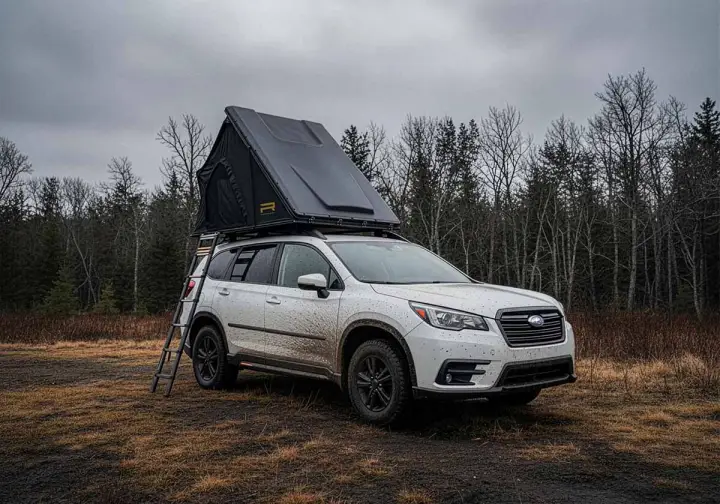
💡 Field Test Insight
Cold weather is where rooftop tents either feel cozy or feel like a wind tunnel. In late-season conditions—think high-elevation mornings and temperatures hovering near freezing—pairing this style of canvas tent with a true cold-rated sleeping bag and cracking a window for airflow can help reduce condensation and improve comfort. For deeper winter trips, Roofnest offers an insulation kit designed to add warmth retention and cut drafts.
Pros and Cons: A Balanced Look
No piece of gear is perfect—especially not one that lives on a roof. Here’s the honest trade-off list.
| What Worked Well ✅ | What Could Be Better ⚙️ |
|---|---|
| Fast setup in real conditions: Clamshell design keeps the routine simple. | Premium price point: The purchase only makes sense when used often. |
| Low profile (8″) for drivability: Less awkward day-to-day than many taller RTTs. | Still heavy at 160 lbs: Install and rack choice matter. |
| Comfort-forward sleep system: Rest EZ setup reduces packing and improves sleep. | Vehicle and rack dependent: Roof/rack dynamic load ratings must be checked carefully. |
| Blackout canvas + ventilation: More sleep, less condensation when vented. | XL footprint: Best on larger SUVs/trucks; small crossovers may feel “over-tented.” |
| Modular gear-carrying options: Side rails and optional crossbars support add-ons. | Packing discipline required: Bedding storage is great, but over-stuffing can make closing harder. |
Comparisons & Alternatives: How Does It Stack Up?
The premium rooftop-tent world is full of genuinely good options. The best pick usually comes down to one question: is the priority maximum living space, minimum weight, or fast, repeatable setup?
iKamper Skycamp 3.0
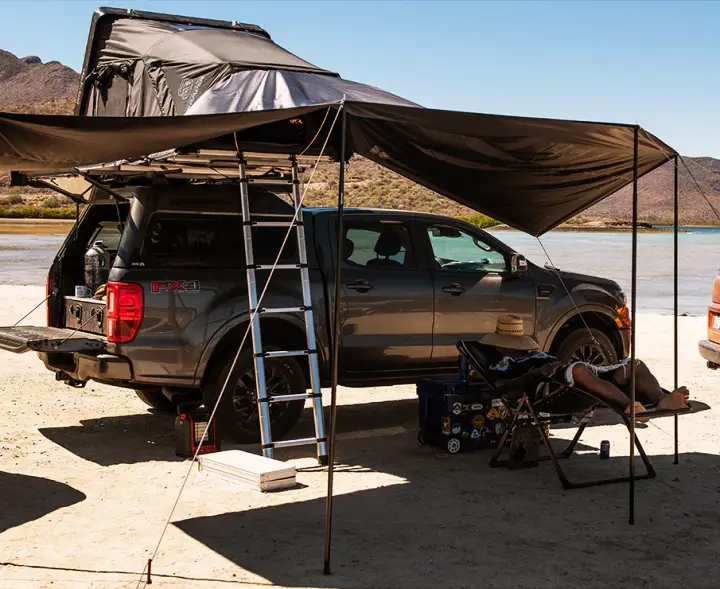
A well-known hybrid hardshell with a fold-out floor that creates a bigger sleeping/living footprint—especially appealing for couples who want extra room or families who like the “bring everyone” flexibility. REI notes the Skycamp 3.0’s king-size mattress can sleep 2 adults + 2 kids (or 3 adults), which is a big part of its appeal when interior space is the deciding factor.
Rack-wise, iKamper also calls out a practical baseline: a dynamic load of at least 165 lbs (75 kg) for your roof/bed rack or crossbars.
Freespirit Recreation Aspen Lite XL
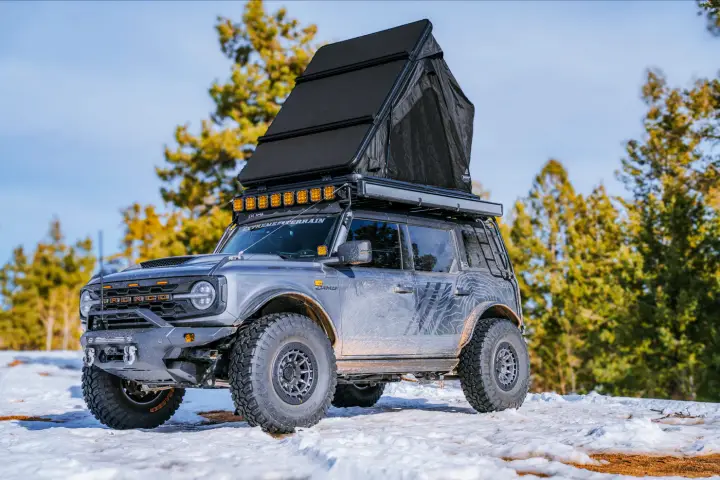
If the goal is to keep a rig feeling nimble—especially on off-camber trails or on smaller SUVs—this is a smart, modern “go-light” alternative. Freespirit lists the Aspen Lite XL as a clamshell design that sleeps 2–3 people, and it’s built around a standout spec: 110 lbs.
It’s also intentionally designed around a fast routine: Freespirit says setup can take under 30 seconds, which is exactly what minimalists want when the plan is “arrive late, sleep fast, move early.”
Why the Falcon 3 EVO XL Air Still Wins:
For travelers who want a straightforward clamshell setup, a low-profile shape on the road, and a comfort-forward sleep system that reduces packing, the Falcon 3 EVO XL Air is a very clean “one-and-done” choice. The Skycamp 3.0 tends to win when the expanded footprint (and family-friendly livability) matters most. The Aspen Lite XL tends to win when weight and quick simplicity are the whole mission. The Falcon aims for the middle ground: comfortable and simple without going full bare-bones—and without turning setup into a nightly project. ✨
Expert Tips & Maintenance 🧰
A rooftop tent is a big investment and a safety item. A little routine care goes a long way.
- Confirm roof rack ratings before buying. Dynamic load rating (while driving) is the number that matters for safety. Static load ratings (when parked) are usually much higher, but they don’t replace a strong driving rating.
- Practice a full open/close cycle at home. The first setup shouldn’t happen in a storm. A driveway “rehearsal” makes the first real camp feel smooth.
- Vent on cold nights. Condensation builds when warm breath hits cold fabric. Crack a window and let moisture escape.
- Always dry before long-term storage. If the tent gets packed wet, open it at home as soon as possible to prevent mold and odor.
- Clean gently. Mild soap and water for hard surfaces; a soft brush and water for fabric. Avoid aggressive detergents that can strip coatings.
- Do quick hardware checks. Seasonal checks for mounting bolts and clamps help prevent rattles and reduce the chance of long-term wear.
- Know the warranty terms. Roofnest notes a two-year warranty to the original purchaser against manufacturer defects (workmanship, parts, and materials) under normal use.
- Think about clearance early. The low profile helps, but garages, drive-thrus, and tree branches still matter. A quick habit of scanning overhead obstacles saves expensive mistakes.
- Dial in a “roof routine.” Keep a small step stool in the vehicle if needed, and store the same items in the same places every time. Consistency makes setup feel automatic.
- Plan a backup sleep option. If high winds make roof sleeping uncomfortable in an exposed area, having a ground pad as a fallback can be reassuring on long trips.
- Use reservations strategically. When a national park campground is full, nearby RV parks or private campgrounds can keep the itinerary alive. Checking options through Booking.com (for cabins/hotels) or Campspot (for camp stays) helps avoid last-minute stress.
Final Verdict: Is The Roofnest Falcon 3 EVO XL Air Worth It?
This tent makes the most sense for a specific kind of traveler: someone who camps often, values quick setup, and cares a lot about sleep quality.
The Falcon 3 EVO XL Air does three things exceptionally well:
- Keeps setup simple, even in bad light or bad weather.
- Stays low-profile on the road, making daily driving less of a chore.
- Treats sleep like a feature, not an afterthought.
The trade-offs are real—price, roof rack requirements, and the fact that a rooftop tent changes the way campsites are chosen (height limits, tighter parking lots, and wind exposure matter more). But for frequent road-trippers, weekend overlanders, and families building a reliable “mobile basecamp,” this is the kind of upgrade that can make trips feel easier and more enjoyable from day one. 🚐
A quick “fit check” before buying:
- Camp trips happen often enough to justify a premium upgrade (not once a year).
- The vehicle has (or can support) a quality rack system with appropriate dynamic load ratings.
- Trips include enough driving and enough setup cycles that speed and simplicity are valuable.
- Comfort matters—because good sleep leads to better mornings, safer driving, and more enjoyable miles.
When those boxes get checked, the Falcon 3 EVO XL Air tends to feel like a long-term piece of gear.
For shoppers comparing prices and the rest of the setup (rack, sleeping bags, camp kitchen gear), it’s smart to browse through REI, check deals at REI Outlet, and fill in the small essentials through Amazon.
Disclaimer: This post is for informational purposes only. Always verify product details and manufacturer warranties before purchase. Performance may vary with use and conditions.
Affiliate Disclosure: ChaseTheBigDream.com participates in affiliate programs (including REI, REI Outlet, Amazon, and other trusted partners). When you purchase through links on this site, a small commission may be earned—at no extra cost to you. These partnerships help keep the gear guides authentic, independent, and free for readers. affiliate links ChaseTheBigDrea…
© 2025 ChaseTheBigDream.com | All rights reserved.