The best time to visit Denali National Park is from late June through August, when long daylight hours, summer bus service, hiking conditions, and the widest range of visitor services make exploring this enormous Alaska wilderness easier.
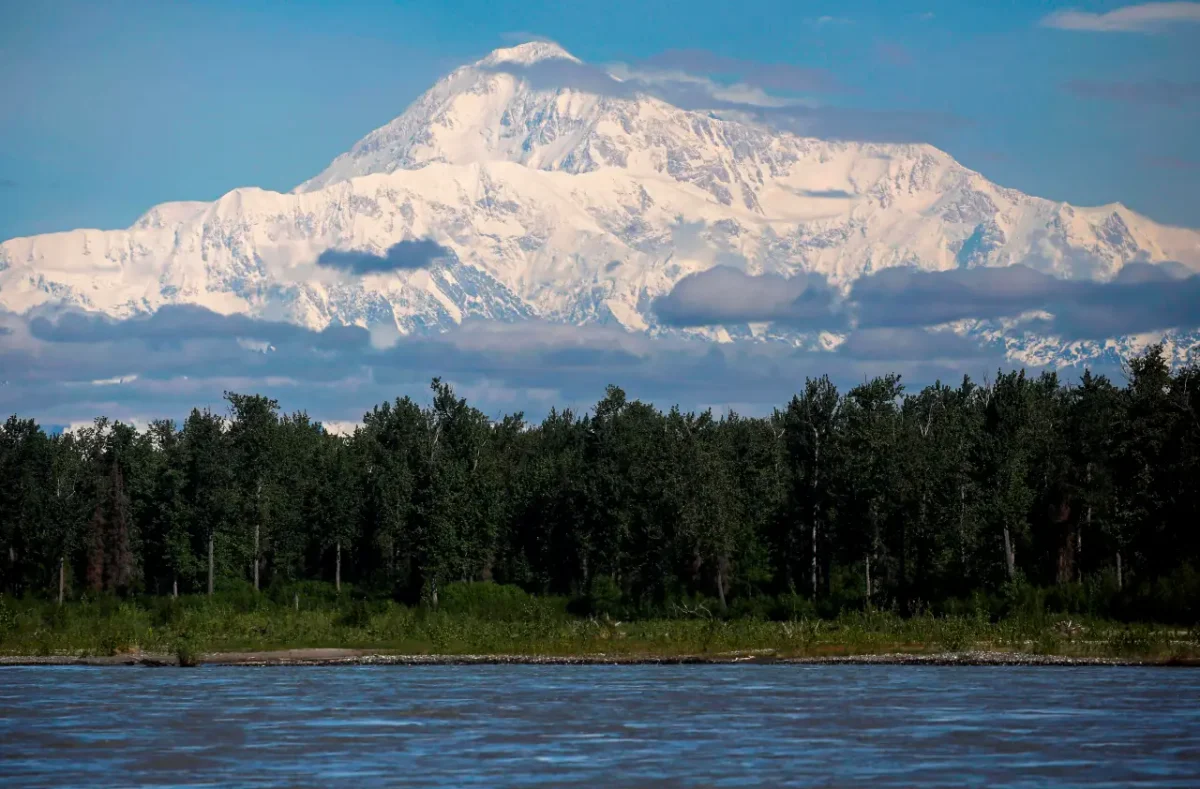
Denali is home to North America’s tallest mountain, vast stretches of tundra and boreal forest, and wildlife that includes grizzly bears, caribou, moose, Dall sheep, and wolves. But planning a trip here works differently from planning most national parks. There is only one road into the park, private vehicles have limited access during summer, and weather can change quickly.
There is another major planning factor: the Denali Park Road is currently closed to bus traffic beyond Mile 43 at East Fork because of the Pretty Rocks Landslide. In summer 2026, transit and tour buses travel no farther than East Fork, and Eielson Visitor Center and Wonder Lake Campground remain closed. Always check current conditions before building an itinerary around road access.
This guide covers the best time to visit Denali National Park, what each season is really like, how many days to spend here, independent things to do, and five Denali National Park tours and experiences that offer very different ways to explore the region.
Denali National Park at a Glance
| Planning Detail | Recommendation |
|---|---|
| Best Overall Time to Visit | Late June through August |
| Best Time for Hiking | July and August |
| Best Time for Fewer Crowds | Late May or early September |
| Suggested Trip Length | 2–4 days |
| Main Gateway Area | Denali Park entrance and Healy |
| Nearest Major Airport | Fairbanks International Airport (FAI) |
| Another Major Gateway | Ted Stevens Anchorage International Airport (ANC) |
| Summer Private Vehicle Access | Generally through Mile 15 at Savage River |
| Current Summer Bus Limit | East Fork, Mile 43, due to the Pretty Rocks Landslide |
Denali’s entrance is about 120 road miles south of Fairbanks and roughly 240 miles north of Anchorage. The Alaska Railroad also stops near the park entrance, making Denali one of the easier Alaska national parks to reach without driving the entire way.
Best Time to Visit Denali National Park
For most travelers, late June through August offers the best balance of accessibility, hiking conditions, wildlife-viewing opportunities, and available services.
Summer daylight is exceptionally long, giving plenty of flexibility for hiking, scenic drives near the entrance, ranger programs, sled dog demonstrations, and bus trips along the Denali Park Road.
The biggest mistake is assuming that summer means predictable weather. It does not. Rain, wind, chilly temperatures, and sudden weather changes are normal even in July and August. Pack layers, a waterproof shell, sturdy footwear, and enough flexibility to change plans.
Summer is also the busiest and most expensive season. Lodging around the park entrance and Healy can book far ahead, as can popular bus trips and guided activities.
Road access deserves special attention. The Denali Park Road is 92 miles long, but current bus operations do not reach the western end of the road. In 2026, narrated Tundra Wilderness Tours turn around near East Fork around Mile 42, while non-narrated transit buses travel to East Fork at Mile 43.
That still provides a long journey into excellent wildlife habitat and tundra scenery, but older itineraries that recommend riding to Eielson Visitor Center at Mile 66 or Wonder Lake are outdated under current conditions.
Denali National Park by Season
Spring: April to May
Spring is a transitional season in Denali. Snow may still cover large parts of the landscape, hiking conditions can range from snowy to muddy, and most summer visitor services have not yet started.
The interesting advantage is road access.
Before summer bus operations begin, private vehicles may sometimes travel farther along the Denali Park Road than they can during peak season. In 2026, for example, the park opened the road to private vehicles as far as Teklanika at Mile 30 in late April before summer restrictions returned on May 20. Road access depends heavily on weather and plowing progress, so this is never something to assume in advance.
Spring works best for independent travelers who value quiet conditions more than a full selection of tours and services.
Expect:
- limited visitor services;
- variable road access;
- lingering snow;
- muddy or wet trails;
- rapidly changing weather;
- much smaller crowds than midsummer.
By the second half of May, the park begins transitioning into its main visitor season.
Summer: June to August
Summer is the easiest season for a first trip to Denali.
Most visitor services are operating, ranger programs are available, trails near the entrance are generally easier to hike, and park buses provide access beyond the section open to private vehicles.
From May 20 through September 17 in 2026, buses operate on the Denali Park Road, although the Pretty Rocks closure currently limits them to East Fork.
July and August are especially good for travelers who want to combine hiking with wildlife viewing and guided activities.
Long daylight also makes itinerary planning forgiving. A morning bus trip does not necessarily mean losing the rest of the day, and shorter hikes can often fit into late afternoon or evening.
The tradeoffs are straightforward:
Pros
- widest range of services;
- best hiking access;
- long daylight;
- active wildlife;
- most guided tours operating.
Cons
- highest demand for lodging and tours;
- more visitors;
- mosquitoes can be persistent;
- rain and cloudy conditions remain common;
- seeing Denali’s summit is never guaranteed.
Rather than scheduling every hour, leave room to take advantage of good weather when it arrives.
Fall: September
Early September can be one of the most rewarding times to visit Denali.
The tundra shifts into red, orange, and gold, temperatures become cooler, mosquitoes largely fade, and crowds begin thinning.
The tradeoff is shrinking access.
For 2026, summer bus operations end on September 17. Beginning September 18, weather permitting, personal vehicles can travel as far as Teklanika at Mile 30. Snow can shorten that access quickly, sometimes bringing the road closure back toward Mountain Vista at Mile 13 or Park Headquarters at Mile 3.
That makes September better for flexible travelers than for anyone building a trip around a rigid list of activities.
Bring warmer layers than you think you need and check operating dates for lodging, tours, visitor facilities, and transportation individually.
Winter: October to March
Winter is a completely different Denali experience.
Most travelers come during summer, but the park itself remains open year-round. Snowshoeing, cross-country skiing, winter biking, and quiet exploration around the entrance area replace bus tours and conventional sightseeing.
Road access becomes extremely limited as snow accumulates. The Winter Visitor Center becomes the main source of visitor information, and snowshoes and traction devices may be available to borrow there. Winter temperatures can range dramatically and may drop to around -40°F during severe cold.
Dark skies also create opportunities to see the aurora, although cloud cover and solar activity mean northern lights sightings can never be promised.
Winter is best for experienced cold-weather travelers who are comfortable planning around limited services, short daylight, and potentially extreme temperatures.
How Many Days Do You Need in Denali National Park?
Two to three days is the sweet spot for most first-time visitors.
One Day
With one full day, concentrate on the park itself.
A practical itinerary could include:
- driving the accessible portion of the Denali Park Road;
- hiking near Savage River or the entrance area;
- visiting the Denali Visitor Center;
- visiting the sled dog kennels;
- joining a ranger program.
Trying to combine a long park-road bus trip with several additional activities can make a one-day visit feel rushed.
Two Days
Two days allows a much better balance.
Use one day for a transit or narrated bus journey into the park, then keep the second for hiking, the kennels, ranger programs, or a guided experience near the entrance or Healy.
This also gives some protection against poor weather.
Three to Four Days
Three or four days is ideal if Denali is a major focus of the Alaska trip.
One day can go toward the park road, another toward hiking and independent exploration, and another toward an experience such as flightseeing, a naturalist walk, or a glacier flight.
The extra time is especially useful in Denali because weather can hide mountain views for an entire day.
Before You Visit: Official NPS Planning Information
Conditions in Denali change too frequently to rely solely on an itinerary written months earlier.
Before traveling, use the National Park Service for the latest information:
- Check current Denali National Park conditions and alerts
- Review Denali National Park entrance fees and passes
- Review Denali operating hours and seasonal services
- Download and review official Denali maps
- Review directions and transportation options for Denali
- Review official Denali safety guidance
- Review accessibility information for Denali National Park
Bus and campground reservations are strongly recommended during summer. Park entrance fees are separate from some transportation costs, so check exactly what each reservation includes.
Wildlife safety deserves particular attention. Visitors should stay at least 300 yards from bears and 25 yards from other wildlife, and the NPS strongly encourages hikers to carry bear spray and know how to use it.
Best Things to Do in Denali National Park
Guided experiences can add variety, but some of the best things to do in Denali National Park require no commercial tour at all.
Ride the Denali Park Road
For many visitors, this is the defining Denali experience.
Private vehicles generally stop at Savage River at Mile 15 during the summer season, so buses provide the main way to travel farther into the park.
Narrated tours provide more interpretation, while non-narrated transit buses give hikers greater flexibility.
Because buses currently stop around East Fork rather than continuing deeper west, choose your trip using the current route, not descriptions from older guidebooks.
Visit the Sled Dog Kennels
Denali maintains the only working sled dog kennel in the National Park System.
The dogs still perform practical wilderness work, and summer demonstrations provide an easy way to understand why dog teams remain valuable in a roadless winter landscape.
For 2026, kennels are open daily from May 15 through September 20, with free demonstrations offered during the summer season. Schedules can change, so check current times before visiting.
Hike Near Savage River
Savage River is one of the easiest places to combine scenic driving and hiking.
The Savage River Loop Trail is about 1.7 miles round trip with minimal elevation change, making it a practical option for travelers who want a relatively easy walk without committing to a full-day hike.
More adventurous hikers can explore other trails and, where permitted, Denali’s largely trail-less wilderness.
Look for Wildlife
Bears, moose, caribou, Dall sheep, and wolves are among Denali’s most sought-after sightings.
Wildlife is never guaranteed, but traveling farther along the park road generally creates more opportunities than staying exclusively around the entrance area.
Bring binoculars. They are often more useful than trying to photograph distant wildlife with a phone.
Join a Ranger Program
Ranger-led programs add useful context to a landscape that can otherwise feel overwhelmingly vast.
Topics and schedules vary, so check the park calendar after arrival or ask at the visitor center.
5 Best Tours and Experiences in and Around Denali National Park
Paid experiences around Denali make the most sense when they offer something the park bus and independent trails cannot: aerial views, glacier access, local interpretation, close interaction with sled dogs, or specialized off-road transportation.
These five experiences cover very different trip styles.
| Experience | Best For | Duration | Starting Area | Location |
|---|---|---|---|---|
| Grand Denali Flight | Mountain scenery | 1.5–2 hours | Talkeetna | Flies into the Denali/Alaska Range region |
| Tundra Walk With Sled Dogs | Dog lovers and families | 1 hour | Healy | Near the park |
| Naturalist Walking Tour | First-time visitors | 3 hours | Denali area | Inside the park |
| Helicopter Flight With Glacier Landing | Glacier access and aerial views | About 2¼ hours total | Denali area | Denali region |
| Fat Truck/SHERP Adventure | Off-road exploration | About 3 hours | Healy | Near the park |
1. Talkeetna: Grand Denali Flight With Optional Glacier Landing
Best for: Travelers who want the broadest aerial perspective of Denali and the Alaska Range
Duration: 1.5–2 hours
Starting area: Talkeetna
Activity type: Fixed-wing flightseeing
Location: Starts well south of the park entrance and flies into the Alaska Range
This flightseeing experience is designed around the mountain rather than the park road.
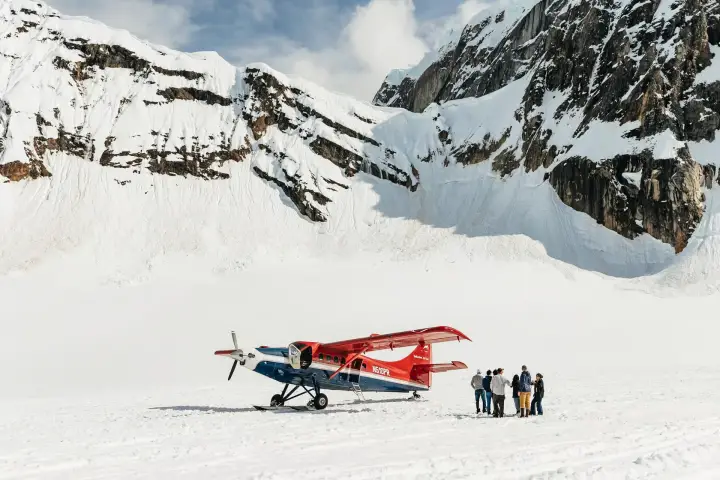
The route crosses the Alaska Range and provides views of Denali from perspectives that cannot be reached by road or trail. Depending on conditions, passengers may see major glaciers, steep mountain faces, and the high alpine terrain surrounding North America’s tallest peak.
An optional glacier landing can be added to the flight.
That makes this particularly appealing when the scale of Denali itself is the priority. The park-road experience is better for tundra and wildlife; flightseeing is better for understanding just how enormous the Alaska Range really is.
The important logistical consideration is Talkeetna. It is not at the Denali National Park entrance. This experience makes the most sense for travelers already stopping in Talkeetna or driving between Anchorage and Denali.
Flights are also highly dependent on weather. Avoid scheduling one so tightly that a delay or cancellation would disrupt the rest of the trip.
See available dates and review the Grand Denali Flight details.
2. Denali: 1-Hour Tundra Walk With Free-Running Sled Dogs
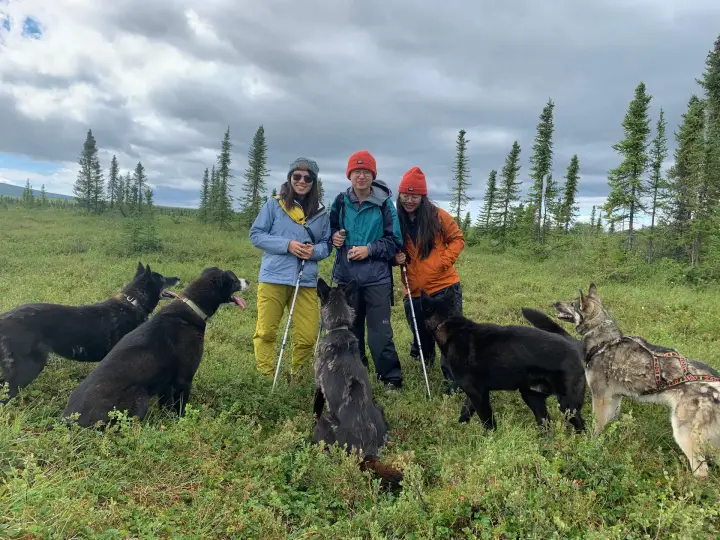
Best for: Dog lovers, families, and travelers wanting a short local experience
Duration: 1 hour
Starting area: Moon Dog Kennel near Healy
Activity type: Guided tundra walk
Location: Outside Denali National Park near the Stampede Trail
This is very different from Denali’s NPS sled dog demonstration.
Instead of watching a working-dog program inside the park, guests take an off-trail tundra walk accompanied by free-running Alaskan huskies.
The group is small, the pace is adjusted to participants, trekking poles are available if needed, and each guest receives dog treats during the walk. Transportation is not included, so travelers need a way to reach Moon Dog Kennel near Healy.
The tundra can be uneven, wet, and harder to walk across than a maintained trail. Closed-toe, sturdy footwear is important.
This is a particularly good complement to the national park kennels for someone interested in mushing culture. The two activities are not duplicates: one explains Denali’s working canine ranger program, while this one offers more direct time walking beside sled dogs.
Review the tundra walk details and check availability.
3. Denali: Naturalist Walking Tour in Denali National Park
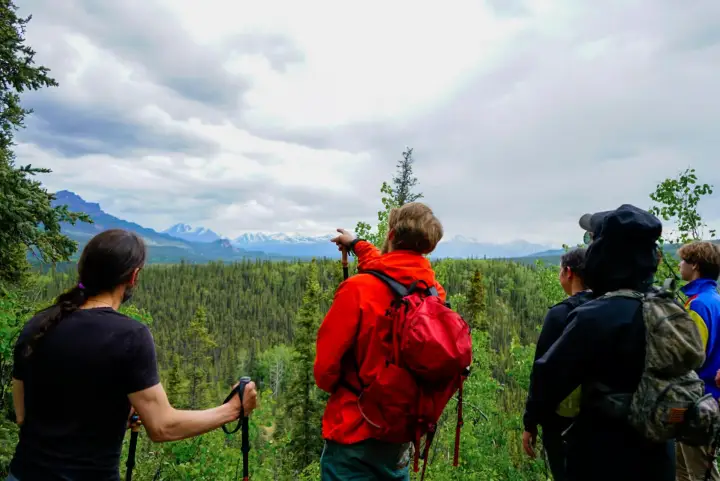
Best for: First-time visitors who want to understand Denali rather than simply see it
Duration: 3 hours
Starting area: Pickup from participating Denali-area lodging
Activity type: Guided nature walk
Location: Inside Denali National Park
For travelers who enjoy hiking but do not want a strenuous backcountry outing, this naturalist-led walk offers a more approachable introduction.
The current itinerary includes roughly 2.5 hours of walking inside Denali National Park, with hotel pickup and drop-off from several properties in the Denali area.
The emphasis is on the boreal forest and the relationships between Denali’s plants, animals, fungi, geology, and climate.
It is not designed as a long-distance wildlife safari. The value comes from having someone interpret details that are easy to walk past without noticing.
The maintained trails and leisurely pace also make this more approachable than many Alaska hiking experiences, although travelers should still be prepared for outdoor conditions.
One useful detail to plan for: food and water are not included, so bring what is needed for the outing.
Check current prices and availability for the Denali Naturalist Walking Tour.
4. Denali National Park: Helicopter Flight With Glacier Landing
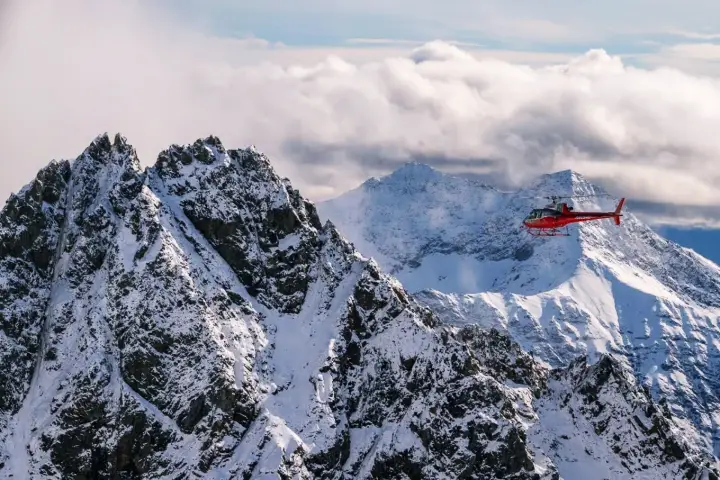
Best for: Travelers who want glacier access without traveling to Talkeetna
Duration: About 135 minutes total, including ground logistics
Starting area: Denali area
Activity type: Helicopter flightseeing with glacier landing
Location: Denali region and Yanert Glacier
This option combines roughly 50 minutes of helicopter flight time with a landing on the Yanert Glacier and about 20 minutes to explore the ice.
Over-boots for walking on the glacier are included, and pickup options may be available depending on the booking.
Compared with the fixed-wing flight from Talkeetna, this experience is easier to integrate into an itinerary based near the Denali park entrance.
The helicopter format also creates a different perspective, flying across tundra and mountain terrain before reaching the glacier.
Weight restrictions and aircraft balance rules matter. The current listing notes additional requirements and charges for passengers at or above a specified weight threshold, so review those policies carefully before paying. The activity is also listed as unsuitable for wheelchair users.
As with any Alaska flightseeing trip, weather can determine whether the flight operates.
See available dates and review the Denali helicopter and glacier landing details.
5. Denali: 3-Hour Fat Truck/SHERP Off-Road Adventure
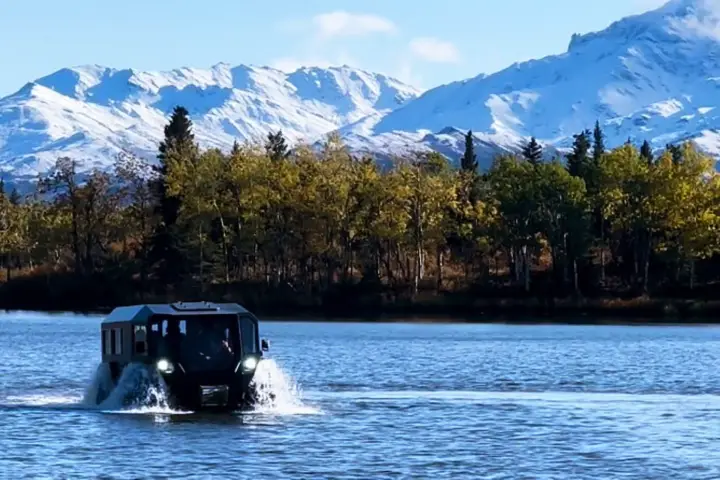
Best for: Travelers who want a rugged experience without a strenuous hike
Duration: About 3 hours
Starting area: Healy
Activity type: Guided off-road vehicle tour
Location: Outside Denali National Park
A SHERP or Fat Truck can travel across terrain that would stop an ordinary vehicle, which is the main attraction of this tour.
The route near Healy can include old mining trails, steep terrain, viewpoints, and water crossings depending on conditions. The vehicles are driven by guides, so guests are passengers rather than operating the machines themselves.
This is important to distinguish from a Denali Park Road tour.
The experience takes place near Denali National Park rather than serving as transportation into the park itself. Its appeal is the off-road terrain and the specialized vehicle, not access to the national park road.
Because the enclosed vehicles provide protection from the weather, it can also be useful when conditions are less appealing for a long hike.
Expect bumps and uneven travel. Travelers with conditions that make rough vehicle rides uncomfortable should review the activity requirements carefully before booking.
Compare current departure times for the Fat Truck/SHERP adventure.
How to Choose the Right Experience
The best choice depends less on which tour sounds most dramatic and more on what is missing from the rest of the itinerary.
For the biggest mountain views: Choose the Grand Denali Flight from Talkeetna. It provides the most mountain-focused perspective but requires planning around Talkeetna.
For convenient aerial adventure near the park: Choose the Helicopter Flight With Glacier Landing. It fits more naturally into a stay around the Denali entrance.
For understanding Denali’s ecosystem: Choose the Naturalist Walking Tour. It adds interpretation to an easy hike and works well for a first visit.
For families and dog lovers: Choose the Tundra Walk With Free-Running Sled Dogs. It is short, personal, and easy to combine with another activity the same day.
For something completely different from the park road: Choose the Fat Truck/SHERP Off-Road Adventure. It is primarily about unusual terrain and the vehicle itself.
Frequently Asked Questions
What is the best month to visit Denali National Park?
July is the easiest all-around choice, with long daylight, summer bus operations, hiking access, and a full range of services.
August is another excellent option and can begin bringing fall color later in the month.
How many days do you need in Denali?
Plan two to three full days for a first visit.
That provides enough time for a park-road bus trip, hiking and visitor-center activities, plus one guided experience without making the itinerary overly rigid.
Can you drive your own car into Denali National Park?
Yes, but summer access is limited.
Private vehicles can generally drive the first 15 miles to Savage River during the main visitor season. Traveling farther normally requires using the park’s bus system.
How far do Denali buses currently travel?
In summer 2026, buses travel no farther than the East Fork area around Mile 43 because of the Pretty Rocks Landslide.
The Tundra Wilderness Tour turns around around Mile 42, while non-narrated transit buses reach approximately Mile 43.
Is Eielson Visitor Center open?
No. Eielson Visitor Center remains closed under the current Pretty Rocks road restrictions. Do not build a current itinerary around taking a bus to Eielson.
Do you need reservations to visit Denali?
A general timed-entry reservation is not required simply to enter Denali, but reservations are strongly recommended for summer buses, campgrounds, lodging, and popular commercial activities.
Always confirm the current system before traveling because transportation and reservation procedures can change.
Is Fairbanks or Anchorage better for reaching Denali?
Fairbanks is closer by road. The park entrance is roughly 120 miles south of Fairbanks compared with about 240 miles north of Anchorage.
Both cities have major airports and connections to Denali by road and rail, so the better option depends on the rest of the Alaska itinerary.
Are Denali National Park tours worth it?
They can be, particularly when they add something that independent exploration cannot easily provide.
A naturalist guide adds interpretation. Flightseeing provides access to aerial mountain scenery. A helicopter can land on a glacier. The sled dog walk provides a more personal experience near Healy. A SHERP reaches terrain that conventional vehicles cannot.
None of those experiences replaces spending time inside Denali National Park itself.
Final Thoughts
The best time to visit Denali National Park is late June through August for most travelers, especially on a first trip. Summer offers the best combination of long daylight, hiking access, operating visitor services, park-road transportation, and guided experiences.
But Denali rewards flexibility more than rigid scheduling.
Weather can hide the mountain. Wildlife may appear where least expected—or not appear at all. Road access and transportation systems can change. A successful itinerary leaves enough space to adapt.
Two to three days gives most visitors a strong introduction: one day exploring the Denali Park Road, another for hiking and the entrance area, and enough time for a guided activity if it adds something genuinely different.
Most importantly, plan around current conditions. The Pretty Rocks Landslide continues to change how visitors experience the park road, so older Denali itineraries describing bus trips to Eielson Visitor Center or Wonder Lake should not be treated as current guidance.
Denali does not need every box checked to feel worthwhile. A quiet tundra hike, caribou spotted from a bus window, time with the park’s working sled dogs, or one clear view of the Alaska Range can easily become the part of the trip that stands out most.
Disclaimer: This post is for informational purposes only. Always check official park regulations, permits, road conditions, closures, and weather before planning or booking any activity.
Affiliate Disclosure: ChaseTheBigDream.com participates in affiliate programs, including GetYourGuide and other trusted partners. When you book or purchase through qualifying links, the site may earn a small commission at no extra cost to you. These partnerships help support the creation and maintenance of independent travel guides.