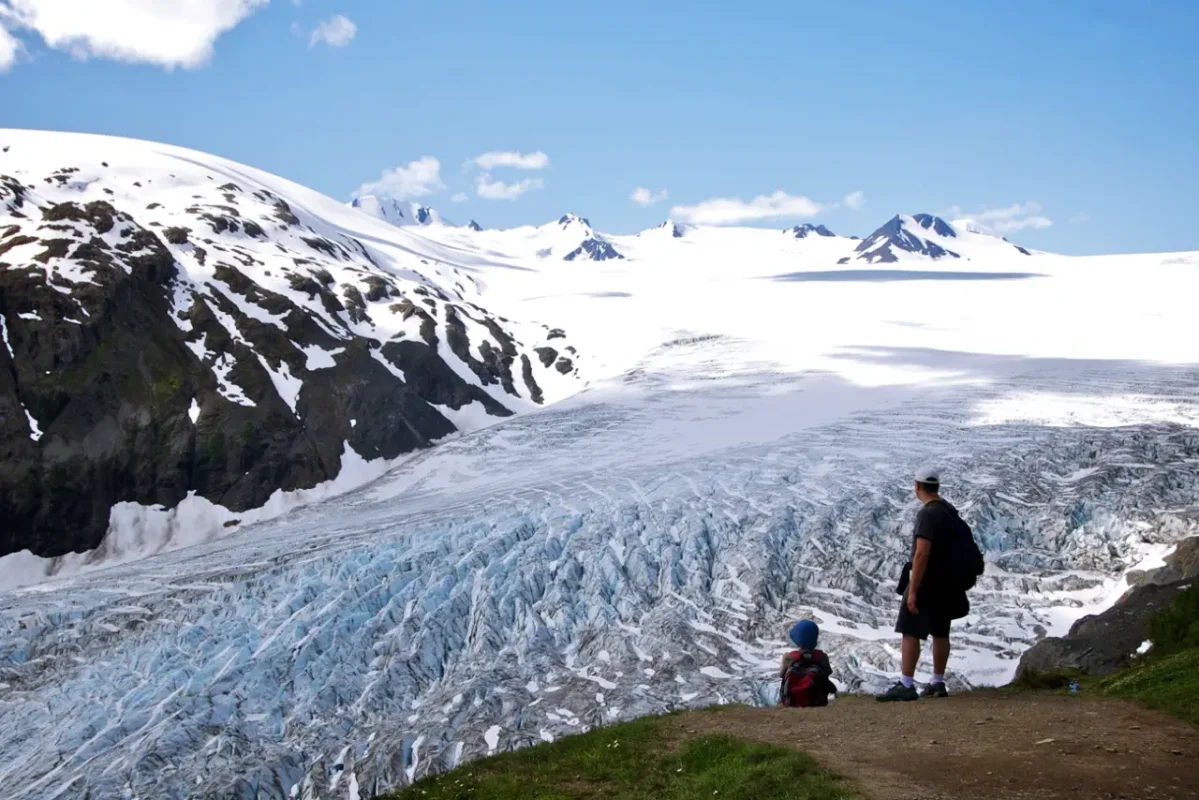
Kenai Fjords National Park brings together three of Alaska’s defining landscapes: the Harding Icefield, steep coastal mountains, and glacier-carved fjords filled with marine wildlife.
For most travelers, the best time to visit Kenai Fjords National Park is June through August. Summer offers the most reliable access to Exit Glacier, the broadest selection of boat trips and guided experiences, long daylight hours, and the best overall conditions for hiking. The tradeoff is higher demand, limited parking around Exit Glacier, and coastal weather that can turn cool and wet quickly. The National Park Service identifies June, July, and August as the park’s primary visitor season, with reduced services in May and September.
The park also rewards travelers who plan beyond the weather forecast. Much of Kenai Fjords is reached from the water or air, while the road-accessible Exit Glacier area provides the easiest opportunity to hike independently. This guide covers when to go, how the seasons differ, how many days to plan, what to explore on your own, and five guided experiences that offer very different ways to see the park.
Kenai Fjords National Park at a Glance
| Planning Detail | What to Know |
|---|---|
| Best Overall Time to Visit | June through August |
| Best Time for Hiking | July through early September, depending on snow and trail conditions |
| Best Shoulder Season | Late May or September |
| Suggested Trip Length | 2 to 3 days |
| Main Gateway Town | Seward, Alaska |
| Distance from Anchorage | About 126 miles |
| Main Road-Accessible Area | Exit Glacier |
| Entrance Fee | No standard park entrance fee |
| Official Park Website | Kenai Fjords National Park — National Park Service |
Best Time to Visit Kenai Fjords National Park
The easiest answer is summer, but the best month depends on what matters most to your trip.
June brings long daylight hours and the start of the main visitor season. July usually offers the strongest combination of hiking access, operating tours, and summer services. August remains excellent for cruises and hiking, although rain is common along this section of the Alaska coast.
Travelers considering May or September can encounter fewer visitors and a quieter Seward, but should expect fewer services and more uncertainty around road, trail, and tour availability.
One important point: summer does not mean warm, dry weather. Kenai Fjords sits in a coastal environment where rain, wind, fog, and temperature changes are normal. Waterproof outer layers and warm clothing belong in the daypack even when the morning looks promising.
Boat trips are particularly weather-sensitive. Seas can be calm one day and rough the next, and wildlife sightings are never guaranteed. Build some flexibility into a two- or three-day Seward itinerary rather than scheduling the activity you care about most immediately before leaving town.
Kenai Fjords National Park by Season
Spring: April Through May
Spring is a transition season rather than a predictable early summer.
Snow can linger around Exit Glacier, and Herman Leirer Road—usually called Exit Glacier Road—is not maintained for normal automobile access during winter. Its reopening depends on seasonal snow conditions rather than a fixed annual date.
Late May becomes much more practical for visitors as Seward’s summer tourism season begins and more excursions return.
The advantages are lighter crowds and a quieter atmosphere. The disadvantage is uncertainty. Hiking conditions, opening dates, and available services can change quickly.
Spring works best for travelers with flexible plans who are comfortable checking conditions shortly before each activity.
Summer: June Through August
Summer offers the broadest version of Kenai Fjords National Park.
This is when most travelers combine a glacier and wildlife cruise from Seward with a day in the Exit Glacier area. The long daylight hours also make it easier to fit scenic drives, shorter hikes, and time around Seward into the same trip.
July and August are generally the most practical months for hikers hoping to go farther up the Harding Icefield Trail, but snow can persist well into summer. Even in July, the NPS cautions hikers to expect snow, mud, rain, rapidly changing weather, and difficult terrain higher on the route.
Exit Glacier also becomes busier. Parking is limited during the main daytime window in June, July, and August, so arriving earlier, visiting later in the day, or using transportation from Seward can make the experience easier.
Fall: September Through October
September can be an excellent choice for travelers willing to trade certainty for fewer crowds.
The first part of the month can still work well for hiking, sightseeing, and selected tours. Services begin tapering off, however, and weather becomes increasingly important.
Conditions can change quickly as the season progresses, and Exit Glacier Road eventually becomes inaccessible to normal vehicle traffic when winter snow arrives. The NPS does not treat that as a fixed October closure date, so travelers should check current road status rather than planning around a historical average.
September is particularly appealing if the goal is a quieter visit and the itinerary can absorb a weather-related change.
Winter: November Through March
Winter is a completely different Kenai Fjords experience.
The coastal backcountry becomes difficult to access, the road toward Exit Glacier is generally closed to normal automobile traffic, and the visitor infrastructure that makes summer trips straightforward is greatly reduced.
Winter recreation can include skiing, snowshoeing, fat biking, and snowmachine access where conditions and regulations allow, but this is not simply a colder version of a summer visit.
Short daylight, deep snow, limited services, avalanche concerns, and remote conditions make winter better suited to experienced visitors who are specifically prepared for Alaska winter travel.
For a first trip centered on glaciers, hiking, and wildlife cruises, summer is far more practical.
How Many Days Do You Need in Kenai Fjords National Park?
Two days is a strong minimum for a first visit. Three days is better if the schedule allows it.
One Day
With only one day, choose the experience that matters most.
A six- or seven-hour boat cruise from Seward gives the broadest look at the park’s coastal scenery, marine wildlife, and tidewater glaciers.
Travelers who prefer hiking can instead spend the day around Exit Glacier and climb as far up the Harding Icefield Trail as conditions, fitness, and time allow.
Trying to do both properly in one day usually means rushing.
Two Days
Two days allows the classic first-time itinerary:
Day 1: Glacier and wildlife cruise from Seward.
Day 2: Exit Glacier plus hiking in the surrounding trail system.
This combination gives you both sides of Kenai Fjords: the coastal wilderness most visitors cannot reach by road and the land-accessible glacier landscape.
Three Days
A third day adds valuable weather flexibility.
It can also be used for a longer Harding Icefield Trail hike, sea kayaking, a helicopter flight, another wildlife trip, or a slower day around Seward.
That flexibility is particularly valuable because poor visibility, wind, or rough water can affect marine and flightseeing excursions.
Before You Visit: Official NPS Planning Information
Conditions change too quickly in Alaska to rely entirely on an itinerary prepared months earlier.
Check these official resources shortly before traveling:
- Check current Kenai Fjords conditions, road status, trail conditions, and alerts
- Review Kenai Fjords operating hours and seasonal access
- Review directions and transportation options for Kenai Fjords
- Download official Kenai Fjords maps
- Review Kenai Fjords safety information
- Check accessibility information for Kenai Fjords
The Exit Glacier area currently has an important safety closure associated with potential glacier outburst flooding below the established hiking trails. Visitors should remain on designated trails and check the current conditions page before exploring the area.
There is also no reliable cell service throughout much of the Exit Glacier area, so download maps and important information before leaving Seward.
Best Things to Do in Kenai Fjords National Park
Guided tours unlock the park’s remote coastline, but several worthwhile activities can be done independently.
1. Explore the Exit Glacier Area
Exit Glacier is the only part of Kenai Fjords National Park accessible by road, making it the easiest place to experience the park without joining a tour.
Herman Leirer Road branches from the Seward Highway and leads toward the Exit Glacier Nature Center area.
Check road status before leaving Seward, especially in spring or fall.
2. Walk the Glacier View Trail
Travelers looking for a relatively easy outing can follow the accessible loop toward views of Exit Glacier.
The NPS describes the approximately one-mile route as wheelchair accessible, with a mix of paved and compacted-gravel surfaces. Snow conditions can affect accessibility early in the season.
This is a practical choice for families, mixed-ability groups, or anyone who wants glacier views without committing to a strenuous hike.
3. Hike the Harding Icefield Trail
The Harding Icefield Trail is the park’s signature land-based challenge.
The trail climbs from the Exit Glacier area through forest and alpine terrain toward sweeping views across the icefield. It is strenuous, exposed, and subject to rapidly changing conditions.
Snow can remain on upper portions into midsummer, and trekking poles can be useful when patches remain. Hikers should carry food, water, extra clothing, rain protection, and sturdy footwear.
Treat this as a serious mountain day rather than an extension of an easy glacier walk.
4. Look for Wildlife
Kenai Fjords supports both terrestrial and marine wildlife.
Around Exit Glacier, visitors may encounter bears and other animals, while boat trips open the possibility of seeing whales, sea otters, seals, sea lions, puffins, porpoises, and other seabirds.
Wildlife sightings are never guaranteed.
Bear awareness is especially important on trails. Carry bear spray where appropriate, avoid surprising wildlife, maintain distance, and follow current NPS guidance.
5. Spend Time With a Ranger
When visitor facilities are operating, the Exit Glacier area is a useful place to ask about trail conditions, wildlife activity, and changing weather.
Rangers can be particularly helpful before attempting the Harding Icefield Trail because upper-trail conditions may differ dramatically from what is visible near the parking area.
5 Best Tours and Experiences in and Around Kenai Fjords National Park
Kenai Fjords is unusual among U.S. national parks because some of its most defining landscapes cannot be reached by road.
A boat, kayak, or aircraft provides access to the glaciers, fjords, marine environment, and remote terrain that make the park distinctive.
These five experiences offer very different approaches.
| Experience | Best For | Duration | Starting Area | Style | Location |
|---|---|---|---|---|---|
| Kenai Fjords National Park Glacier Cruise | First-time visitors | 6 hours | Seward | Boat cruise | Inside the park |
| Harding Icefield Trail Hiking Tour | Strong hikers | 8 hours | Seward | Guided hiking | Inside the park |
| Bridal Veil Falls Kayak + Exit Glacier Hike | Active travelers | 8 hours | Seward | Kayaking + hiking | Near and inside the park |
| Bear Glacier Flight and Beach Landing | Short visits and aerial views | About 1 hour | Seward | Helicopter | Bear Glacier area |
| Kenai Fjords Helicopter Tour + Glacier Dog Sled | Travelers seeking a premium Alaska activity | 1.5 hours | Seward | Helicopter + dog sledding | Kenai Fjords region |
1. Seward: Kenai Fjords National Park Glacier Cruise With Lunch
Best for: First-time visitors who want glaciers, marine wildlife, and fjord scenery in one trip
Duration: 6 hours
Starting area: Seward
Activity type: Wildlife and glacier cruise
Location: Kenai Fjords National Park
For most first-time visitors, a boat cruise is the most useful paid experience to prioritize.
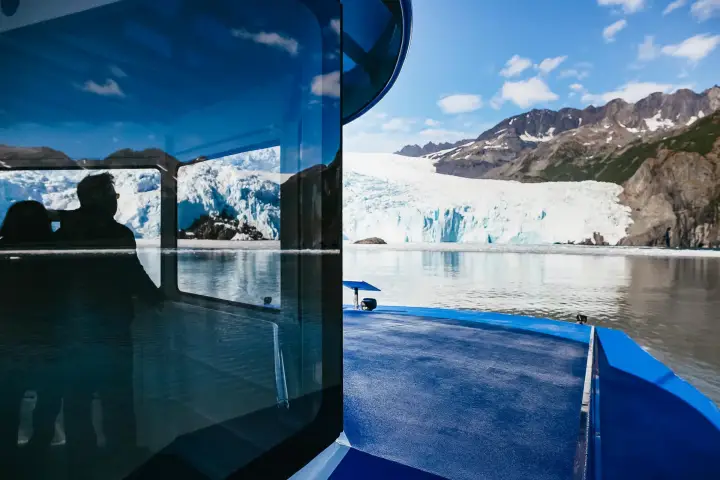
This six-hour cruise leaves from Seward aboard a large catamaran and travels through Resurrection Bay toward the coastal landscapes of Kenai Fjords National Park. The route is designed around glacier scenery and wildlife viewing, with the exact sightings depending on conditions that day.
The cruise includes a captain-guide, lunch, hot drinks, and binoculars for onboard use. Wildlife possibilities include whales, sea otters, seals, sea lions, porpoises, puffins, and other seabirds, but no specific species should be treated as guaranteed.
Why it may be worth booking: It reaches the part of Kenai Fjords that cannot be experienced from Exit Glacier Road. For travelers choosing only one guided activity, this provides the broadest introduction to the park.
Who should consider it: First-time visitors, photographers, wildlife enthusiasts, couples, families comfortable spending several hours on a boat, and anyone who wants to prioritize the park’s coastline.
What to know before booking: Even summer days can feel cold on open decks. Bring warm layers and a waterproof jacket. Travelers prone to motion sickness should prepare before departure rather than waiting until the boat reaches open water.
Check current prices, departure times, and availability for the Kenai Fjords glacier cruise
2. From Seward: Harding Icefield Trail Hiking Tour
Best for: Fit travelers who want a guided mountain hike
Duration: 8 hours
Starting area: Seward
Activity type: Guided hiking
Location: Inside Kenai Fjords National Park
This is the most physically demanding experience in the group.
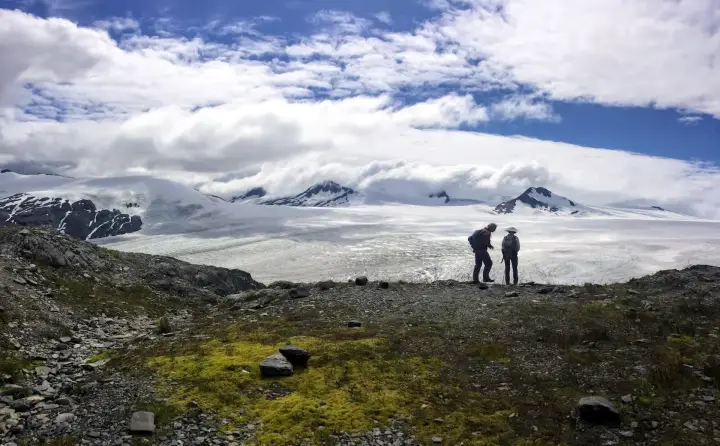
The current tour runs for approximately eight hours and includes transportation from Seward, a professional guide, a deli-style lunch, and interpretive hiking in a small-group format. Importantly, this is a trail hiking tour rather than a glacier-walking tour.
That distinction makes it a good fit for travelers whose goal is reaching high viewpoints over the Exit Glacier and Harding Icefield landscape rather than stepping onto glacier ice.
A guide can also add context about geology, vegetation, wildlife, and changing mountain conditions.
Why it may be worth booking: Strong hikers can complete the trail independently, but a guide reduces some of the uncertainty around pacing, route conditions, wildlife awareness, and logistics from Seward.
Who should consider it: Travelers with solid hiking fitness who are comfortable walking for most of the day over uneven and steep terrain.
What to know before booking: The activity specifically requires a reasonable fitness level and the ability to travel over uneven terrain. Conditions can still include snow, rain, mud, and rapidly changing weather.
Review the Harding Icefield Trail Hiking Tour and check available dates
3. Seward: Bridal Veil Falls Kayak and Exit Glacier Hike Combo
Best for: Active travelers who want two different environments in one day
Duration: 8 hours
Starting area: Seward
Activity type: Sea kayaking and hiking
Location: Resurrection Bay and the Exit Glacier area
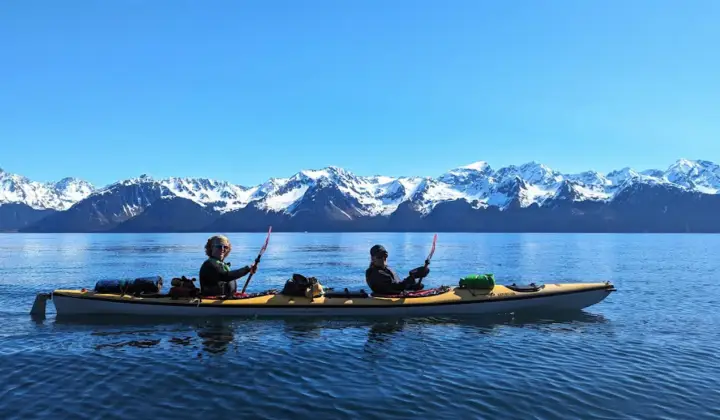
This full-day experience combines roughly four hours of kayaking in Resurrection Bay with an afternoon hike around Exit Glacier.
The current itinerary begins in Seward, travels to the kayaking area, paddles through Resurrection Bay, includes time around Bridal Veil Falls, and later continues to the Exit Glacier area for approximately two hours of hiking. The package includes a guide, rain gear, dry bags, PFDs, lunch, snacks, hot drinks, and trekking poles.
That makes it one of the most varied options here.
Rather than spending most of the day inside a boat or hiking one demanding trail, you move between water and land and experience both the Seward coastline and a road-accessible part of Kenai Fjords.
Why it may be worth booking: It simplifies an ambitious day. Gear, transportation between activities, food, and guiding are bundled together.
Who should consider it: Active travelers who enjoy paddling and want a hands-on alternative to a large sightseeing vessel.
What to know before booking: The kayaking portion occurs around Resurrection Bay rather than deep inside Kenai Fjords National Park. The Exit Glacier portion enters the park later in the day. Tours operate in wet conditions, although high winds can force cancellation.
See available dates for the Bridal Veil Falls Kayak and Exit Glacier Hike Combo
4. Seward: Bear Glacier Flight and Beach Landing
Best for: Travelers short on time, photographers, and anyone who wants an aerial perspective
Duration: About 1 hour
Starting area: Seward
Activity type: Helicopter flight and landing
Location: Bear Glacier area
A helicopter changes the scale of Kenai Fjords almost instantly.
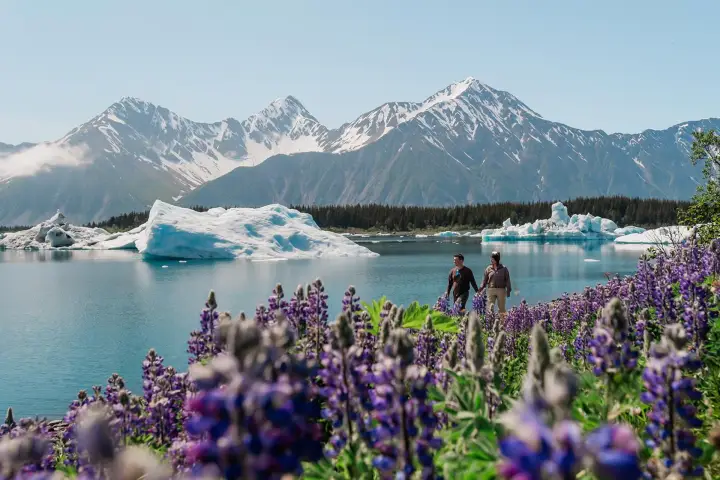
This experience flies from Seward toward Bear Glacier, providing aerial views of the glacier, surrounding mountains, and iceberg-filled lagoon before a remote landing near the edge of the park. Current GetYourGuide listings show the experience at approximately one hour.
The main advantage is efficiency. A landscape that takes hours to approach by boat can be seen from above during a comparatively short excursion.
Why it may be worth booking: The aerial perspective makes the relationship between the Harding Icefield, flowing glaciers, mountains, and coastline much easier to understand.
Who should consider it: Photographers, travelers with limited time in Seward, and visitors who prefer a shorter excursion to a full-day cruise.
What to know before booking: Flightseeing is highly dependent on visibility and weather. The landing location and exact route can also respond to current conditions, so keep the surrounding schedule flexible.
Check current availability for the Bear Glacier Flight and Beach Landing
5. Seward: Kenai Fjords Helicopter Tour & Glacier Dog Sled

Best for: Travelers looking for a premium combination of flightseeing and dog sledding
Duration: 1.5 hours
Starting area: Seward
Activity type: Helicopter and dog sledding
Location: Kenai Fjords region
This 1.5-hour experience combines a scenic helicopter flight with approximately one hour of dog sledding on snow. The group size is limited, and the activity includes time with sled dogs and mushers as well as the flight itself.
Compared with the Bear Glacier flight, this is less about photographing a single glacier landscape and more about combining two distinctive Alaska activities into one booking.
Participants can ride on the sled or, when conditions and operating procedures allow, stand on the runners as part of the experience.
Why it may be worth booking: It delivers both flightseeing and glacier dog sledding without using an entire day.
Who should consider it: Couples, families, dog lovers, and travelers comfortable paying more for an activity that combines transportation and a specialized experience.
What to know before booking: Aircraft weight restrictions matter. The operator requires accurate passenger weights at booking and may charge additional fees or require a different aircraft above specified thresholds. The activity is also not suitable for people with animal allergies.
Compare current departure times for the Kenai Fjords Helicopter Tour and Glacier Dog Sled
How to Choose the Right Experience
The five tours solve different travel problems.
Choose the glacier cruise if this is your first visit. It offers the most balanced introduction to the park’s glaciers, fjords, and marine wildlife.
Choose the Harding Icefield hike if hiking is the priority. This is the strongest option for travelers who want physical effort and big mountain views rather than passive sightseeing.
Choose the kayak and Exit Glacier combination if variety matters most. It puts you on the water and on foot in the same day.
Choose the Bear Glacier helicopter flight if time is limited. You can see an extraordinary amount of landscape without giving up most of the day.
Choose the helicopter and dog sled experience if the activity itself is part of the trip’s appeal. It is the least traditional national-park outing of the five, but combines two distinctly Alaskan experiences.
For many travelers with two or three days in Seward, the strongest combination is still a boat cruise plus an independent day at Exit Glacier. Add kayaking or a helicopter trip only if the schedule and budget allow.
Frequently Asked Questions
What is the best month to visit Kenai Fjords National Park?
July is one of the easiest months for a first visit because summer services are operating and hiking access is generally improving. June and August are also excellent.
No month guarantees clear skies or calm seas, so weather flexibility matters more here than chasing a single “perfect” week.
How many days do you need in Kenai Fjords?
Plan two to three days.
Two days gives you time for a boat cruise and Exit Glacier. Three days provides room for a longer hike, kayaking, flightseeing, or a backup plan if weather affects an excursion.
Do you need a reservation to enter Kenai Fjords National Park?
There is no standard timed-entry reservation simply to enter the road-accessible area of the park.
Guided cruises, helicopter flights, kayaking trips, accommodations, and transportation can sell out independently, however, especially during the main summer season.
Always check current NPS information before traveling because park access rules and temporary closures can change.
Can you visit Kenai Fjords National Park without a car?
Yes.
Seward can be reached from Anchorage by road and seasonal rail service, and private shuttle and taxi companies connect Seward with the Exit Glacier area. The National Park Service itself does not operate a regular shuttle between Seward and Exit Glacier.
A car is convenient, but it is not essential if transportation and tours are arranged in advance.
What is the closest major airport?
Ted Stevens Anchorage International Airport is the main gateway for most visitors.
Seward is approximately 126 miles south of Anchorage by road.
Is Kenai Fjords National Park good for families?
Yes, with the right itinerary.
Short walks around Exit Glacier and large sightseeing cruises can work well for families. Long hikes such as the Harding Icefield Trail demand much more fitness and preparation.
Helicopter and kayaking operators may also have their own age, weight, mobility, or safety requirements, so check the specific activity before booking for children.
Final Thoughts
For most travelers, the best time to visit Kenai Fjords National Park is June through August, when Seward is fully connected to the park’s summer experiences and conditions are most favorable for combining water-based sightseeing with hiking.
The strongest first trip does not need to be complicated.
Spend one day on the water seeing the fjords, tidewater glaciers, and marine environment. Spend another around Exit Glacier, adjusting the hike to your fitness level and current trail conditions. If there is a third day, use it for kayaking, flightseeing, a longer hike, or simply as insurance against Alaska weather.
That combination captures what makes Kenai Fjords different from most national parks: the best parts are spread across land, sea, and ice, and each one rewards a different way of exploring.
Before heading out, always check the latest NPS conditions, closures, trail reports, and weather. Kenai Fjords is open year-round, but access changes dramatically with the seasons—and planning around those changes is one of the easiest ways to have a better trip.
Disclaimer: This post is for informational purposes only. Always check official park regulations, permits, road conditions, closures, and weather before planning or booking any activity.
Affiliate Disclosure: ChaseTheBigDream.com participates in affiliate programs, including GetYourGuide and other trusted partners. When you book or purchase through qualifying links, the site may earn a small commission at no extra cost to you. These partnerships help support the creation and maintenance of independent travel guides.