Death Valley rewards good timing more than almost any other U.S. national park. The best time to visit Death Valley National Park is generally November through March, when cooler temperatures make it much easier to hike, walk the salt flats, explore canyons, and spend time outside the car. The National Park Service specifically identifies November through March as the best hiking season for the park’s lower elevations.
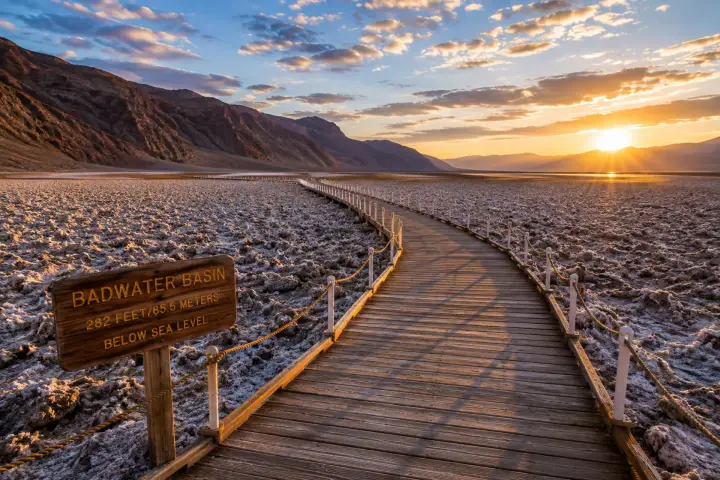
This is a park of dramatic contrasts: Badwater Basin sits 282 feet below sea level, mountain roads climb thousands of feet above the valley, and summer temperatures can push beyond 120°F. Those extremes are part of what makes Death Valley fascinating, but they also make season, elevation, road conditions, and trip planning unusually important.
This guide covers when to go, how the seasons compare, how many days to spend in the park, the best things to do independently, and five guided Death Valley tours from Las Vegas for travelers who prefer to leave the long-distance driving and logistics to someone else.
Death Valley National Park at a Glance
| Best Overall Time to Visit | November through March |
| Best Time for Hiking | November through March |
| Best Time for Wildflowers | Typically mid-February through early April when conditions cooperate |
| Suggested Trip Length | 2–3 days |
| Main Gateway Areas | Pahrump, Beatty, Shoshone, Furnace Creek |
| Nearest Major Airport | Harry Reid International Airport (LAS), Las Vegas |
| Lowest Point | Badwater Basin, 282 feet below sea level |
| Getting Around | Private vehicle or permitted tour; no public transportation within the park |
| Official Website | Death Valley National Park — National Park Service |
Death Valley is enormous, remote, and much less forgiving of poor planning than a compact national park. Most visitors travel by private vehicle, and the NPS notes that there is no public transportation to or within the park. Cell coverage is also absent along many park roads, so downloading maps and checking conditions before leaving reliable service is especially important.
Best Time to Visit Death Valley National Park
For most travelers, November through March offers the best balance of comfortable temperatures and access to Death Valley’s lower-elevation attractions.
Winter days at lower elevations are generally mild, while nights can become surprisingly cold. Spring remains popular because of comfortable conditions and the possibility of wildflowers, although blooms depend on a specific combination of rainfall, temperature, and other factors and should never be treated as guaranteed.
The NPS notes that spring is already a high-visitation period, with peak wildflower activity commonly falling between mid-February and early April when conditions are favorable. Popular roads, viewpoints, and roadside parking areas can become noticeably busier during a strong bloom.
Summer is a different kind of trip. Furnace Creek and the valley floor routinely experience extreme heat, with summer temperatures capable of exceeding 120°F. The NPS advises visitors not to hike at low elevations when it is hot and recommends staying close to air conditioning during severe heat.
For a first visit centered on Badwater Basin, Zabriskie Point, Artists Drive, Golden Canyon, and the Mesquite Flat Sand Dunes, cooler months are by far the more practical choice.
Death Valley National Park by Season
Spring: March–April
Spring combines long daylight hours, generally favorable sightseeing weather, and the possibility of desert wildflowers.
February into early April can produce colorful roadside displays when rainfall and temperatures line up correctly. But a wet winter alone does not guarantee a superbloom—the NPS emphasizes that several environmental factors have to come together.
Why visit in spring:
- Good conditions for many lower-elevation hikes
- Potential wildflower displays
- Longer days than midwinter
- Comfortable mornings and evenings during much of the season
What to consider:
- Spring is one of Death Valley’s busiest periods
- Popular areas can have limited parking
- Temperatures rise quickly as the season progresses
- Road or trail conditions can still change after storms
Spring works especially well for first-time visitors who want to combine scenic drives with shorter hikes and photography.
Summer: May–September
Summer is the season that earned Death Valley its reputation.
Temperatures above 120°F are possible, and overnight temperatures may remain extremely warm. During dangerous heat, the difference between stepping out for a viewpoint and committing to a hike is significant. NPS summer safety guidance has repeatedly advised travelers to avoid low-elevation hiking after about 10 a.m., remain close to air conditioning, drink plenty of water, and prepare for emergencies.
A summer trip therefore looks very different from a winter trip.
A safer summer itinerary generally emphasizes:
- Very short stops near the vehicle
- Early-morning sightseeing
- Higher-elevation destinations when accessible
- Paved-road travel
- Large reserves of drinking water
- A reliable vehicle with plenty of fuel
Summer is not the season to plan a normal hiking-focused Death Valley itinerary. Even a vehicle problem becomes much more serious when outside temperatures are extreme and cell service is unavailable.
Fall: October–November
Fall gradually returns Death Valley to its prime outdoor season.
Early October can still feel much more like summer at low elevations, so hikers should not assume that the calendar automatically means cool conditions. By November, temperatures are typically more suitable for walking and longer periods outside.
Why fall works well:
- Improving hiking conditions
- Fewer wildflower-driven crowds than spring
- Excellent light for photography
- A comfortable transition into the park’s winter season
November is an especially useful target for travelers who want pleasant conditions without specifically planning around spring blooms.
Winter: December–February
Winter is one of the easiest seasons for exploring the valley floor.
Lower elevations are generally mild during the day, while nights can become cold. Higher elevations are a different environment entirely: temperatures decrease substantially as elevation increases, and mountain roads or trails can encounter snow and ice.
This is prime time for places such as Golden Canyon, Badwater Basin, Artists Drive, and the Mesquite Flat Sand Dunes.
Winter is especially good for:
- Hiking at low elevations
- Longer sightseeing days outside the vehicle
- Photography
- Exploring canyons and badlands
- Travelers who prefer cooler weather
Bring layers rather than assuming “Death Valley” automatically means hot weather. Sunrise viewpoints and higher-elevation stops can feel surprisingly chilly.
How Many Days Do You Need in Death Valley National Park?
One Day
One day works if the goal is to see the most recognizable landscapes rather than explore deeply.
A practical first-time route can combine Zabriskie Point, Badwater Basin, Artists Drive and Artists Palette, plus another stop such as Dante’s View if road conditions and daylight allow.
The distances are larger than they appear on a map, so avoid building an itinerary around constant backtracking.
Two Days
For most first-time independent travelers, two full days is a much better fit.
Day one can focus on the Badwater Road corridor, including Badwater Basin, Artists Drive, and nearby canyon or badlands scenery.
Day two can include Mesquite Flat Sand Dunes, Zabriskie Point at sunrise or sunset, Dante’s View when accessible, and a hike suited to the weather.
The extra day also creates breathing room if a road closure or weather change disrupts the original plan.
Three or More Days
Three days open the door to the park’s more distant landscapes.
Depending on current road conditions, vehicle capability, weather, and season, that might include Ubehebe Crater, longer hikes, higher-elevation areas, or backcountry roads.
Remote travel requires much more preparation. The NPS warns that many backcountry roads have no nearby services or cell coverage and that travelers should be prepared for delayed rescue and self-rescue situations.
Before You Visit: Official NPS Planning Information
Death Valley is not a park where yesterday’s road information should automatically be trusted today. Flash flooding, storm damage, extreme heat, construction, and other conditions can change access.
As of September 2026, for example, the NPS reports specific damaged or temporarily accessible backcountry roads and notes that Titus Canyon Road is scheduled to close for repairs from October 1, 2026 through September 30, 2027. That is exactly why current conditions should be checked shortly before departure rather than relying on an older itinerary.
Use these official resources while planning:
- Check current Death Valley road conditions, closures, and alerts.
- Review current Death Valley entrance fees and passes.
- Confirm visitor center and facility operating hours.
- Review official directions and transportation information.
- Download official Death Valley maps.
- Read current Death Valley safety guidance.
- Review accessibility information for Death Valley National Park.
The NPS also advises travelers not to depend solely on vehicle GPS navigation in remote parts of Death Valley. Download the NPS app and maps for offline use before entering areas with limited service.
Best Things to Do in Death Valley National Park
Death Valley is easy to underestimate from a map. Its best attractions range from salt flats below sea level to mountain overlooks thousands of feet above the valley floor.
Walk Across Badwater Basin
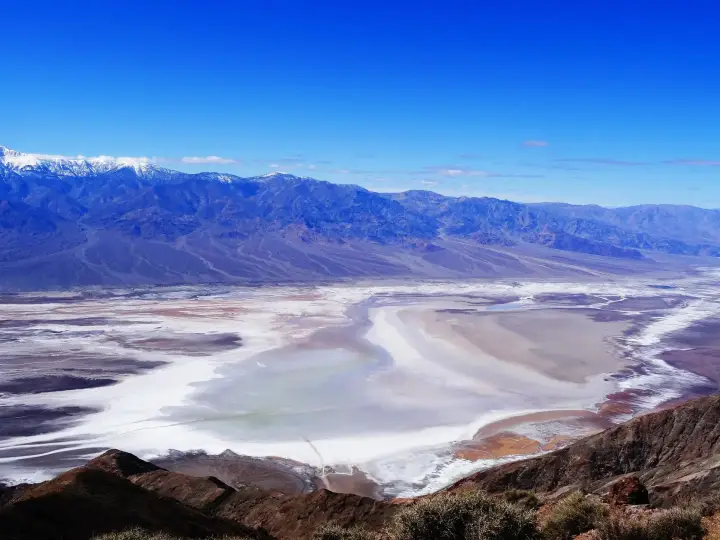
Badwater Basin is the lowest point in North America at 282 feet below sea level. The broad salt flats make it one of the park’s defining landscapes.
Walk beyond the immediate parking area when temperatures allow and the scale of the basin becomes much easier to appreciate.
Avoid treating this as a casual midday summer walk. There is virtually no shade, and reflected heat can be intense.
See Sunrise or Sunset at Zabriskie Point
Zabriskie Point offers a wide view across deeply eroded badlands toward the Panamint Range.
Sunrise is popular because the low light gradually reveals the folds and ridges of the badlands. Sunset creates a different effect as the surrounding mountains catch the last light.
The viewpoint is easy to incorporate into a driving itinerary and requires far less time than a full hike.
Hike Golden Canyon
Golden Canyon is one of the most accessible ways to get off the pavement and into Death Valley’s badlands.
Routes can be adjusted from shorter out-and-back walks to longer connections through the surrounding trail network.
This is best approached during the cool season. Canyon walls can trap and radiate heat, making the area particularly dangerous during hot weather. NPS incident reports have documented extreme temperatures in and around Golden Canyon during summer.
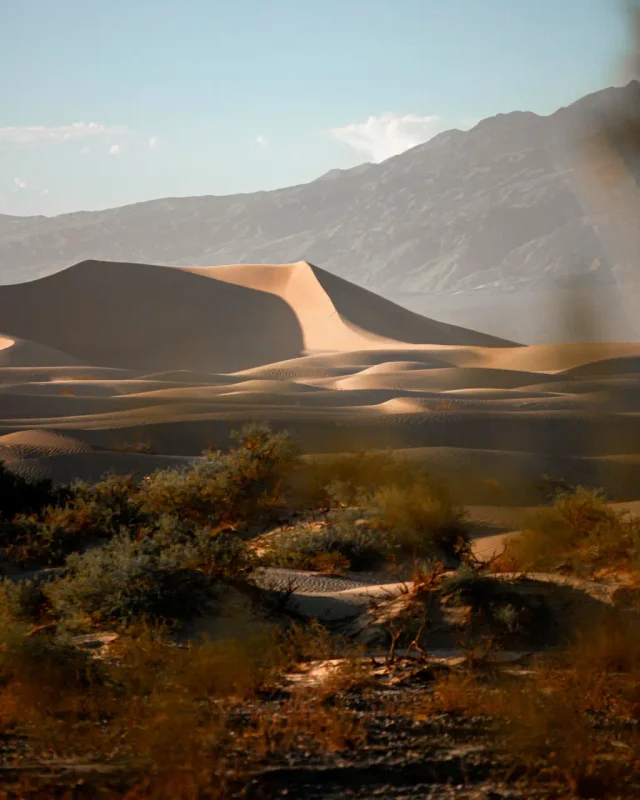
Explore Mesquite Flat Sand Dunes
Near Stovepipe Wells, the Mesquite Flat Sand Dunes offer a completely different landscape from Badwater Basin and the colorful badlands around Furnace Creek.
There is no single required route through the dunes, which makes the experience easy to adapt to available time and energy.
Early morning and late afternoon offer cooler conditions and stronger shadows across the sand.
Drive Artists Drive
Artists Drive is one of Death Valley’s classic scenic roads.
Its best-known stop, Artists Palette, reveals hills stained with a mix of mineral colors. The drive pairs naturally with Badwater Basin because both are reached from the same general corridor south of Furnace Creek.
Check vehicle restrictions and current road conditions before entering the loop.
Look Across the Valley from Dante’s View
Dante’s View sits more than 5,000 feet above the valley floor and provides one of the best high-level perspectives of Badwater Basin and the surrounding mountains.
That elevation also means the weather can differ considerably from conditions around Furnace Creek.
Check the current road status before making the drive, particularly after winter weather.
Stay After Dark
Death Valley after sunset is worth building into the itinerary rather than treating as an afterthought.
The remote location and limited surrounding development can produce remarkably dark skies. Staying overnight inside or near the park also avoids turning an evening of stargazing into an exhausting late-night drive back to Las Vegas.
5 Best Tours and Experiences in and Around Death Valley National Park
A guided trip makes particular sense for travelers staying in Las Vegas without a rental car, visitors uncomfortable driving through an isolated desert environment, or anyone who would rather spend the day looking at the landscape than navigating.
The five experiences below all use Las Vegas as their starting area, but they are not interchangeable. Some emphasize the main landmarks, one continues through sunset and stargazing, while another uses a premium six-person SUV format.
| Experience | Best For | Current Duration | Group Style | Main Focus |
|---|---|---|---|---|
| Death Valley Sunset and Starry Night Tour | Sunset & stargazing | 12 hours | Small group, up to 14 | Major sights + sunset + stars |
| Death Valley & Rhyolite Ghost Town Day Trip | History + park highlights | 1 day | Small group, up to 14 | Death Valley + Rhyolite |
| Death Valley Guided Day Tour | Broad first-time overview | 12 hours | Small group, up to 12 | Scenic landmarks + dunes + Rhyolite |
| Death Valley and Mojave Desert Full-Day Tour | Compact sightseeing | 1 day | Small group, up to 13 | Zabriskie + Badwater + desert drive |
| Death Valley VIP Luxury SUV Small-Group Tour | Premium small group | 14 hours | Up to 6 | Full-day sightseeing in luxury SUV |
Tour itineraries, inclusions, and timing can change with weather, road conditions, and operating decisions, so review the current activity page before booking.
1. From Las Vegas: Death Valley Sunset and Starry Night Tour
Best for: Travelers who want sunset and stargazing without driving back to Las Vegas at night
Duration: 12 hours
Starting area: Las Vegas Strip
Group size: Up to 14 participants
Location: Primarily inside Death Valley National Park
This tour is the most distinct option in the group because it deliberately stretches the Death Valley day into the evening.
The current itinerary includes Dante’s View, Badwater Basin, Artists Palette, Furnace Creek, and Zabriskie Point, with sunset scheduled around Zabriskie before the group moves to a darker viewing location for stargazing. Hotel pickup and drop-off, park admission, bottled water, and guiding are currently included.
That format solves one of the biggest logistical drawbacks of planning a self-guided stargazing trip from Las Vegas: someone still has to drive several hours back after dark.
It is also a useful choice for travelers who care about photography. The itinerary reaches many classic daytime locations but shifts the timing later than a standard day trip.
There are meaningful limitations. Stargazing depends on weather and sky conditions, and the activity provider notes that a bright or full moon can affect the experience. The tour also has health and age restrictions and is not listed as wheelchair accessible.
See available dates and review the itinerary for the Death Valley Sunset and Starry Night Tour.
2. From Las Vegas: Death Valley & Rhyolite Ghost Town Day Trip
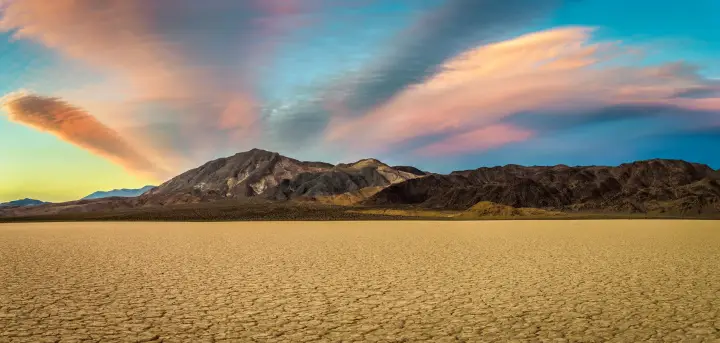
Best for: Travelers who want desert landscapes plus regional history
Duration: 1 day
Starting area: Las Vegas
Group size: Up to 14 participants
Location: Death Valley National Park and Rhyolite, Nevada
Despite the older URL still containing the words “private tour,” the current experience is listed as a small-group day trip limited to 14 participants, not a private tour.
That distinction matters when comparing price, privacy, and flexibility.
The itinerary combines Death Valley with Rhyolite Ghost Town, just outside the park in Nevada. Current listed stops can include Dante’s View, Zabriskie Point, Badwater Basin, Furnace Creek, the Tom Kelly Bottle House area, and additional desert sightseeing, although the operator notes that individual stops are subject to change.
Hotel pickup and drop-off, transportation, drinks, and the national park permit are included. Meals and gratuities are currently listed separately rather than included.
This option makes the most sense for travelers who want some human history mixed into a sightseeing day. Rhyolite adds a mining-boom-and-bust story that feels very different from the park’s salt flats and badlands.
Travelers primarily interested in maximizing time inside Death Valley may prefer one of the park-focused alternatives.
Check current availability and details for the Death Valley & Rhyolite Ghost Town Day Trip.
3. From Las Vegas: Death Valley Guided Day Tour
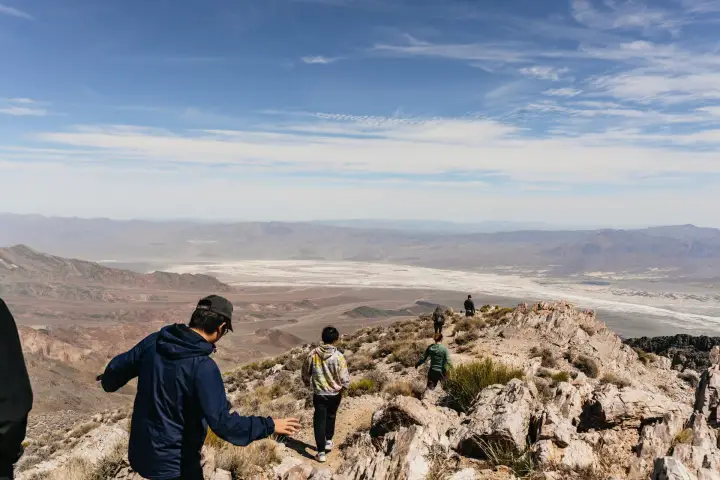
Best for: First-time visitors who want a broad introduction
Duration: 12 hours
Starting area: Las Vegas
Group size: Up to 12 participants
Location: Death Valley and the surrounding desert region
This is one of the broader sightseeing options for a first Death Valley trip.
The current activity is simply titled “From Las Vegas: Death Valley Guided Day Tour.” Its description emphasizes a mix of dunes, salt-flat landscapes, Furnace Creek, viewpoints, and Rhyolite rather than the narrower landmark list in the original draft. The group is limited to 12 participants.
The tour currently includes hotel pickup and drop-off, Death Valley entrance fees, a breakfast buffet, bottled water, and a guide. Tips are not included.
The twelve-hour format is long, but it allows travelers to see considerably more than a short turnaround trip from Las Vegas.
It can be particularly useful for first-time visitors who do not want to research road connections or build their own driving route. The smaller vehicle format also keeps the experience more flexible than a large coach tour.
The activity page currently lists wheelchair accessibility but notes that certain types of wheelchairs and mobility equipment cannot be accommodated, so travelers with accessibility requirements should review the restrictions carefully before booking.
Compare dates and current details for the Death Valley Guided Day Tour.
4. From Las Vegas: Death Valley and Mojave Desert Full-Day Tour
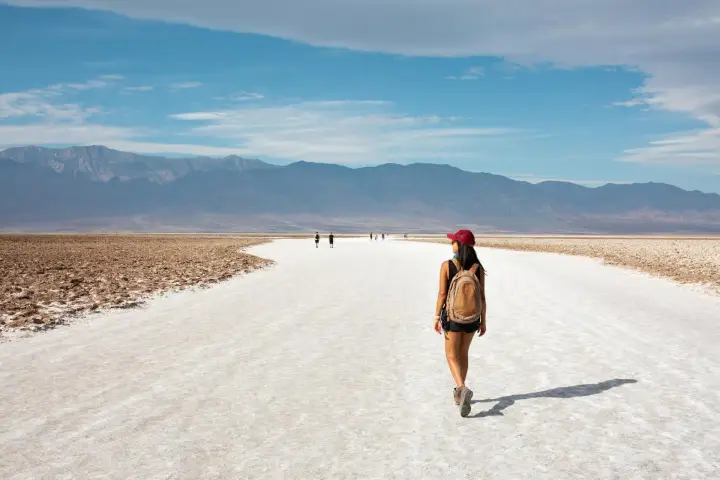
Best for: Travelers who want a straightforward small-group Death Valley excursion
Duration: 1 day
Starting area: Las Vegas
Group size: Up to 13 participants
Location: Death Valley National Park and Mojave Desert route
This tour currently uses a simpler itinerary than some of the other options.
The published route highlights Zabriskie Point and Badwater Basin, with a Pahrump stop along the journey and an early departure from Las Vegas. The activity page lists a maximum group size of 13.
Transportation, a driver-guide, bottled water, entry fees to visited attractions, and snacks are currently listed among the inclusions. The page also displays lunch among its inclusion information, although the published itinerary marks the lunch stop in Pahrump as optional, making this a detail worth confirming for the specific departure before booking.
This is a sensible fit for travelers who care more about seeing a few major landscapes than checking off a long list of stops.
Because Death Valley itineraries can change with temperature, weather, and road access, a more compact route can also be an advantage on days when conditions make an ambitious schedule impractical.
5. Death Valley All in 1 VIP Luxury SUV Small-Group 1Day Tour
Best for: Travelers prioritizing a smaller group and more comfortable vehicle
Duration: 14 hours
Starting area: Las Vegas
Group size: Up to 6 participants
Location: Death Valley National Park
This option is substantially different from the description in the original draft.
It is currently sold as a premium small-group experience rather than a private SUV tour, with a maximum of six participants. Transportation is in a Lexus TX or RX, and the listed duration is 14 hours.
The package currently includes high-end SUV transportation, the guiding team and driver, beverages and snacks, water, emergency supplies, the park fee, and travel insurance. Guide tips are excluded.
The value here is less about exclusivity than about group size and vehicle comfort. Six travelers is noticeably more intimate than a 12- to 14-person van, while still spreading the experience across a small group.
The operator also states that the itinerary may change because of severe weather, high temperatures, road closures, or other local conditions—an especially relevant consideration in Death Valley.
This tour is currently listed as unsuitable for babies under one year and adults over 70, so the participation requirements should be checked carefully before booking.
See available dates and current details for the Death Valley VIP Luxury SUV Small-Group Tour.
How to Choose the Right Experience
Start with how the day should feel, not simply how many attractions appear in the itinerary.
Choose the Sunset and Starry Night Tour if staying after dark is the priority and a late return to Las Vegas is acceptable.
Choose the Death Valley & Rhyolite Ghost Town Day Trip if regional mining history and a ghost town add meaningful value to the trip.
The Death Valley Guided Day Tour offers one of the broader introductions for first-time visitors, with a 12-hour schedule and a mix of landscapes around Death Valley and Rhyolite.
The Death Valley and Mojave Desert Full-Day Tour is better suited to travelers comfortable with a more streamlined route centered on major landscapes such as Zabriskie Point and Badwater Basin.
The VIP Luxury SUV Small-Group Tour stands out for its six-person maximum and premium vehicle rather than for being a fully private experience.
Before booking any of them, compare the current itinerary against what matters most: specific stops, pickup location, mobility requirements, meal arrangements, return time, and seasonal conditions.
Frequently Asked Questions
What is the best month to visit Death Valley National Park?
November through March is the strongest overall window, particularly for hiking and lower-elevation exploration. November and February can be especially appealing for travelers trying to balance comfortable conditions with daylight.
Spring is attractive for possible wildflowers, but it also draws more visitors.
How many days do you need in Death Valley?
Two days works well for a first independent trip because it allows time for the main Furnace Creek and Badwater Road sights without turning the visit into a nonstop driving schedule.
One day is enough for highlights. Three days is better for longer hikes or more distant parts of the park.
Is Death Valley National Park open year-round?
Yes. Death Valley National Park is open 24 hours a day, year-round, although individual roads, facilities, campgrounds, and services can close or operate seasonally.
Is Death Valley safe in summer?
Death Valley can be visited in summer, but it requires a fundamentally different approach.
The NPS warns that summertime temperatures can approach 130°F and advises against hiking in the valley and other low elevations during dangerous heat. Visitors should stay close to air conditioning, carry substantial water, and avoid unnecessary exposure.
Do you need a reservation to enter Death Valley?
Death Valley does not currently operate the type of general timed-entry reservation system used at some other national parks. Entrance fees or a qualifying pass still apply.
Because park policies can change, confirm the latest requirements on the official NPS fees and passes page before traveling.
Can you visit Death Valley without a rental car?
There is no public transportation to or within Death Valley National Park. Travelers without a vehicle generally need a guided tour or another private transportation arrangement.
That makes Las Vegas-based day tours particularly practical for visitors who do not want to rent a car solely for Death Valley.
Are guided Death Valley tours from Las Vegas worth considering?
They can be very practical when a Las Vegas stay is already part of the trip.
A tour handles the long desert drive, navigation, park logistics, and return trip. This becomes particularly useful for sunset and stargazing tours, when the alternative is a long self-drive after dark.
Independent travelers staying multiple nights near or inside Death Valley will generally have more freedom with their own vehicle.
Final Thoughts
The best time to visit Death Valley National Park is less about finding one perfect month and more about matching the season to what you actually want to do.
For hiking, salt-flat walks, canyon exploration, and long days outside the car, November through March is the most dependable window. Spring adds the possibility of wildflowers, while summer demands an entirely different strategy built around heat safety, very short stops, and higher elevations.
Give the park at least two days when possible. Death Valley’s huge scale becomes much easier to appreciate when there is enough time to experience Badwater Basin, the badlands around Zabriskie Point, the dunes near Stovepipe Wells, and one or two trails without racing between stops.
Travelers coming from Las Vegas can also make the trip considerably simpler by joining a guided tour. The five options above cover different priorities—from stargazing and Rhyolite history to smaller groups and premium transportation—so compare the current itineraries rather than assuming all Death Valley day trips offer the same experience.
Most importantly, check current Death Valley conditions and alerts shortly before departure. Road access, temperature, weather, and facility availability can change quickly in one of the most extreme landscapes in the National Park System.
Disclaimer: This post is for informational purposes only. Always check official park regulations, permits, road conditions, closures, and weather before planning or booking any activity.
Affiliate Disclosure: ChaseTheBigDream.com participates in affiliate programs, including GetYourGuide and other trusted partners. When you book or purchase through qualifying links, the site may earn a small commission at no extra cost to you. These partnerships help support the creation and maintenance of independent travel guides.