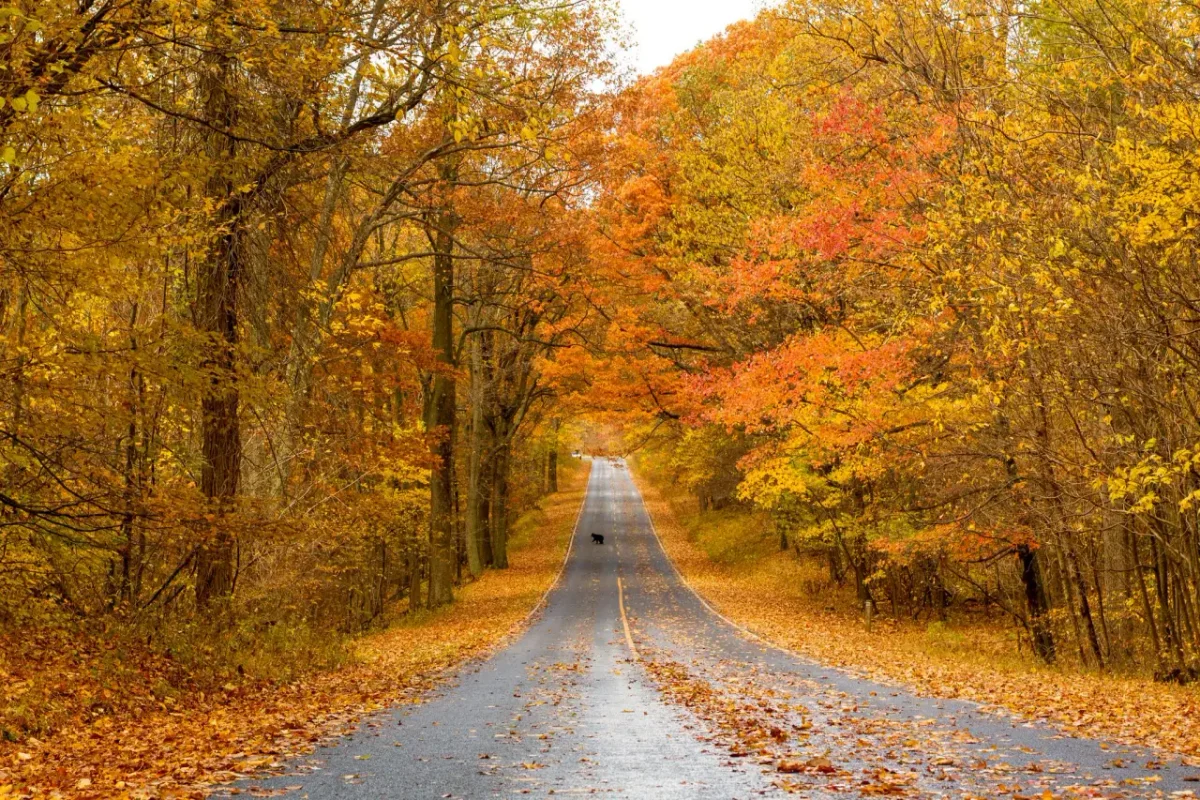
The best time to visit Shenandoah National Park is fall, especially from late September through October, when cooler hiking weather and changing leaves transform Virginia’s Blue Ridge Mountains. The tradeoff is crowds: October weekends can bring busy trailheads, full overlooks, and slower traffic along Skyline Drive.
For a quieter trip, late spring is one of the best alternatives. Waterfalls tend to benefit from seasonal rain, wildflowers appear throughout the forest, and the mountains turn green again without the same level of fall traffic.
At the center of almost every Shenandoah trip is Skyline Drive, the 105-mile road that follows the crest of the Blue Ridge Mountains. Scenic overlooks, trailheads, campgrounds, visitor areas, and some of the park’s most popular hikes are spread along the route.
This guide covers when to visit Shenandoah National Park, what each season is like, how many days to spend, four of the best things to do, and guided options for travelers coming from Washington, D.C.
Shenandoah National Park at a Glance
| Planning Detail | What to Know |
|---|---|
| Best Overall Time to Visit | Late September through October |
| Best Alternative | Late April through May |
| Best Time for Hiking | Spring and fall |
| Best Time for Fewer Crowds | Winter and early spring |
| Suggested Trip Length | 1–3 days |
| Main Scenic Road | Skyline Drive |
| Skyline Drive Length | 105 miles |
| Main Entrances | Front Royal, Thornton Gap, Swift Run Gap, Rockfish Gap |
| Best for Waterfalls | Spring |
| Best for Fall Color | October |
| Old Rag Ticket Season | March 1–November 30 |
Shenandoah National Park is open throughout the year, but that does not mean every part of the park is equally accessible in every season. Snow, ice, storms, and other hazardous conditions can temporarily close sections of Skyline Drive, while many campgrounds and visitor services operate seasonally.
That makes the best time to visit less about finding one universally perfect month and more about choosing the conditions that fit the trip you want.
Best Time to Visit Shenandoah National Park
For most first-time visitors, fall offers the best overall combination of scenery and hiking weather.
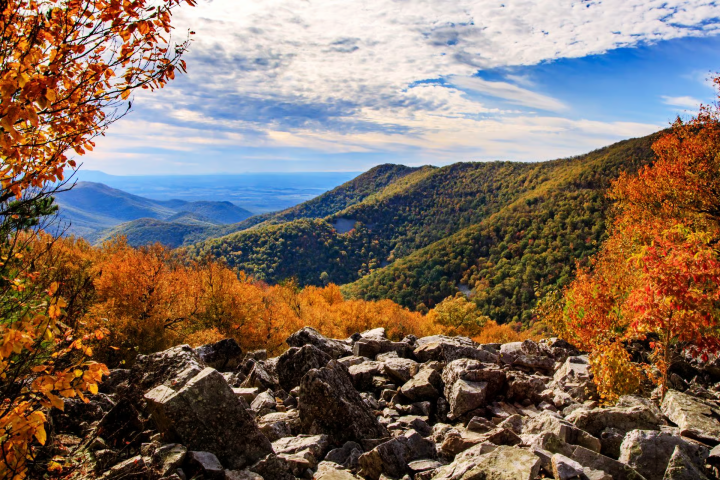
By late September, summer heat and humidity begin easing. Through October, hardwood forests across the Blue Ridge shift toward yellow, orange, and red while cooler temperatures make trails more comfortable.
There is no single guaranteed peak-foliage weekend for the entire park. Shenandoah stretches across a long mountain corridor with varying elevations, so color develops at different times in different areas.
Think of late September through October as a broader fall-color window rather than planning everything around one supposedly perfect date.
The biggest downside is popularity.
Fall—particularly October weekends—is one of the busiest times of year in Shenandoah. Parking at popular trails can fill early, overlooks become more crowded, and traffic near entrances can slow considerably.
A weekday visit is one of the easiest ways to improve the experience. Starting early also gives you more freedom to choose hikes before trailhead parking becomes limited.
When Spring May Be Better Than Fall
Spring does not have the same iconic reputation as October, but it offers a different set of advantages.
By late April and May, the forest is coming back to life, wildflowers appear along trails, and streams and waterfalls often carry more water than during drier parts of the year.
Crowds are generally easier to manage than during peak fall weekends, too.
The main compromise is weather. Spring in the Blue Ridge can change quickly. A mild afternoon in the valley does not guarantee warm conditions along Skyline Drive, and rain, fog, or cold mornings are all possible.
For hikers who value waterfalls and quieter trails more than fall foliage, May can be one of the most rewarding times to visit.
Shenandoah National Park by Season
Spring
Spring arrives gradually in Shenandoah.
March can still feel like winter at higher elevations, while April and May bring warming temperatures, budding trees, wildflowers, and increasingly comfortable hiking conditions.
This is an especially good season for waterfall hikes. Seasonal rainfall can give streams and cascades more energy, making routes such as Dark Hollow Falls and Whiteoak Canyon particularly appealing.
Spring also tends to feel less hurried than peak fall.
You may still encounter busy trailheads on pleasant weekends, but the park generally offers more breathing room than during October foliage season.
Pack for changing conditions. A light rain shell, insulating layer, and footwear that handles wet trails are useful even when the forecast looks mild.
Spring is best for:
- Waterfall hikes
- Wildflowers
- Cooler temperatures
- Birdwatching
- Smaller crowds than peak fall
- Travelers comfortable with variable weather
For many hikers, late April through May provides the best balance.
Summer
Summer brings long days, a full green canopy, and broad access to the park’s seasonal services.
That makes it one of the easiest times for camping trips and family visits. Longer daylight hours also allow you to combine scenic driving, overlooks, short hikes, and wildlife watching without rushing.
The main consideration is heat and humidity.
Shenandoah’s higher elevations are often cooler than the surrounding lowlands, but exposed climbs and longer trails can still feel hot during the middle of the day.
Starting early is worthwhile. Morning hiking usually means cooler conditions, easier parking, and more time to adjust the day if afternoon thunderstorms develop.
Summer haze can also soften the long-distance views Shenandoah is famous for, so not every overlook will deliver crystal-clear horizons.
Even so, summer works well when the trip is more about camping, hiking, and spending several days outdoors than capturing one specific seasonal scene.
Summer is best for:
- Camping trips
- Families
- Long daylight hours
- Combining several activities in one day
- Visitors who want seasonal facilities operating
- Travelers who do not mind humidity
Fall
Fall is the season most closely associated with Shenandoah National Park.
Cooler air settles over the Blue Ridge, leaves begin changing across the mountains, and hiking becomes much more comfortable than during humid summer afternoons.
The result is an excellent combination of scenic driving and trail time.
Skyline Drive is particularly rewarding during this period, but it is important to manage expectations: the same scenery attracting you to Shenandoah attracts thousands of other visitors.
Popular overlooks can be busy. Trailhead lots may fill. Entrance stations can develop lines.
Instead of trying to visit every famous stop, choose one section of Skyline Drive and explore it well.
A couple of overlooks, one rewarding hike, Big Meadows, and time to enjoy the road often make a better day than racing from one end of the park to the other.
Fall is best for:
- Fall foliage
- Scenic drives
- Hiking in cooler weather
- Landscape photography
- First-time visits
- Classic Blue Ridge scenery
For the easiest experience, visit on a weekday and enter the park early.
Winter
Winter is Shenandoah at its quietest.
Bare trees reveal views hidden by foliage during other seasons, popular overlooks can feel almost empty, and the mountains take on a very different character.
But winter requires flexibility.
Snow and ice can temporarily close sections of Skyline Drive, and many facilities that operate during warmer months shut down for the season.
Trails can also become icy even when roads outside the park are clear.
That means winter works best for travelers who are comfortable changing plans and checking conditions shortly before leaving.
When weather cooperates, the reward is solitude that is difficult to find during fall.
Winter is best for:
- Solitude
- Quiet scenic drives
- Bare-tree mountain views
- Wildlife watching
- Experienced cold-weather hikers
How Many Days Do You Need in Shenandoah National Park?
One Day
One day is enough to get a meaningful introduction to Shenandoah—as long as you resist the temptation to see the entire park.
Skyline Drive runs for 105 miles, and driving the full route takes roughly three hours without building in significant stops, hiking, meals, or wildlife delays.
Trying to cover the entire road on a one-day visit often means spending too much of the trip inside the car.
Instead, choose one section.
The central area around Thornton Gap, Skyland, Big Meadows, and nearby trails works particularly well for first-time visitors.
A strong one-day itinerary might include:
- Several Skyline Drive overlooks
- One short or moderate hike
- Big Meadows
- A picnic or relaxed lunch
- Time for wildlife or sunset views
That provides a much better sense of Shenandoah than simply collecting miles.
Two Days
Two days is the sweet spot for many first-time visitors.
With an overnight stay, you can spend one day exploring Skyline Drive and several shorter attractions, then give the second day to a longer hike or a different section of the park.
It also gives the mountains a chance to recover from poor weather.
Fog can cover viewpoints for hours. Rain can change hiking plans. A second morning or afternoon gives you flexibility instead of forcing every experience into one weather window.
Three Days or More
Three days makes sense when hiking is one of the main reasons for visiting.
You can combine shorter summit and waterfall trails with a more demanding outing while still leaving room for overlooks, Big Meadows, wildlife watching, and slower scenic driving.
Longer trips also make it easier to experience Shenandoah early in the morning or around sunset, when the park often feels calmer than during the middle of the day.
Before You Visit: A Few Things Worth Checking
A Shenandoah itinerary does not need dozens of official links. Four resources cover most of what travelers actually need before leaving.
Check Current Conditions
Weather and road access can change quickly in the mountains, particularly during winter and after storms.
Before driving to Shenandoah, check the park’s current conditions and alerts.
This is the most useful official page to check shortly before the trip because it can affect Skyline Drive access, trails, and other parts of the itinerary.
Check Entrance Fees
Shenandoah charges an entrance fee.
As of September 2026, a private vehicle pass costs $30 and is valid for seven consecutive days. The park uses cashless payment for entrance and campground fees, so bring a debit or credit card or purchase a pass in advance.
Rates and payment policies can change, so confirm the latest information on the official Shenandoah fees and passes page.
Download Maps Before You Arrive
Cell service is unreliable in parts of Shenandoah.
Download the maps you need before reaching the mountains, particularly if the itinerary includes several trailheads.
The NPS provides both a general park map and individual hiking maps for areas around Big Meadows, Hawksbill, Whiteoak Canyon, Old Rag, and other popular destinations.
Use the official Shenandoah maps and trail maps before heading into the park.
Plan Old Rag Separately
Old Rag is not a hike to add casually at the last minute.
From March 1 through November 30, anyone entering the designated Old Rag ticket area via the Ridge, Ridge Access, or Saddle trails needs an advance day-use ticket in addition to the regular park entrance pass.
As of 2026, tickets cost $2 per person and do not guarantee parking.
There is also a temporary complication in 2026: infrastructure work has closed the main Old Rag Trailhead parking lot, with visitors using overflow parking while the project continues.
If Old Rag is part of the trip, check the official Old Rag day-use ticket information before making final plans.
4 Best Things to Do in Shenandoah National Park
1. Drive Skyline Drive
Skyline Drive is the backbone of Shenandoah National Park.
The road follows the crest of the Blue Ridge Mountains for 105 miles, connecting the park from Front Royal in the north to Rockfish Gap near Waynesboro in the south.
Four main entrances divide the road into manageable sections:
- Front Royal — Mile 0
- Thornton Gap — Mile 31.5
- Swift Run Gap — Mile 65.5
- Rockfish Gap — Mile 104.6
The speed limit is generally 35 mph, which suits the character of the road. This is not somewhere to rush.
Pull into overlooks. Stop when the light changes. Watch for wildlife. Take a short trail instead of treating every viewpoint as a two-minute photo stop.
For a first visit, driving one carefully chosen section is usually better than covering all 105 miles.
The central stretch around Thornton Gap, Skyland, Stony Man, Hawksbill, and Big Meadows packs plenty into a single day and works especially well for travelers with limited time.
Fall brings the most dramatic colors but also the busiest roads. Summer offers long daylight hours, while winter can provide beautifully quiet driving when weather keeps Skyline Drive open.
2. Hike to a Waterfall
Shenandoah’s waterfalls give the park a completely different personality from its broad ridge-top overlooks.
Dark Hollow Falls is one of the best-known options.
Its relatively short distance makes it easy to combine with Big Meadows and other central-park stops, but do not let the mileage create false confidence. The hike descends toward the waterfall, so much of the climbing comes on the way back to the trailhead.
For hikers looking for something longer, Whiteoak Canyon offers a much more substantial day on the trail and a series of cascades and waterfalls.
Spring is particularly attractive for waterfall hiking because seasonal rain can increase water flow.
After heavy rain, though, wet rocks and stream crossings deserve extra caution.
Whatever the season, waterfall trails are one of the best reasons to leave Skyline Drive behind for a while. The road provides the panoramas; these trails take you deeper into the forest.
3. Hike to a Mountain View
Some of Shenandoah’s best viewpoints require a little effort.
For a shorter outing, Stony Man is a practical choice. Its location near the central portion of Skyline Drive makes it easy to add to a day of scenic driving, and the hike provides a genuine mountain viewpoint without taking over the entire itinerary.
Travelers wanting something much more challenging can consider Old Rag.
Old Rag is one of Shenandoah’s most popular hiking destinations for good reason: the route combines sustained climbing, rocky terrain, scrambling, and broad mountain views.
It is also much more demanding than a typical short Shenandoah hike.
Allow plenty of time, carry enough water and food, understand the route before starting, and remember that the seasonal ticket requirement means this hike usually needs to be planned ahead.
For most visitors, Stony Man and Old Rag fill very different roles.
Choose Stony Man when you want a mountain viewpoint as part of a broader park day.
Choose Old Rag when the hike itself is the day’s main event.
4. Watch for Wildlife
It is easy to focus so much on overlooks and hiking trails that wildlife becomes an afterthought.
It should not.
Shenandoah’s forests and open meadows support white-tailed deer, wild turkeys, birds, black bears, and many other animals.
Big Meadows is one of the most accessible places to slow down and watch for wildlife, especially early or late in the day.
Black bears also live throughout the park.
Seeing one can become a memorable part of the trip, but wildlife should always be observed from a safe distance. Never approach an animal for a better photo and never feed wildlife.
Keep an eye on Skyline Drive as well.
Animals can cross the road unexpectedly, particularly around dawn and dusk. The park’s slow speed limit is useful for more than sightseeing.
Guided Shenandoah National Park Tours from Washington, D.C.
Shenandoah is easiest to explore independently with a vehicle.
Trailheads, overlooks, visitor areas, and attractions are spread across a long mountain corridor, so having your own car provides the most flexibility.
But for travelers staying in Washington, D.C., renting a car for a single day is not always appealing.
A guided trip can remove the driving, parking, navigation, and rental-car logistics from the equation.
The key is choosing a tour that matches what you actually want from Shenandoah.
The two experiences below were active when this guide was updated.
| Experience | Best For | Duration | Format | Main Focus |
|---|---|---|---|---|
| Luray Caverns & Shenandoah National Park Small Group Day Tour | First-time visitors who want two Virginia highlights | Full day | Small group | Luray Caverns + Skyline Drive |
| Shenandoah National Park Private Day Tour | Families and small groups wanting flexibility | 9 hours | Private | Shenandoah scenery + overlooks |
1. Luray Caverns & Shenandoah National Park Small Group Day Tour

Best for: Travelers who want to combine Shenandoah with Luray Caverns without renting a car.
Duration: Full day
Starting area: Washington, D.C. area
Group size: Up to 13 participants
Activity style: Scenic sightseeing with a short hiking component
This small-group day trip combines two distinctly different Virginia landscapes.
The first is Luray Caverns, where underground chambers, stalactites, reflective pools, and other geological formations provide a dramatic contrast to the mountains above ground.
The itinerary then continues toward Shenandoah National Park and Skyline Drive.
Inside the park, the experience focuses on mountain scenery, scenic overlooks, a visitor-center stop, and a short hike on Stony Man when weather permits.
That makes the tour a useful introduction rather than a hiking-focused Shenandoah trip.
It works particularly well for someone visiting Washington who wants to see the Blue Ridge without organizing a rental car, navigation, parking, and a long round-trip drive independently.
The group is limited to 13 participants, keeping the experience smaller than a traditional large coach tour.
One important booking detail is easy to miss: Luray Caverns is currently an optional part of the itinerary and involves an additional admission cost unless the appropriate option is selected.
That makes it worth checking exactly what is included before comparing prices.
Why it may be worth booking
The biggest advantage is efficiency.
Instead of choosing between Luray Caverns and Shenandoah during a short Washington-area trip, this tour makes it possible to experience both in one day while someone else handles the transportation.
Who should consider it
This option makes the most sense for:
- First-time visitors to the region
- Travelers without a rental car
- Couples and solo travelers
- Visitors who want both Shenandoah and Luray Caverns
- Travelers interested in scenery more than serious hiking
What to know before booking
The Shenandoah portion is primarily scenic sightseeing with a relatively short hike rather than a full hiking day.
Weather can also affect the itinerary. Fog, rain, or poor mountain conditions may change what is practical inside the park.
See available dates and review the current itinerary.
2. Washington DC: Shenandoah National Park Private Day Tour
Best for: Couples, families, and small groups who value flexibility and private transportation.
Duration: 9 hours
Starting area: Washington, D.C.
Format: Private tour
Activity style: Scenic sightseeing
This nine-hour private day trip puts more emphasis on Shenandoah itself.
Instead of joining a mixed small group, travelers have a private vehicle for their party and can explore highlights such as Skyline Drive, mountain overlooks, and the Big Meadows area.
That private format is the main reason to consider it.
A family may want more relaxed stops. Photographers may prefer extra time at certain viewpoints. A couple may simply prefer exploring without following the rhythm of a larger group.
The current experience includes pickup and drop-off in Washington, private air-conditioned transportation, bottled water, and an English-speaking driver.
It is worth understanding that this is primarily a private scenic touring experience, rather than a dedicated guided hiking expedition.
That distinction matters if the main objective is Old Rag, Whiteoak Canyon, or another substantial hike. Travelers primarily interested in trail time will usually have more freedom by driving themselves.
Why it may be worth booking
The tour removes nearly all of the transportation friction from a Shenandoah day trip.
There is no rental-car pickup, unfamiliar mountain driving, navigation, or concern about making the return drive to Washington after a long day.
Who should consider it
This experience is particularly suited to:
- Families
- Couples
- Small groups
- Photographers
- Travelers who prefer private tours
- Visitors who want a scenic introduction to Shenandoah
- Travelers without a rental car
What to know before booking
Private tours generally cost more than shared excursions, so the value comes from privacy, convenience, and flexibility rather than simply finding the least expensive way to reach Shenandoah.
Travelers with mobility limitations should also review the current accessibility information before booking.
Check available dates and review the complete private-tour details.
How to Choose the Right Shenandoah Experience
The right choice depends mostly on how much independence you want.
Choose the small-group Shenandoah and Luray Caverns tour when variety matters most.
It combines two major regional attractions and works well for travelers who want to see more than Shenandoah during a single day outside Washington.
Choose the private Shenandoah day tour when privacy and flexibility matter more.
It is particularly useful for families or small groups that would rather control the pace without sharing the vehicle and itinerary with other travelers.
And if hiking is the main goal, consider skipping a tour entirely.
With your own vehicle, it is easier to start early, choose a specific trail, wait out changing weather, and spend as much time as you want inside the park.
Guided trips make the most sense when removing transportation and planning logistics is part of what makes the day appealing.
Frequently Asked Questions
What is the best month to visit Shenandoah National Park?
October is the classic choice because of fall foliage and cooler hiking temperatures.
It is also one of the busiest months.
For travelers who prefer lighter crowds, waterfalls, wildflowers, and green forest, May is an excellent alternative.
When is peak fall color in Shenandoah National Park?
There is no guaranteed peak date for the entire park.
Elevation and weather cause foliage to change at different times along Skyline Drive. Late September through October is the broader window to consider, with conditions varying each year.
How many days do you need in Shenandoah National Park?
One day is enough for a scenic drive, several overlooks, and one hike.
Two days gives most first-time visitors a much better balance.
Three or more days is ideal when longer hikes are a major part of the trip.
Do you need reservations to enter Shenandoah National Park?
Shenandoah does not currently use a general timed-entry reservation system for ordinary park access.
However, Old Rag requires a separate day-use ticket from March 1 through November 30 for visitors entering the designated ticket area.
How much does it cost to enter Shenandoah National Park?
As of September 2026, a standard private-vehicle pass costs $30 and covers seven consecutive days.
Check current fees before the trip because park charges can change.
Can you visit Shenandoah National Park without a car?
It is possible, but independent sightseeing becomes much more difficult.
Most major overlooks, attractions, and trailheads are spread along Skyline Drive, and the park does not have a convenient public transportation network connecting them.
Travelers based in Washington, D.C. who do not want to rent a vehicle may find a guided day trip the simplest option.
Is Skyline Drive open year-round?
Skyline Drive is generally accessible throughout the year, but sections can temporarily close because of snow, ice, storms, fallen trees, or other hazardous conditions.
Winter travelers should always check current road conditions shortly before departure.
How long does it take to drive Skyline Drive?
Allow roughly three hours to drive the full 105 miles without significant stops.
A realistic sightseeing trip takes much longer once overlooks, hiking, meals, wildlife, and traffic are added.
For a one-day visit, exploring one section well is usually more enjoyable than trying to drive the entire road.
Do you need a ticket to hike Old Rag?
Yes, during the ticket season.
From March 1 through November 30, visitors entering the designated Old Rag area via the Ridge, Ridge Access, or Saddle trails need an advance day-use ticket in addition to the regular park entrance pass.
Are there black bears in Shenandoah National Park?
Yes. Black bears live throughout Shenandoah.
Enjoy sightings from a safe distance, secure food properly, never feed wildlife, and avoid moving closer simply for photographs.
Final Thoughts
The best time to visit Shenandoah National Park depends on what you want from the Blue Ridge.
Choose fall for colorful forests, cooler hiking weather, and the classic Shenandoah scenery that fills travel photos every October.
Choose late spring for wildflowers, stronger waterfalls, fresh green forest, and a little more space on the trails.
Summer works particularly well for camping and longer trips, while winter rewards flexible travelers with solitude and a quieter side of the park.
Whatever the season, do not turn Shenandoah into a race down Skyline Drive.
The road is only part of the experience.
Stop at an overlook when the light is good. Walk a trail into the forest. Spend time around Big Meadows. Leave enough flexibility for fog, wildlife, weather, or a viewpoint that makes you want to stay longer than expected.
One day can provide an excellent introduction, but two days lets the park feel far less rushed.
Travelers coming from Washington, D.C. also have two very different ways to approach the trip.
Driving yourself provides the most freedom and is the better choice when hiking is a major priority.
A guided tour makes more sense when avoiding a rental car and a long day of driving is part of the appeal. The small-group option pairs Shenandoah with Luray Caverns, while the private experience gives couples, families, and small groups more control over the pace of the day.
Whichever approach you choose, check current park conditions shortly before leaving and download the maps you need before entering the mountains.
Then give Shenandoah what it rewards most: time to slow down.
Disclaimer: This post is for informational purposes only. Always check official park regulations, permits, road conditions, closures, and weather before planning or booking any activity.
Affiliate Disclosure: ChaseTheBigDream.com participates in affiliate programs, including GetYourGuide and other trusted partners. When you book or purchase through qualifying links, the site may earn a small commission at no extra cost to you. These partnerships help support the creation and maintenance of independent travel guides.