The best time to visit Yellowstone National Park is generally from late May through June or during September. These shoulder-season windows offer a useful balance of wildlife activity, open attractions, comfortable daytime conditions, and smaller crowds than July and August. September is especially appealing for crisp weather, changing foliage, and the elk rut, while late spring brings powerful waterfalls and opportunities to see young wildlife.
Summer provides the most dependable access to Yellowstone’s roads, trails, campgrounds, and visitor services, but it also brings heavy traffic and crowded parking areas. Winter offers solitude and snow-covered scenery, although most park roads close to regular vehicles.
This guide explains Yellowstone’s seasonal tradeoffs, how many days to spend in the park, the best independent activities, and five Yellowstone National Park tours and experiences for travelers who want guided sightseeing, wildlife viewing, rafting, or kayaking.
Yellowstone National Park at a Glance
| Category | Details |
|---|---|
| Best overall time to visit | Late May–June and September |
| Best time for hiking | July–September |
| Best time for wildlife viewing | Spring and fall |
| Best time for fewer crowds | April–May, September–October |
| Suggested trip length | 3–5 days |
| Main gateway towns | West Yellowstone, Gardiner, Cody, and Jackson |
| Nearest practical airports | Bozeman Yellowstone International Airport, Jackson Hole Airport, and Yellowstone Regional Airport in Cody |
| Official park website | Visit the official Yellowstone National Park website |
Yellowstone covers more than 2.2 million acres and extends across Wyoming, Montana, and Idaho. Five entrances connect visitors with different sections of the park, making the choice of lodging and gateway town an important part of planning.
Best Time to Visit Yellowstone National Park
For most travelers, September is the best month to visit Yellowstone National Park. The busiest summer vacation period has ended, daytime weather can still be comfortable, and most park roads and major visitor areas generally remain accessible. It is also the season of the elk rut, when bull elk can often be heard bugling around Mammoth Hot Springs and other open valleys.
Late May through June is another strong choice. Snowmelt increases the flow of Yellowstone’s rivers and waterfalls, while bison calves and other young animals become more visible. The tradeoff is variable weather. Snow may linger on higher trails, muddy conditions are common, and late-season storms can temporarily affect roads.
July and August remain the easiest months for travelers who prioritize the broadest access to trails, lodging, campgrounds, and visitor services. They are also the busiest. Traffic delays can develop anywhere wildlife gathers near a road, and parking at Old Faithful, Midway Geyser Basin, Norris Geyser Basin, and the Grand Canyon of the Yellowstone can fill early.
October can be quiet and rewarding, but it requires flexibility. Facilities begin closing, temperatures fall quickly, and snow may affect travel. Most interior roads close to regular vehicles in early November.
There is no single month that works best for every traveler:
- Choose June for waterfalls, young wildlife, and longer daylight.
- Choose July or August for the most complete access and warmest conditions.
- Choose September for fewer crowds, wildlife activity, and generally good road access.
- Choose winter for snowcoach travel, wildlife watching, and a much quieter park.
Yellowstone National Park by Season
Spring: April–June
Spring is one of Yellowstone’s most dynamic seasons. Snow begins retreating from valleys and developed areas while higher elevations remain wintry. Roads reopen in stages, and operating dates can change because of storms, snowpack, or maintenance conditions.
Lower-elevation roads may begin opening to regular vehicles in April, but not every entrance or section of the Grand Loop Road opens at the same time. Travelers visiting in April or May should build their itinerary around the roads that are actually open rather than assuming the entire loop will be available. The NPS publishes projected road dates, but weather can delay those openings.
Spring is especially productive for wildlife watching. Bison calves are commonly seen in valleys, and bears become more active as snow melts. Waterfalls also benefit from snowmelt, making May and June good months for visiting the Grand Canyon of the Yellowstone.
The main limitations are cold mornings, muddy trails, remaining snow, and reduced services. Some campgrounds, stores, restaurants, and visitor centers do not open until late May or June. Individual trails and backcountry areas may also have seasonal wildlife-management closures.
Spring is best for:
- Wildlife watchers
- Travelers comfortable with changing weather
- Waterfall photography
- Visitors who prefer fewer people
- Flexible road-trip itineraries
Pack waterproof footwear, warm layers, gloves, and a weather-resistant outer shell even when the forecast looks mild.
Summer: July–August
Summer offers the easiest access to Yellowstone’s major attractions. Roads, campgrounds, visitor centers, and seasonal services are generally operating, and most established day hikes are accessible.
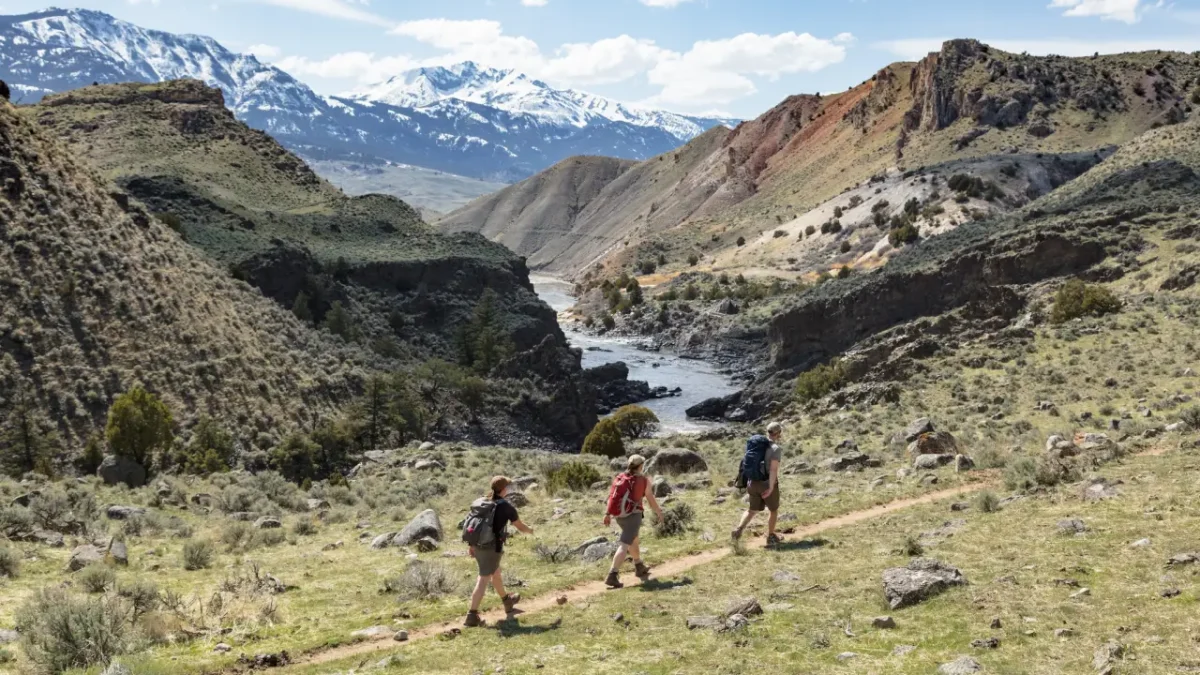
Warm afternoons work well for hiking, scenic driving, boating, camping, and exploring geyser-basin boardwalks. Nights can still be cold because much of Yellowstone sits at high elevation, and afternoon thunderstorms may develop quickly.
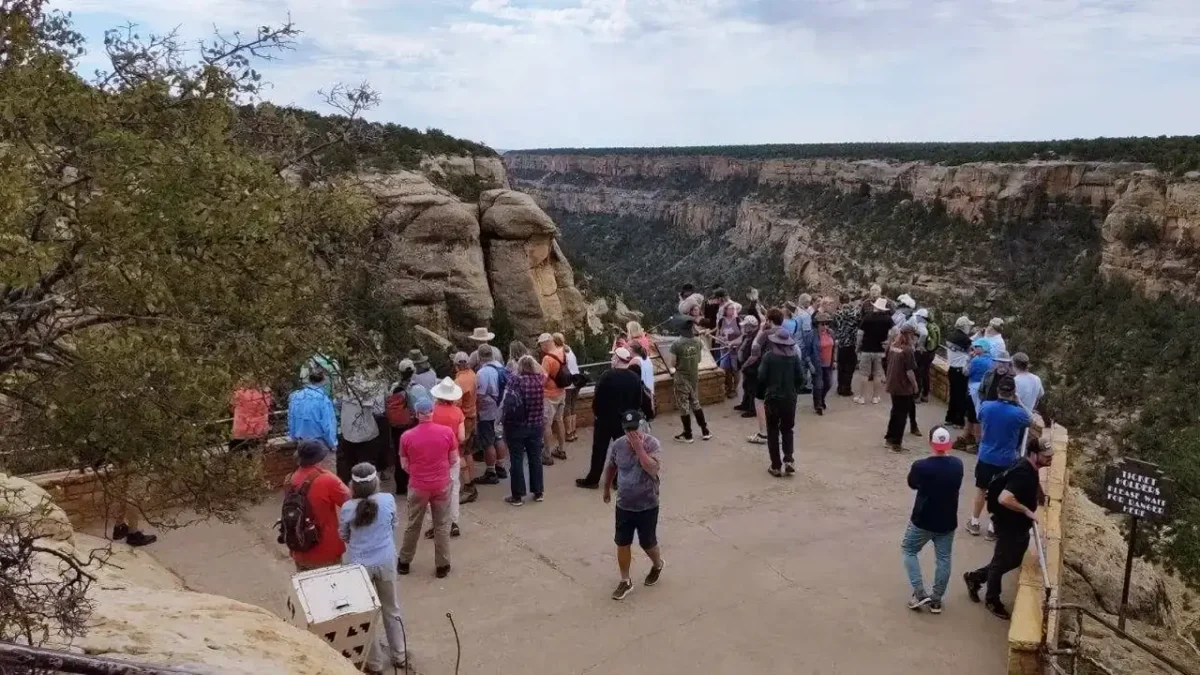
The challenge is crowd management. Parking near Grand Prismatic Spring, Old Faithful, Norris Geyser Basin, and popular canyon viewpoints can become difficult by late morning. Wildlife beside the road may create long traffic delays, often called bison jams.
A practical summer strategy is to reach the most popular area early, spend the middle of the day on a quieter trail or picnic stop, and return to wildlife-viewing areas later in the afternoon.
Summer is best for:
- First-time visitors who want maximum access
- Families traveling during school vacation
- Hikers and campers
- Visitors with fixed travel dates
- Travelers planning several days inside the park
Reserve lodging and campsites as early as possible. Yellowstone’s established campsites generally require reservations and frequently fill well in advance.
Fall: September–October
September combines many of summer’s advantages with lower visitation. Most major roads and visitor areas are generally still accessible, but parking and traffic tend to become easier after Labor Day.
Cooler mornings can improve wildlife-viewing conditions, and the elk rut becomes an important seasonal feature. Bull elk may gather near Mammoth Hot Springs, where visitors must give them plenty of space and follow ranger instructions.
September weather is not guaranteed. Frost is common, and snow can arrive unexpectedly. By October, freezing conditions become more frequent, seasonal services close, and road closures become more likely.
Most interior roads eventually close to regular vehicles for winter travel. The road connecting the North Entrance at Gardiner with the Northeast Entrance near Cooke City is generally the only route through the park that remains open year-round to regular vehicles.
Fall is best for:
- Travelers seeking smaller crowds
- Wildlife viewing
- Fall photography
- Adults traveling outside school holidays
- Visitors comfortable with colder conditions
Keep the itinerary flexible and check road conditions every morning.
Winter: November–March
Winter changes both the appearance of Yellowstone and the way visitors move through it. Most interior park roads close to regular automobiles. Access to destinations such as Old Faithful is generally limited to authorized commercial snowcoaches and snowmobiles during the oversnow season.
The North Entrance provides the most practical winter access for independent travelers. The route from Gardiner through Mammoth Hot Springs and toward Cooke City usually remains open to regular vehicles, although snow, ice, and temporary restrictions can still affect travel.
Winter activities include wildlife watching, cross-country skiing, snowshoeing, photography, and guided oversnow tours. Steam rising from thermal areas becomes more visible in cold air, and animals may be easier to spot against snowy terrain.
Conditions are demanding. Daytime temperatures often remain well below freezing, subzero nights are common, and only limited services operate.
Winter is best for:
- Experienced cold-weather travelers
- Wildlife enthusiasts
- Photographers
- Visitors willing to book guided transportation
- Travelers seeking solitude
Winter visitors need insulated clothing, appropriate footwear, emergency supplies, and realistic driving plans.
How Many Days Do You Need in Yellowstone National Park?
Yellowstone’s size makes rushed itineraries difficult. Driving distances may look manageable on a map, but traffic, wildlife, construction, weather, and sightseeing stops can make travel much slower than expected.
One Day
A single day is enough for only a focused introduction. Choose one part of the park rather than attempting the full Grand Loop.
A Lower Loop itinerary might include Old Faithful, the Upper Geyser Basin, Grand Prismatic Spring, Yellowstone Lake, and part of the Grand Canyon of the Yellowstone. Another option is to focus on Mammoth Hot Springs and wildlife viewing in Lamar Valley.
Expect considerable driving and limited time at each stop.
Two Days
Two full days allow visitors to divide the park into broad northern and southern sections. One day can focus on Old Faithful, Grand Prismatic Spring, Yellowstone Lake, and the canyon. The second can cover Mammoth Hot Springs, Tower-Roosevelt, and Lamar Valley.
This itinerary works for travelers who want the main highlights but do not plan longer hikes.
Three Days
Three days provide a much better introduction. In addition to the major geothermal areas and canyon viewpoints, there is time for wildlife watching, short trails, and unplanned stops.
A practical three-day plan is:
- Old Faithful, Upper Geyser Basin, and Grand Prismatic Spring
- Yellowstone Lake, Hayden Valley, and the Grand Canyon of the Yellowstone
- Mammoth Hot Springs, Tower-Roosevelt, and Lamar Valley
Four to Five Days
Four or five days is ideal for most first-time visitors. The slower pace makes it easier to return to wildlife areas at dawn or dusk, walk longer sections of geyser-basin boardwalk, and complete a few day hikes.
Extra time also protects the itinerary from unexpected delays. A temporary road closure or crowded parking area is much less disruptive when the trip is not built around a single packed day.
Before You Visit: Official NPS Planning Information
Yellowstone’s road access, campground schedules, fees, and visitor services change throughout the year. Review the official planning pages shortly before traveling rather than relying on an older itinerary.
- Check current Yellowstone conditions and alerts.
- Review Yellowstone’s current park-road status and seasonal opening dates.
- Confirm current operating dates for campgrounds, visitor centers, stores, and other services.
- Review Yellowstone entrance fees and pass options.
- Download and use official Yellowstone maps.
- Review permits and reservation requirements.
- Read Yellowstone’s wildlife, thermal-area, hiking, and driving safety guidance.
- Review accessibility information for Yellowstone.
Yellowstone currently does not require a timed-entry vehicle reservation, but visitors still need an entrance pass. Lodging and campgrounds are separate and should be reserved well ahead of the trip.
Entrance-fee policies also deserve careful attention. Beginning in 2026, non-U.S. residents age 16 and older may be charged an additional per-person fee at Yellowstone on top of the standard entrance pass unless covered by an eligible pass. Check the official fee page before purchasing a tour or entering the park because some tour listings include park entry only for U.S. residents.
Cell service is limited, and navigation apps can provide incorrect directions inside the park. Download offline information and carry an official map.
Wildlife must be observed from a safe distance. Remain at least 100 yards from bears, wolves, and cougars and at least 25 yards from bison, elk, and other wildlife. Never leave a boardwalk in a thermal area.
Best Things to Do in Yellowstone National Park
Guided Yellowstone National Park tours can simplify transportation and add expert interpretation, but many of the park’s defining attractions are easy to explore independently.
Watch an Old Faithful Eruption
Old Faithful is Yellowstone’s best-known geyser, but eruption times are predicted rather than fixed. Check the official NPS app, posted information in the Old Faithful area, or the visitor education center before choosing a viewing time.
Arrive early enough to find a place around the viewing area, then allow extra time to explore the surrounding Upper Geyser Basin.
Walk the Upper Geyser Basin
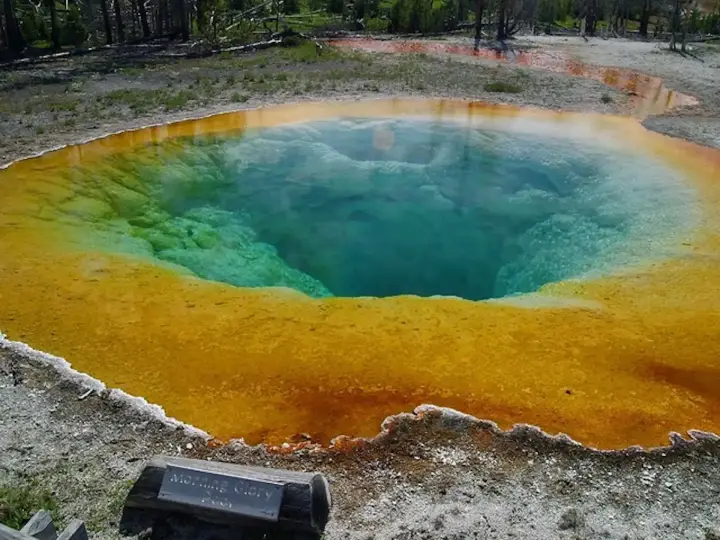
The trails and boardwalks around Old Faithful connect visitors with one of the world’s most concentrated collections of geysers. Depending on the route, stops may include Castle Geyser, Grand Geyser, Riverside Geyser, and Morning Glory Pool.
A longer walk provides a much fuller experience than watching Old Faithful and immediately returning to the car.
See Grand Prismatic Spring
The Midway Geyser Basin boardwalk provides a close view of Grand Prismatic Spring, although steam can partially obscure its colors in cool weather.
For a wider perspective, use the Grand Prismatic Spring Overlook Trail, reached from the Fairy Falls trailhead. Parking is limited, and the trail can become busy during summer afternoons.
Explore the Grand Canyon of the Yellowstone
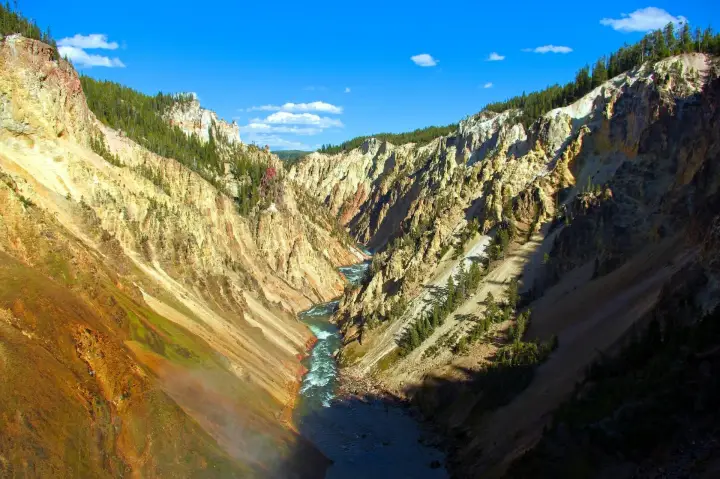
The Yellowstone River cuts through colorful canyon walls before dropping over Upper and Lower Falls. Roads on the North Rim and South Rim lead to different viewpoints, including Artist Point.
Trails and overlooks may close temporarily because of weather, construction, or unsafe conditions, so check the current status before driving to a specific stop.
Watch Wildlife in Lamar Valley
Lamar Valley is one of Yellowstone’s most productive wildlife-viewing areas. Bison are frequently visible, while wolves, bears, coyotes, pronghorn, and other animals may require patience and optical equipment.
Arrive around sunrise or later in the evening, bring binoculars, and use established pullouts without blocking traffic.
Drive Through Hayden Valley
Hayden Valley is another important wildlife corridor, especially for bison. It also sits conveniently between Yellowstone Lake and the Grand Canyon of the Yellowstone.
Traffic can slow considerably when animals approach or cross the road. Avoid stopping in the travel lane, and never walk toward an animal for a closer photograph.
Walk the Mammoth Hot Springs Terraces
Mammoth Hot Springs differs from Yellowstone’s classic geyser basins. Hot water moving through limestone creates shifting travertine terraces, with boardwalks providing access to the Lower Terraces.
The nearby Albright Visitor Center operates year-round, although hours and services can vary.
5 Best Tours and Experiences in and Around Yellowstone National Park
Yellowstone tours are most useful when they solve a specific planning problem. A sightseeing tour can reduce driving and parking stress. A naturalist-led trip can improve wildlife-viewing opportunities. Rafting and kayaking experiences add activities that would otherwise require equipment and local logistical knowledge.
The five options below are not interchangeable. Two begin in Jackson, one begins in West Yellowstone, one operates just outside Yellowstone near Gardiner, and one meets inside the park at Grant Village Marina.
| Experience | Best For | Duration | Starting Area | Activity Type | Location |
| Jackson: 2-Day Yellowstone National Park Tour with Lunches | First-time visitors who want broad park coverage | 2 days | Jackson, Wyoming | Guided sightseeing | Primarily inside Yellowstone |
| West Yellowstone: Yellowstone Day Tour Including Entry Fee | Visitors based near the West Entrance | 9 hours | West Yellowstone, Montana | Guided sightseeing | Inside Yellowstone |
| Gardiner: Half-Day Whitewater Raft Trip | Families and active travelers | 3 hours | Gardiner, Montana | Whitewater rafting | Outside the park near the North Entrance |
| Yellowstone & Grand Tetons Wildlife Adventure | Wildlife-focused travelers | 4 days | Jackson, Wyoming | Multi-day naturalist tour | Grand Teton, Yellowstone, and surrounding towns |
| Yellowstone Lake Kayaking Adventure | Active travelers seeking a small-group paddle | 3 hours | Grant Village Marina | Guided kayaking | Inside Yellowstone |
1. Jackson: 2-Day Yellowstone National Park Tour with Lunches
Best for: First-time visitors based in Jackson who want to see both major sections of Yellowstone without driving
Duration: Two days
Starting area: Jackson, Wyoming
Group size: Up to nine participants
Location: Primarily inside Yellowstone National Park
This two-day guided trip is the most comprehensive sightseeing option in the comparison. It travels from Jackson through Yellowstone and covers attractions across the park’s major road loops.
The planned itinerary may include the Upper Geyser Basin, Midway Geyser Basin, Norris Geyser Basin, Grand Canyon of the Yellowstone, Lamar Valley, Hayden Valley, Tower Fall, and Yellowstone Lake. Stops depend on conditions, wildlife activity, and road access.
Transportation, guiding, lunches on both days, snacks, drinks, and park entry fees are listed as included. Breakfast, dinner, tips, and overnight accommodation are not included. The operator typically arranges the overnight stay at Chico Hot Springs or a hotel in Gardiner, but travelers pay the lodging cost separately.
That lodging detail is important when comparing prices. This is not a fully packaged two-day trip with the hotel built into the advertised tour price.
The tour is a good fit for travelers who want to cover more than a single day trip allows. It also removes the need to navigate between Jackson, Yellowstone’s southern entrance, and the park’s widely separated attractions.
Expect two long days, substantial vehicle time, and short walks on boardwalks and developed trails. The format is less suitable for travelers who prefer independent hiking or long, unstructured stops.
See available dates and review the full two-day Yellowstone itinerary.
2. West Yellowstone: Yellowstone Day Tour Including Entry Fee
Best for: Travelers staying in West Yellowstone with one full day available
Duration: Nine hours
Starting area: West Yellowstone, Montana
Group size: Up to ten participants
Location: Inside Yellowstone National Park
This Lower Loop tour begins in West Yellowstone and typically visits a selection of Yellowstone’s most recognizable landmarks, including Old Faithful, Grand Prismatic Spring, Fountain Paint Pots, West Thumb, Yellowstone Lake, Hayden Valley, and the Grand Canyon of the Yellowstone.
The tour generally runs from approximately 7:30 a.m. to 4:30 p.m., although pickup details and itineraries can change. Transportation, hotel pickup and drop-off within West Yellowstone, a light breakfast, picnic lunch, binoculars, and a guide are included. The listing states that park entry is included for U.S. residents. Non-U.S. residents should carefully review the current entrance-fee requirement before booking.
This is a practical option for visitors who do not want to drive the Lower Loop or compete for parking at several busy attractions. It also works well for travelers who prefer receiving geological, ecological, and historical context along the way.
The main limitation is pace. Nine hours sounds generous, but Yellowstone is large, and a considerable portion of the day is spent driving. Stops usually involve short boardwalk walks and viewpoint visits rather than long hikes.
Travelers staying in Gardiner, Cody, Jackson, or inside another section of Yellowstone should calculate the additional drive to West Yellowstone before choosing this tour.
Check availability for the Yellowstone day tour from West Yellowstone.
3. Gardiner: Half-Day Whitewater Raft Trip on the Yellowstone River
Best for: Families, groups, and active travelers seeking a break from scenic driving
Duration: Three hours
Starting area: Gardiner, Montana
Activity type: Guided whitewater rafting
Location: Outside Yellowstone National Park near the North Entrance
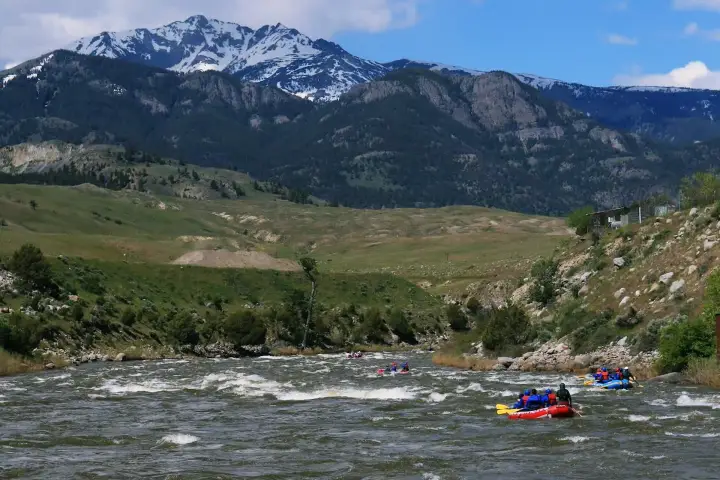
This rafting experience begins at a riverfront office in Gardiner and travels along the Yellowstone River near the park’s northern boundary. It does not raft through the interior of Yellowstone National Park.
After being fitted with equipment, participants take a short shuttle to the launch area and receive a safety briefing. The route combines splashy rapids with calmer stretches where conditions may allow floating or swimming. Named rapids on the itinerary include Man-Eater Hole, Boonie’s Revenge, and Sleeping Giant.
The booking includes river transportation, a helmet, paddle, personal flotation device, wetsuit, neoprene booties, splash top, and a trained guide. Hotel transportation, food, drinks, tips, and trip photographs are not included. The activity is not suitable for children younger than six or pregnant travelers.
This experience works particularly well after one or two days of driving and sightseeing. It introduces physical activity without consuming an entire day, leaving time for Mammoth Hot Springs or an evening wildlife drive.
River conditions change throughout the season. Higher water can make the trip feel more energetic, while later-season flows may produce a different experience. Participants should review the operator’s current recommendations for clothing, water conditions, and minimum requirements.
Check current prices and available rafting departures from Gardiner.
4. Yellowstone & Grand Tetons: 4-Day/3-Night Wildlife Adventure
Best for: Travelers who want an organized multi-day trip with a strong wildlife focus
Duration: Four days and three nights
Starting area: Jackson, Wyoming
Group size: Up to ten participants
Location: Grand Teton National Park, Yellowstone National Park, Cody, Cooke City, and surrounding areas
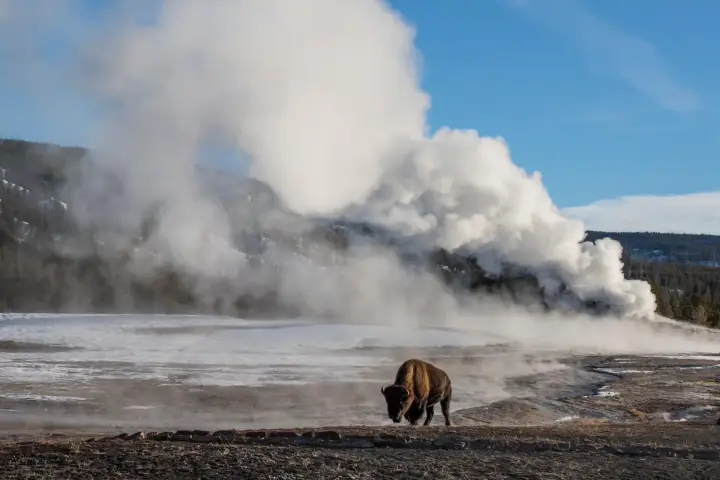
This four-day naturalist-led trip combines wildlife viewing and sightseeing across Grand Teton and Yellowstone. It is broader than a standard Yellowstone tour and includes overnight stops in several communities.
The itinerary begins with an evening wildlife outing in Grand Teton National Park. Later days may include Oxbow Bend, Yellowstone Lake, West Thumb Geyser Basin, Hayden Valley, the Grand Canyon of the Yellowstone, Cody, the Buffalo Bill Center of the West, Chief Joseph Highway, Lamar Valley, Mammoth Hot Springs, Fountain Paint Pots, and Old Faithful.
Three nights of lodging, breakfasts on days two through four, transportation, snacks, refreshments, a naturalist guide, and binoculars or spotting scopes are included. Lunches and dinners are not listed as included. Airport transfers and guide gratuity are also excluded.
The listing states that national park entry is included only for U.S. residents. International travelers should budget for any additional entrance charges that apply under current federal rules.
This tour is best for travelers who want the logistical structure of a multi-day itinerary and are interested in animal behavior, ecology, and patient observation. Wildlife sightings are never guaranteed, even with an experienced guide and optical equipment.
It is not exclusively a wildlife safari. The itinerary also includes major landmarks, geothermal areas, scenic highways, a museum visit, and travel between gateway towns. Travelers seeking several uninterrupted days in Yellowstone’s Lamar Valley should compare the route carefully with a more specialized wildlife tour.
Review the complete four-day itinerary and available travel dates.
5. Yellowstone Lake Kayaking Adventure Among Thermal Features
Best for: Active travelers who want to explore Yellowstone Lake away from roads and boardwalks
Duration: Three hours
Starting area: Grant Village Marina
Group size: Limited to two participants on the current listing
Location: Inside Yellowstone National Park
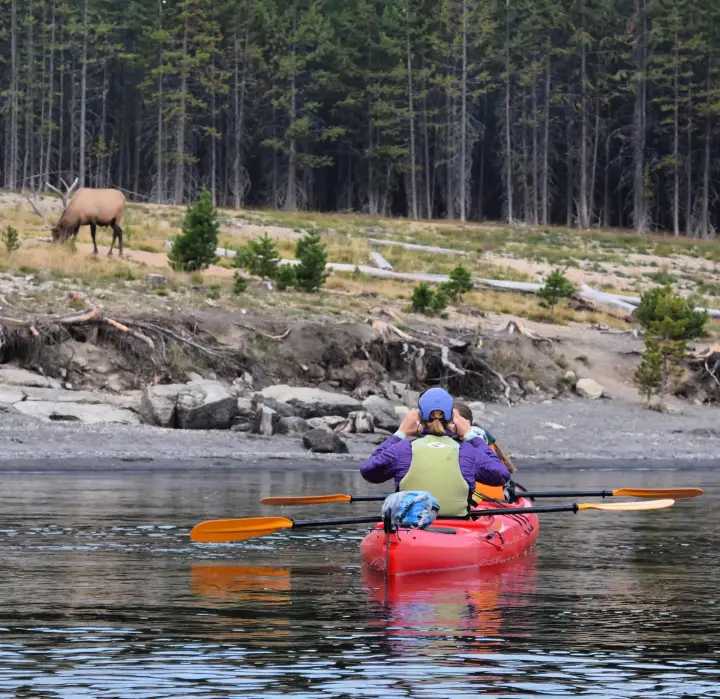
This small-group kayaking tour launches from Grant Village Marina and explores part of Yellowstone Lake near West Thumb and Potts geyser basins.
The experience includes approximately three hours of paddling, instruction, kayaking equipment, dry storage for personal items, snacks, and weather-dependent accessories such as spray jackets and cold-water gloves. Participants should bring quick-drying clothing, a rain layer, and footwear that can get wet. Cotton clothing and jeans are discouraged.
The lake’s high elevation and cold water make this more demanding than a casual warm-water paddle. The tour is not suitable for children under eight, non-swimmers, people with a low fitness level, or participants above the provider’s listed weight limit.
Meeting logistics also require planning. Cell service and GPS navigation can be unreliable inside Yellowstone, and wildlife traffic may delay the drive to Grant Village. Arrive early and use an official park map rather than depending entirely on a phone.
This experience is a good fit for active travelers who are comfortable around cold water and want a quieter perspective on Yellowstone’s geology. It is less appropriate for visitors who have never paddled, dislike cold conditions, or are working with a tightly timed driving itinerary.
Weather can affect departures, and access to Grant Village is seasonal. Confirm that the marina area and connecting roads will be open during the planned visit.
Compare current departure times for the Yellowstone Lake kayaking experience.
How to Choose the Right Experience
Choose the tour based on where you are staying, how much time you have, and whether the priority is sightseeing, wildlife, or physical activity.
Choose the two-day tour from Jackson for the broadest guided introduction to Yellowstone. Remember that overnight lodging is arranged but charged separately.
Choose the West Yellowstone day tour when staying near the West Entrance and wanting to see major Lower Loop attractions without driving.
Choose the Gardiner rafting trip for a half-day outdoor activity near the North Entrance. It complements a park visit but does not replace Yellowstone sightseeing.
Choose the four-day wildlife adventure for an organized trip that combines both national parks, gateway towns, wildlife searches, and major landmarks.
Choose the Yellowstone Lake kayak trip for a physically active, small-group experience inside the park.
Before booking, confirm the exact pickup area, included entrance fees, physical requirements, cancellation terms, and seasonal availability.
Frequently Asked Questions
What is the best month to visit Yellowstone?
September is the best month for many travelers because summer visitation begins declining while most major roads and attractions remain accessible. Cool mornings, wildlife activity, and the elk rut add to its appeal. Snow is still possible, so pack for changing weather.
How many days do you really need in Yellowstone?
Plan at least three full days. Four or five days is better for travelers who want to hike, watch wildlife at dawn or dusk, and explore without rushing between parking areas.
Is Yellowstone open during winter?
Yellowstone is open throughout the year, but most roads close to regular vehicles during winter. The road between the North and Northeast entrances generally remains open, while interior destinations require authorized oversnow transportation.
Do you need a reservation to enter Yellowstone?
Yellowstone currently does not require a timed-entry vehicle reservation. Visitors do need an entrance pass, and separate reservations are generally required for overnight lodging and campgrounds.
Are guided tours in Yellowstone worth it?
A guided tour can be worthwhile for visitors who want to avoid long days of driving, learn more about Yellowstone’s geology and wildlife, or improve their chances of locating animals with help from a naturalist guide.
Tours are less valuable for travelers who prefer independent hiking, flexible stops, or spontaneous route changes.
Can you see Yellowstone from Jackson in one day?
It is possible, but the drive from Jackson makes for a very long day. A guided day tour can simplify transportation, but travelers should expect an early departure and a late return. Spending at least one night closer to or inside Yellowstone creates a more comfortable itinerary.
Which airport is best for Yellowstone?
Bozeman Yellowstone International Airport is practical for the North and West entrances. Jackson Hole Airport works well for travelers combining Yellowstone with Grand Teton National Park. Yellowstone Regional Airport in Cody can be convenient for the East Entrance.
The best choice depends on seasonal road access and the location of the first night’s lodging.
Is Yellowstone safe for families?
Yellowstone can be an excellent family destination when visitors follow wildlife-distance rules, remain on thermal-area boardwalks, supervise children closely, and prepare for changing weather.
Bison, elk, bears, hot springs, rivers, and roadside terrain are real hazards. Treat animals as wild, even when they appear calm.
Final Thoughts
The best time to visit Yellowstone National Park depends on the experience you want, but late May through June and September offer the strongest balance of access, wildlife activity, and manageable crowds.
Summer is the most straightforward season for first-time visitors who need dependable road and facility access. Spring rewards flexible travelers with young wildlife and powerful waterfalls. Fall brings cooler conditions, fewer visitors, and the elk rut. Winter provides solitude and striking scenery but requires specialized transportation and cold-weather preparation.
Three to five days gives Yellowstone’s geothermal basins, waterfalls, wildlife valleys, and scenic roads enough room in the itinerary. Travelers with less time should focus on one section rather than trying to drive the entire park in a single day.
Guided experiences can remove transportation stress, provide equipment, and add naturalist expertise, but location matters. Some tours begin several hours away in Jackson, the rafting experience operates outside the park, and the kayaking trip requires travelers to reach Grant Village independently.
Before traveling or booking, confirm current roads, services, fees, weather, and safety alerts through the official National Park Service website. Yellowstone changes constantly, and the most successful itineraries are built with enough flexibility to adjust.
Disclaimer: This post is for informational purposes only. Always check official park regulations, permits, road conditions, closures, and weather before planning or booking any activity.
Affiliate Disclosure: ChaseTheBigDream.com participates in affiliate programs, including GetYourGuide and other trusted partners. When you book or purchase through qualifying links, the site may earn a small commission at no extra cost to you. These partnerships help support the creation and maintenance of independent travel guides.