The best time to visit Joshua Tree National Park is from March through May and October through November, when daytime temperatures are generally comfortable enough for hiking, climbing, sightseeing, and longer stretches outside the car. Spring usually brings the largest crowds, while fall offers similarly pleasant conditions without quite the same spring-break rush.
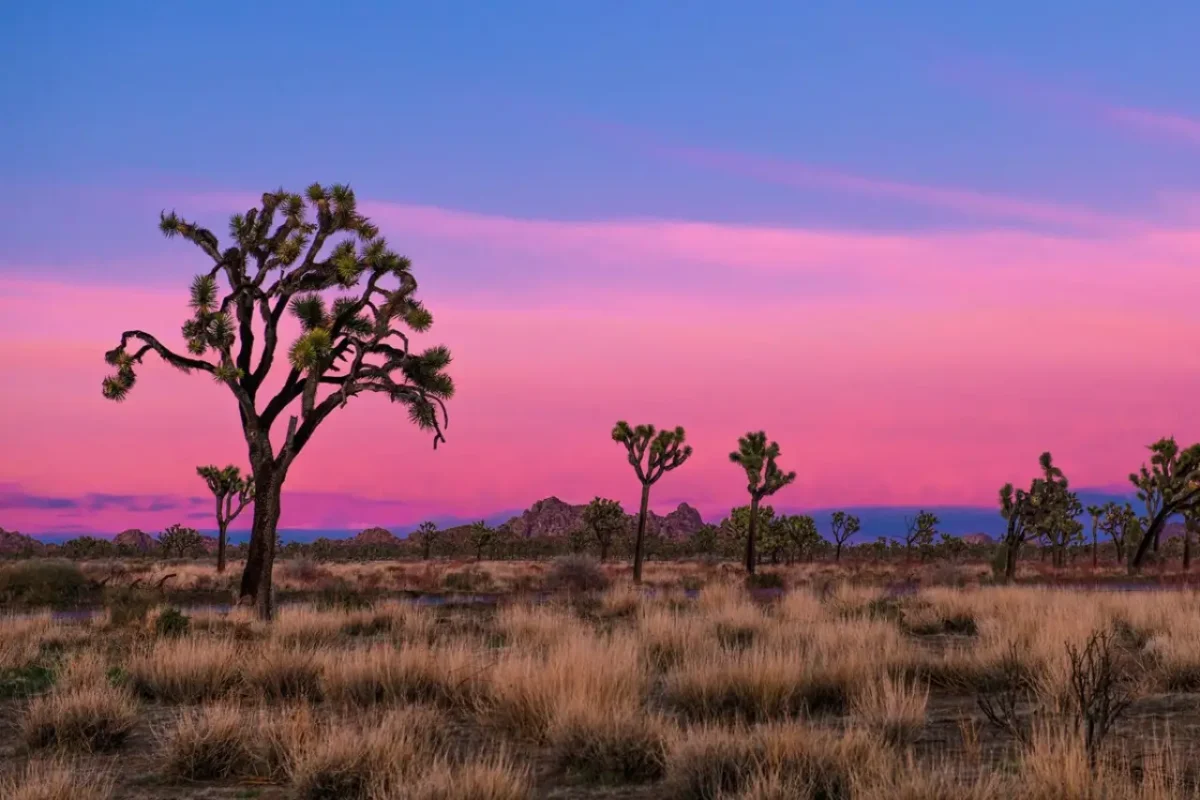
Joshua Tree sits where the Mojave and Colorado deserts meet, creating a landscape of Joshua trees, enormous granite boulders, cactus gardens, wide desert basins, and some of Southern California’s darkest night skies.
The biggest planning factor here is temperature. Summer regularly brings daytime highs around or above 100°F, while winter nights can fall to freezing. Choosing the right season can make the difference between comfortably spending a day on the trails and planning most outdoor activity around sunrise and sunset.
This guide covers the best time to visit Joshua Tree National Park, how the park changes by season, how many days to stay, the best things to do independently, and five guided experiences worth considering.
Joshua Tree National Park at a Glance
| Best Overall Time to Visit | March–May and October–November |
| Best Time for Hiking | Spring and fall |
| Best Time for Fewer Crowds | Winter and summer, with major weather tradeoffs |
| Suggested Trip Length | 1–3 days |
| Main Gateway Towns | Joshua Tree, Twentynine Palms, Yucca Valley |
| Nearest Major Airport | Palm Springs International Airport (PSP) |
| Park Hours | Open 24 hours a day, year-round |
| Entrance Reservation Required? | No |
| Official Website | Joshua Tree National Park |
Joshua Tree is easy to underestimate on a map. Although many highlights are accessible from paved roads, distances between entrances, trailheads, viewpoints, and the Cholla Cactus Garden add up quickly. There are also no restaurants, gas stations, grocery stores, or lodging inside the park, and potable water is unavailable through most of the interior. Bring what you need before entering.
Best Time to Visit Joshua Tree National Park
For most travelers, spring and fall provide the best combination of comfortable temperatures and access to outdoor activities.
Typical spring and fall daytime highs are roughly 70–85°F, making these seasons much better suited to hiking, climbing, and exploring exposed desert terrain. Nights cool considerably, so layers still matter after sunset.
Spring can also bring wildflowers when rainfall and temperatures line up, but it is the park’s busiest period. Spring break, holidays, and weekends from October through May can mean entrance lines, crowded trails, limited parking, and full campgrounds.
Fall is a strong alternative. The extreme summer heat begins to fade, days become much more comfortable for hiking, and the park settles back into its main outdoor season.
Winter works well for visitors who prefer cooler hiking weather and quieter conditions, although nights can be very cold and daylight is shorter.
Summer requires the most caution. Daytime temperatures commonly exceed 100°F, several facilities reduce operations, and some areas may close seasonally because of extreme heat. In 2026, for example, the 49 Palms Oasis Trail is closed from June 1 through September 30, and some campgrounds have seasonal closures or reduced capacity.
Joshua Tree National Park by Season
Spring: March–May
Spring offers some of Joshua Tree’s most comfortable conditions for spending a full day outside.
Days are usually mild to warm rather than brutally hot, making it easier to combine several short trails with scenic stops. Rock climbers also benefit from temperatures that allow longer sessions on exposed granite.
After wetter winters, wildflowers can add patches of color across the desert, but blooms vary considerably from year to year and should be treated as a bonus rather than a guarantee.
Advantages: Excellent temperatures for hiking and climbing, long enough days for extensive sightseeing, and possible wildflowers.
Limitations: Spring is extremely popular. Parking at heavily visited areas can become difficult, campgrounds fill quickly, and spring-break weekends can feel especially busy.
Best for: First-time visitors, hikers, climbers, photographers, and anyone wanting to spend most of the day outdoors.
If visiting on a busy spring weekend, entering early in the day can make popular stops significantly easier.
Summer: June–September
Summer changes how Joshua Tree should be approached.
Typical daytime highs reach around 100°F, and extreme heat presents a serious safety risk. Even nighttime temperatures may remain around 75°F. Long midday hikes are a poor choice under these conditions.
A summer trip is better built around short sunrise outings, scenic driving, air-conditioned breaks outside the park, and evening activities.
Summer operations can also differ from the rest of the year. Certain campgrounds or campground loops may close, visitor-center hours can be reduced, and heat-related trail closures may be in effect. Check the current seasonal information immediately before traveling.
Advantages: Lower visitation, quieter roads and viewpoints, and excellent night-sky opportunities.
Limitations: Extreme heat dramatically restricts safe daytime activity.
Best for: Travelers comfortable restructuring the entire day around heat, sunset, and nighttime activities.
Fall: October–November
Fall is one of the easiest seasons for planning a Joshua Tree trip.
Once summer temperatures retreat, hiking and sightseeing become comfortable again. The cooler weather makes it practical to spend several hours outside rather than moving repeatedly between short stops and an air-conditioned vehicle.
October also marks the beginning of the park’s busier season, so weekends can still fill quickly.
Advantages: Comfortable hiking weather, excellent conditions for climbing, and more flexibility for full-day itineraries.
Limitations: Weekends can still be busy, especially as temperatures improve.
Best for: Hikers, climbers, road-trippers, photographers, and first-time visitors.
For travelers who have flexibility, late October through November is one of the strongest overall windows for visiting Joshua Tree.
Winter: December–February
Winter brings cooler days and genuinely cold nights.
Daytime highs are typically around 60°F, which can feel excellent on exposed trails. After sunset, however, temperatures can approach or drop below freezing. Snow is uncommon but occasionally falls at higher elevations.
The shorter daylight window means route planning matters more. It is easy to underestimate drive times between areas and reach the final trail or viewpoint later than expected.
Advantages: Comfortable midday hiking temperatures and generally less intense visitation than spring.
Limitations: Cold nights, shorter days, and occasional winter weather.
Best for: Hikers who prefer cool weather, campers prepared for cold nights, and travelers who want a quieter desert experience.
How Many Days Do You Need in Joshua Tree National Park?
One day is enough for a strong introduction.
A well-planned day can include Hidden Valley, Skull Rock, Keys View, several roadside rock formations, and the Cholla Cactus Garden. Keep drive times in mind—the Cholla Cactus Garden is well east of many of the park’s most popular Joshua tree and boulder areas.
Two days is the sweet spot for many first-time visitors.
With a second day, there is enough time to slow down, add Barker Dam or a longer hike, spend more time exploring the rock formations, and stay after sunset for stargazing without trying to cram everything into one continuous drive.
Three days works particularly well for hikers, climbers, photographers, and travelers staying close to the park.
The extra time opens room for longer hikes, guided climbing or scrambling, quieter sections of the park, and a flexible evening that can be saved for sunset or dark-sky viewing.
For most first trips, two days gives Joshua Tree enough breathing room without requiring a long stay.
Before You Visit: Official NPS Planning Information
Desert weather, fire restrictions, campground availability, road access, and temporary closures can change. Check official information shortly before entering the park rather than relying on an itinerary created months earlier.
- Check current Joshua Tree National Park conditions and alerts.
- Review current entrance fees and passes.
- Confirm current visitor-center hours and seasonal operations.
- Review directions and transportation information.
- Download official Joshua Tree National Park maps.
- Review current permits and reservation requirements.
- Check campground status and reservation requirements.
- Read Joshua Tree National Park safety information.
- Review accessibility information.
- Check current summer closures and restrictions.
No advance reservation is currently required simply to enter Joshua Tree National Park. Most developed campgrounds, however, use reservations, while Hidden Valley, Belle, and White Tank include first-come, first-served camping. Availability becomes especially competitive on weekends, holidays, and during the busy season.
Best Things to Do in Joshua Tree National Park
Joshua Tree is particularly rewarding for independent exploration. Many of its signature experiences require nothing more than a vehicle, walking shoes, water, and enough time to wander.
Hike Hidden Valley
Hidden Valley is one of the easiest introductions to Joshua Tree’s granite landscape.
The short loop winds among enormous boulders and Joshua trees, with enough variety to feel like a real desert walk without committing several hours to the trail.
It is especially useful on a first visit because it immediately shows why this part of the park is so popular.
Stop at Skull Rock and Explore the Surrounding Boulders
Skull Rock sits beside Park Boulevard, making it one of the simplest sightseeing stops in the park.
The rock itself attracts most of the attention, but the surrounding Jumbo Rocks area is worth more time. Short wandering routes through the boulder fields often prove more interesting than taking a quick photo and leaving.
Walk Through the Cholla Cactus Garden
The Cholla Cactus Garden showcases a completely different desert environment.
A short walking path runs through a dense concentration of cholla cactus in the Colorado Desert section of the park. The cactus spines detach extremely easily, so give the plants plenty of space rather than brushing past them.
Because this stop sits away from many of the park’s other famous sights, work it into the day’s driving route rather than treating it as a quick detour.
Watch Sunset from Keys View
Keys View provides one of the park’s broadest overlooks, with views across the Coachella Valley and toward the San Andreas Fault.
It is understandably popular near sunset, so allow enough time for parking and the drive back afterward.
Cold and wind can also be noticeably stronger here than lower in the park, particularly from fall through early spring.
Go Stargazing
Joshua Tree is an International Dark Sky Park, and staying after sunset adds an entirely different layer to a visit.
Moon phase matters. A bright full moon illuminates the desert beautifully but washes out many stars, while nights around the new moon provide darker conditions for seeing faint stars and the Milky Way.
Bring warm layers outside summer. Desert temperatures can drop quickly once the sun disappears.
Hike Barker Dam
Barker Dam combines rock formations, desert vegetation, and a piece of the area’s ranching history in a relatively short outing.
Water behind the dam varies considerably by season and recent precipitation, so do not plan the hike expecting a permanent lake.
Tackle a Longer Hike
Travelers with more time can add a longer route instead of stringing together only roadside stops.
Whatever trail is chosen, carry enough water, download maps before entering, and avoid depending on cell service for navigation. Reception is limited across much of the park.
5 Best Tours and Experiences in and Around Joshua Tree National Park
Guided experiences make the most sense when they provide something difficult to replicate independently: transportation, route-finding, technical instruction, specialized equipment, or a structured evening activity.
The five options below cover very different trips, from private sightseeing and granite scrambling to rock climbing and a multi-day Southwest tour.
| Experience | Best For | Duration | Location | Activity |
| Ultimate Private Group Adventure | First-time visitors & private groups | 4 hours | Inside the park | Guided sightseeing |
| Caves & Corridors Adventure | Active travelers | About 2–4 hours | Inside the park | Scrambling & cave-like passages |
| Private Rock Climbing Trip | Beginners & experienced climbers | 4–8 hours | Inside the park | Rock climbing |
| Soundbath Under the Stars | Relaxed evening experience | 2 hours | Joshua Tree area | Meditation & soundbath |
| 5-Day Los Angeles Southwest Tour | Multi-park road-trip travelers | 5 days | Southwest itinerary including Joshua Tree | Small-group road trip |
1. Ultimate Joshua Tree National Park Private Group Adventure
Best for: First-time visitors, couples, families, and small groups
Duration: 4 hours
Activity type: Private guided sightseeing
Location: Joshua Tree National Park
This private tour is a practical choice when the goal is to see several Joshua Tree highlights without spending the day studying maps, choosing stops, and dealing with navigation.
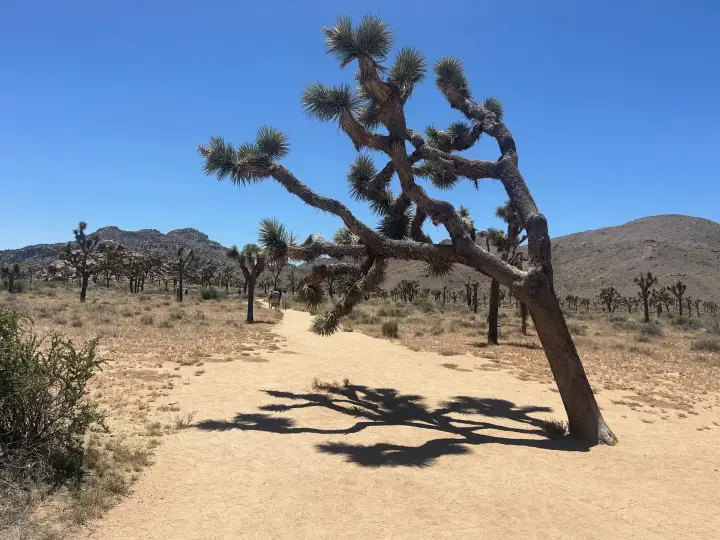
Current itineraries feature places such as Hidden Valley, Keys View, Cap Rock, Quail Springs, and other rock formations, with pickup included and the day handled in a private vehicle. Because the experience is reserved for one group, the pace can be more flexible than on a conventional bus tour.
That flexibility is the strongest reason to book it. A family may want more short walks and fewer extended stops, while photographers might prefer additional time at particular viewpoints.
Four hours will not cover Joshua Tree in depth, so this works better as a guided overview than a substitute for two full days in the park.
It is particularly useful for travelers staying around Palm Springs who would rather have transportation and route planning handled for them.
2. Joshua Tree Caves and Corridors Adventure
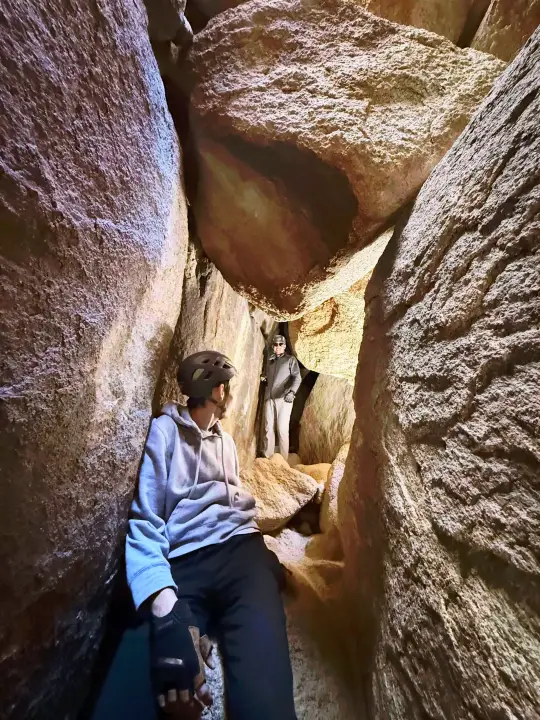
Best for: Active travelers who want something beyond standard hiking
Duration: Approximately 2–4 hours depending on the route
Activity type: Scrambling and granite corridor exploration
Location: Joshua Tree National Park
Joshua Tree does not have traditional limestone cave systems. Instead, enormous granite boulders have created narrow passageways, chambers, slots, and cave-like spaces that can be explored by scrambling through the formations.
This experience takes that style of exploration much farther than a normal hiking trail.
Expect a hands-on outing involving scrambling, squeezing between rocks, ducking into passageways, and moving over uneven terrain. Routes can be adapted to the group, but this is still much more physical than a sightseeing tour.
The experience takes place inside Joshua Tree National Park, rather than on private land outside the park as sometimes described in older information. The operator specializes in guided cave-and-corridor routes through the park’s granite formations.
It is a strong choice for travelers who enjoy scrambling but would not feel comfortable locating or navigating these formations alone.
Anyone uncomfortable with confined spaces or uneven scrambling should choose a conventional hike or sightseeing experience instead.
See current availability for the Joshua Tree Caves and Corridors Adventure.
3. Joshua Tree National Park: Private Rock Climbing Trip
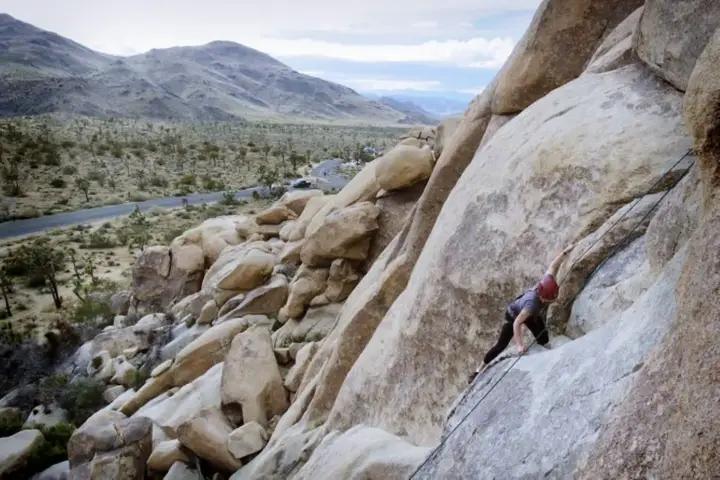
Best for: First-time climbers and experienced climbers wanting a private guide
Duration: 4, 6, or 8 hours
Activity type: Private rock climbing
Location: Joshua Tree National Park
Joshua Tree is one of the best-known climbing destinations in the United States, but its sheer number of routes can be intimidating if this is a first outdoor climbing trip.
A private guide solves that problem by selecting routes that suit the group’s ability and handling the technical systems needed to climb safely.
All climbing equipment and safety training are included, and current options allow travelers to choose 4-, 6-, or 8-hour sessions. The meeting location is selected based on conditions and the most appropriate climbing area for the group.
Beginners can focus on movement, basic technique, and getting comfortable on real rock. More experienced climbers gain the advantage of a local guide who can select routes aligned with ability and goals.
The park entrance fee is currently included in this experience, another useful distinction from many independently organized guided outings.
A four-hour session is easier to combine with sightseeing. Six or eight hours makes more sense when climbing is one of the main reasons for visiting Joshua Tree.
Compare current options for the Joshua Tree National Park Private Rock Climbing Trip.
4. Joshua Tree: Soundbath Under the Stars
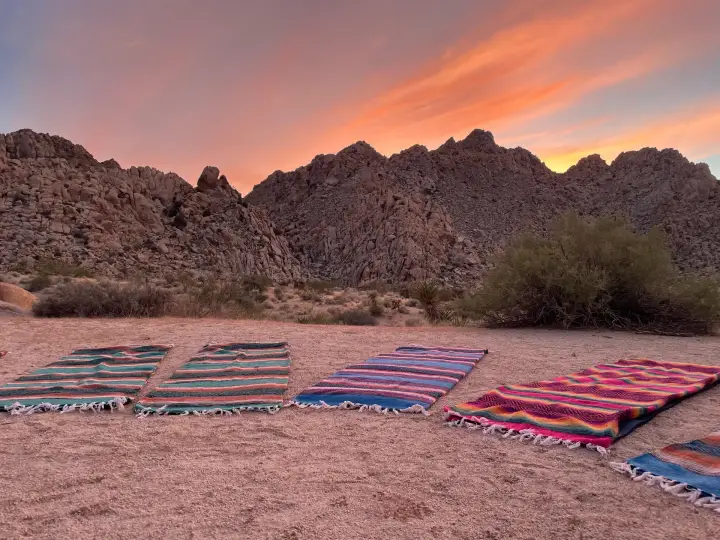
Best for: Couples, solo travelers, and anyone wanting a quiet evening activity
Duration: 2 hours
Activity type: Guided meditation and soundbath
Location: Joshua Tree area, outside the national park
Not every Joshua Tree experience needs to involve hiking or climbing.
This two-hour evening experience combines guided meditation with a soundbath in the Joshua Tree area, using the desert night as part of the setting. The current listing describes an intention-setting meditation followed by a sound journey under the stars.
It works particularly well after a day of hiking because it requires little physical effort and does not consume another daytime block that could be spent inside the national park.
The most important expectation to set is that this is not a National Park Service stargazing program and does not take place as a sightseeing tour inside Joshua Tree National Park. Treat it as a separate Joshua Tree-area wellness experience.
Weather can also affect the setting, so check the current activity details when booking.
Review current dates and details for the Joshua Tree Soundbath Under the Stars.
5. 5-Day Los Angeles to Las Vegas Grand Canyon Tour
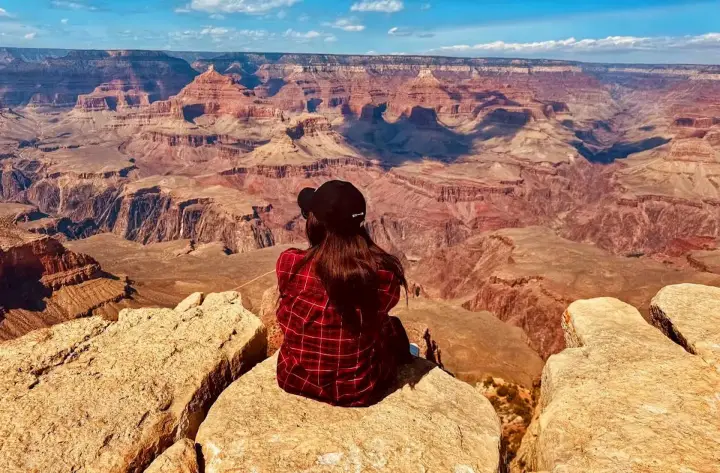
Best for: Travelers who want Joshua Tree as part of a much larger Southwest trip
Duration: 5 days
Activity type: Small-group multi-day tour
Location: Regional Southwest itinerary including Joshua Tree National Park
This tour belongs in a different category from the first four.
Rather than spending several days focused on Joshua Tree, it combines the park with major Southwest destinations such as the Grand Canyon, Lower Antelope Canyon, Horseshoe Bend, Bryce Canyon, Zion, Monument Valley, Death Valley, and Joshua Tree.
The current operator itinerary is structured as a five-day loop beginning and ending in Los Angeles, with hotel accommodation and small-group transportation included. Joshua Tree appears as part of the broader itinerary rather than being the main destination.
The Joshua Tree portion currently includes several of the park’s signature stops, such as the Cholla Cactus Garden, Skull Rock, Keys View, and Hidden Valley.
That makes this tour a poor fit for someone whose main goal is to explore Joshua Tree deeply. There is no substitute here for staying near the park and spending two or three days hiking and exploring independently.
For travelers visiting Southern California who want to see multiple major Southwest landscapes without renting a car or planning several hotels and long driving days, however, the format can simplify an otherwise complicated road trip.
Check the current itinerary carefully before booking because multi-day routes, inclusions, fees, and accommodation details are more likely to change than those of a simple half-day activity.
Review current dates and itinerary details for the 5-Day Los Angeles to Las Vegas Grand Canyon Tour.
How to Choose the Right Experience
Choose the Ultimate Private Group Adventure if this is a first Joshua Tree visit and the main priority is seeing the highlights without handling the driving and route planning.
Choose Caves & Corridors if ordinary trails sound too tame and scrambling through the park’s granite formations is more appealing.
Choose the Private Rock Climbing Trip if climbing itself is part of the reason for visiting—or if trying outdoor climbing in Joshua Tree sounds more exciting than spending another day sightseeing.
Choose the Soundbath Under the Stars for a low-effort evening after hiking, particularly if the itinerary already has plenty of daytime activities.
Choose the 5-Day Southwest Tour only when Joshua Tree is one piece of a larger trip rather than the primary destination.
For a first dedicated Joshua Tree vacation, the most balanced approach is often to explore independently during the day and add one specialized guided experience rather than filling the entire itinerary with tours.
Frequently Asked Questions
What is the best month to visit Joshua Tree National Park?
March, April, October, and November are among the easiest months for planning outdoor activities because temperatures are generally comfortable.
March and April can be considerably busier, while fall often provides an appealing combination of good weather and slightly less intense visitation.
How many days do you need in Joshua Tree?
Two days is ideal for many first-time visitors.
One day covers the major highlights, while two days allows time for short hikes, scenic stops, sunset, stargazing, and a more relaxed pace.
Three days makes sense for climbing, longer hikes, photography, or a guided adventure.
Do you need a reservation to enter Joshua Tree?
No advance reservation is currently required to enter Joshua Tree National Park.
Entrance rules can change, so check the official NPS planning information before traveling. Campgrounds operate under separate reservation rules.
Can you visit Joshua Tree without a car?
Exploring the park without your own transportation is difficult.
Major sights are spread across a large area, and a vehicle makes it much easier to move between trailheads and viewpoints. Travelers without a rental car should consider a guided experience that includes transportation.
Is Joshua Tree good for families?
Yes, provided activities are chosen for the group’s ages and abilities.
Short walks, enormous boulders, unusual plants, and roadside viewpoints make it easy to build a day without committing to one long hike.
Families should be particularly careful around cactus spines, exposed rocks, extreme heat, and areas where scrambling could lead to falls.
Is summer a good time to visit Joshua Tree?
Summer can work for stargazing and very early sightseeing, but it is not the best season for a typical hiking-focused trip.
Daytime temperatures commonly reach around or above 100°F, and seasonal closures may affect trails, campgrounds, and visitor services.
When is the best time for stargazing?
Choose a clear night near the new moon if seeing the maximum number of stars is the goal.
A full moon creates a beautiful illuminated desert landscape but significantly brightens the sky.
Always choose a legal parking area or designated pullout and carry a flashlight or headlamp for moving around safely after dark.
Final Thoughts
For most travelers, the best time to visit Joshua Tree National Park is spring or fall, with October and November particularly appealing for comfortable hiking conditions without the extreme heat of summer.
Two days is enough to experience the park at a satisfying pace: spend daylight hours walking through Joshua tree groves and granite boulder fields, drive out to the Cholla Cactus Garden, catch a sunset, and leave room for the night sky rather than racing back to town before dark.
Guided experiences are most valuable when they add something that independent sightseeing cannot easily provide. A private tour simplifies logistics, Caves & Corridors introduces more technical terrain, and a climbing guide makes Joshua Tree’s granite accessible even to beginners. The soundbath offers a completely different evening experience, while the five-day Southwest tour makes more sense for travelers whose real objective is a larger road trip.
Whichever approach fits the trip, check current NPS conditions, closures, weather, campground information, and seasonal restrictions immediately before visiting. Joshua Tree may look simple from the highway, but heat, limited water, sparse cell service, and long distances between stops reward travelers who arrive prepared.
Disclaimer: This post is for informational purposes only. Always check official park regulations, permits, road conditions, closures, and weather before planning or booking any activity.
Affiliate Disclosure: ChaseTheBigDream.com participates in affiliate programs, including GetYourGuide and other trusted partners. When you book or purchase through qualifying links, the site may earn a small commission at no extra cost to you. These partnerships help support the creation and maintenance of independent travel guides.