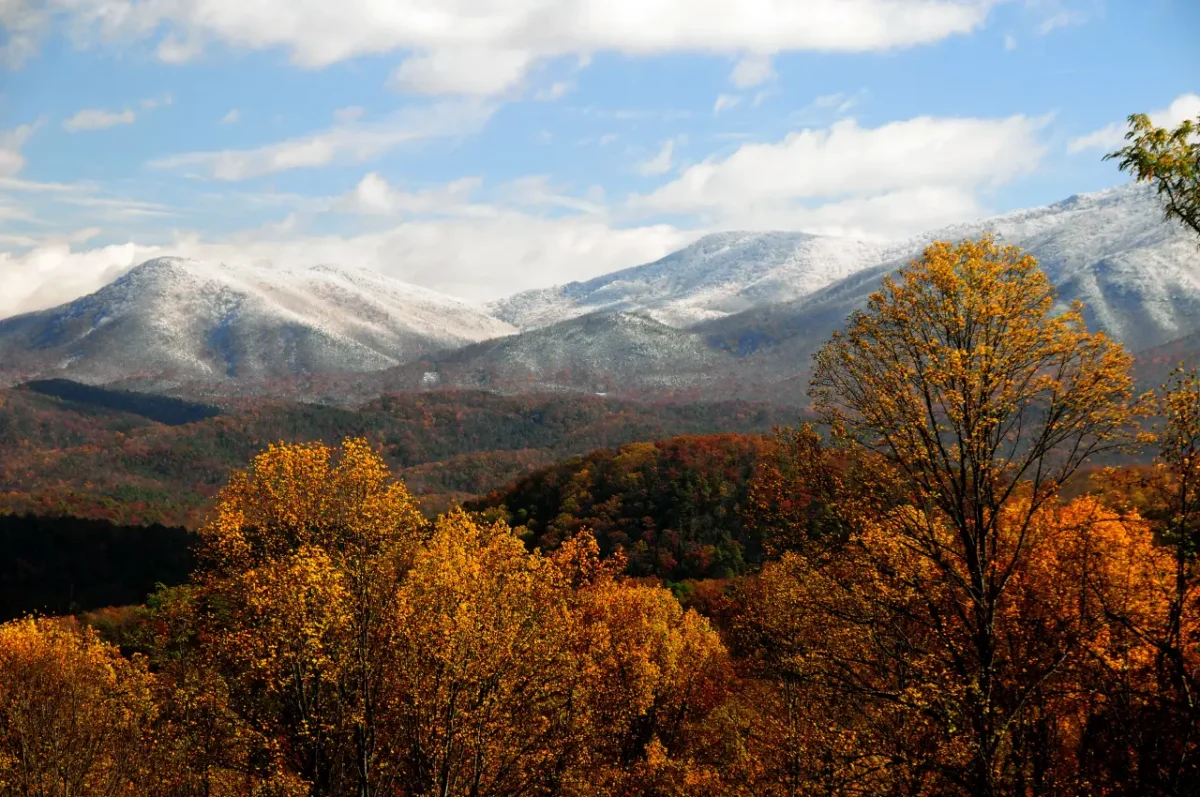
Fall is generally the best time to visit Great Smoky Mountains National Park for comfortable hiking weather, clearer mountain views, and the park’s famous fall foliage. Color usually develops first at higher elevations before moving into the lower valleys, creating a longer leaf-peeping season than many destinations offer.
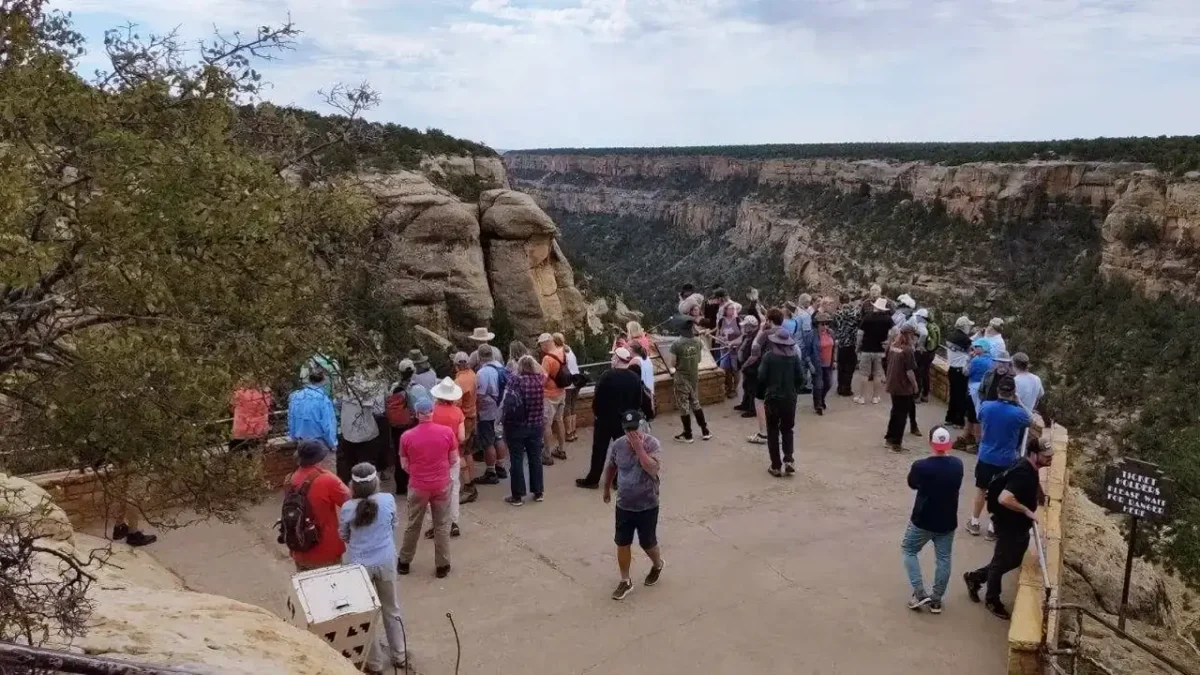
The tradeoff is traffic. October can bring slow-moving roads, crowded overlooks, and limited trailhead parking—especially around Cades Cove, Newfound Gap Road, and Kuwohi.
Spring is the strongest alternative. Wildflowers spread through the lower and middle elevations, waterfalls run well, and visitation is often more manageable than during peak fall weekends. Summer offers the most dependable access but also brings humidity, afternoon storms, and heavy crowds. Winter is quieter, though snow and ice can temporarily close mountain roads.
This guide explains the seasonal tradeoffs, how many days to spend in the Smokies, the best things to do independently, and how five tours and outdoor experiences differ.
Great Smoky Mountains National Park at a Glance
| Planning Detail | What to Know |
|---|---|
| Best overall time to visit | Late September through early November for fall color and generally comfortable outdoor conditions |
| Best alternative season | Mid-April through May for wildflowers, waterfalls, and smaller crowds than peak fall |
| Best time for hiking | Spring and fall, although weather varies considerably by elevation |
| Best time for fewer crowds | January and February, with the understanding that seasonal and weather-related road closures are common |
| Suggested trip length | Three to four days for a balanced first visit |
| Main Tennessee gateways | Gatlinburg, Pigeon Forge, and Townsend |
| Main North Carolina gateways | Cherokee, Bryson City, and Maggie Valley |
| Closest commonly used airport | McGhee Tyson Airport near Knoxville, Tennessee |
| Entrance reservation | Not normally required, but some activities, campsites, and special events require reservations or permits |
| Parking requirement | A physical parking tag is generally required when parking inside the park |
| Official website | Visit the official Great Smoky Mountains National Park website |
Best Time to Visit Great Smoky Mountains National Park
The best time to visit Great Smoky Mountains National Park depends on whether the priority is fall foliage, hiking, wildlife, waterfalls, road access, or lighter crowds.
For the classic Smokies experience, plan for late September through early November. Fall color begins at the highest elevations before gradually moving into the valleys. That elevation change means foliage conditions can differ dramatically between Kuwohi, Newfound Gap, Cades Cove, and the lower-elevation areas near Gatlinburg.
October is usually the most popular month, but it is not automatically the best choice for every traveler. Weekend traffic can consume a large part of the day, and finding parking near popular trailheads may be difficult. Visiting on weekdays, entering the park early, and avoiding an overly ambitious driving itinerary can make a major difference.
Spring, particularly from mid-April through May, provides a better balance for many visitors. Forests turn green, wildflowers appear across different elevations, and waterfalls often carry more water than they do later in the year. Temperatures can still shift quickly, so rain protection and warm layers remain important.
Summer works well for families and travelers who want the broadest access to visitor services and seasonal roads. However, lower elevations can feel hot and humid, while afternoon thunderstorms can disrupt longer hikes.
Winter offers the quietest experience. Lower-elevation roads and trails may remain accessible, but snow and ice can temporarily close Newfound Gap Road and other high-elevation routes. Kuwohi Road and several scenic secondary roads also follow seasonal operating schedules.
Great Smoky Mountains National Park by Season
Spring
Spring arrives gradually because the park spans a wide range of elevations. Lower valleys may look fully green while high ridges remain cold, bare, or even snowy.
March can still feel like winter in the mountains. By April, wildflowers become more noticeable at lower and middle elevations, and waterfalls benefit from seasonal rainfall. May usually brings greener forests and more comfortable conditions across much of the park.
Spring is particularly rewarding for:
- Waterfall hikes
- Wildflower walks
- Historic areas such as Cades Cove
- Lower-elevation trails
- Scenic drives before peak summer traffic
- Visitors willing to prepare for changing weather
Pack layers rather than dressing only for conditions in Gatlinburg or Cherokee. Temperatures at Newfound Gap and Kuwohi can be significantly cooler than conditions near the park entrances.
Kuwohi Road, formerly known as Clingmans Dome Road, normally operates seasonally and may still close temporarily because of snow, ice, or hazardous conditions after its scheduled spring opening. Confirm access before building the day around Kuwohi.
Summer
June through August brings long daylight hours, dense green forests, active wildlife, and generally dependable access to the park’s main areas.
Summer is also humid, especially in the valleys. A hike that feels moderate in spring can become much more demanding during a hot July afternoon. Starting early helps with heat, storms, parking, and traffic.
Afternoon thunderstorms are common enough that exposed ridgelines and high-elevation viewpoints deserve extra caution. Check the forecast, carry rain protection, and avoid committing to a long exposed route when storms are expected.
Summer is best for:
- Families traveling during school vacation
- Visitors planning several full park days
- High-elevation hikes
- Picnics and river areas
- Travelers who want access to seasonal roads
- Visitors combining the park with rafting or fishing
The synchronous firefly viewing period at Elkmont is one of the park’s best-known seasonal events. Vehicle access is controlled through a limited-entry process, so travelers should not expect to drive into the viewing area without the required authorization.
Fall
Fall combines cooler hiking conditions with the park’s most famous scenery. Because elevation changes across the Smokies are substantial, peak color does not occur everywhere at once.
Higher elevations can begin changing in late September. Mid-elevation forests often become more colorful in October, while some lower valleys may hold color into early November. Weather, temperature, rainfall, and wind can shift the timing from year to year.
Fall is best for:
- Scenic driving
- Photography
- Comfortable day hiking
- Mountain overlooks
- First-time visitors seeking the classic Smokies landscape
It is also the season that requires the most traffic planning. Cades Cove Loop Road, Newfound Gap Road, Kuwohi Road, and popular Gatlinburg-area trailheads can become heavily congested.
Avoid scheduling multiple major drives on the same peak-season day. A plan that combines Cades Cove, Kuwohi, Newfound Gap, and Roaring Fork may look reasonable on a map but can become exhausting once traffic and parking are added.
A better approach is to choose one major section of the park each day and explore it thoroughly.
Winter
Winter is the best time to visit Great Smoky Mountains National Park for solitude, open views through leafless forests, and quieter lower-elevation trails.
It is not the best season for travelers who need every scenic road to be open.
Kuwohi Road and Roaring Fork Motor Nature Trail normally close to vehicles seasonally. Other roads may close temporarily because of snow, ice, fallen trees, flooding, or unsafe conditions. Newfound Gap Road remains an important cross-park route, but winter weather can interrupt access without much warning.
Winter visitors should:
- Check current conditions each morning
- Avoid depending on a single high-elevation destination
- Carry warm layers and rain protection
- Expect ice on shaded trails
- Keep extra food and water in the vehicle
- Build a flexible itinerary with lower-elevation alternatives
Cades Cove, Oconaluftee, the Mountain Farm Museum, Sugarlands, and lower trails near the main entrances may still provide rewarding days when high roads are inaccessible.
How Many Days Do You Need in Great Smoky Mountains National Park?
One Day
One day is enough for an introduction, but not enough to see both sides of the park in depth.
Choose one of these focused itineraries:
- Newfound Gap Road, several overlooks, and Kuwohi when the access road is open
- Cades Cove and one nearby short hike
- Oconaluftee, the Mountain Farm Museum, Newfound Gap, and a North Carolina trail
- Roaring Fork Motor Nature Trail and a Gatlinburg-area hike when the road is open
Trying to combine all four areas usually produces more driving than exploring.
Two Days
Two days allow for one scenic-driving day and one hiking-focused day.
A practical first visit could include:
Day one: Newfound Gap Road, Oconaluftee, Newfound Gap, and Kuwohi
Day two: Cades Cove, historic structures, wildlife viewing, and a nearby trail
Travelers staying on the North Carolina side could substitute Cataloochee Valley, Deep Creek, or a guided outdoor activity near Bryson City or Maggie Valley.
Three to Four Days
Three to four days is the most comfortable length for a first trip.
This allows time to:
- Explore both Tennessee and North Carolina
- Spend a full morning in Cades Cove
- Complete a moderate or challenging hike
- Visit Kuwohi when conditions are favorable
- Explore Oconaluftee or Cataloochee
- Add rafting, fly fishing, or another guided experience
- Adjust plans when weather or road conditions change
Visitors interested in backpacking, fishing, photography, or longer hikes can easily fill five days or more.
Before You Visit: Official NPS Planning Information
Great Smoky Mountains National Park does not normally require a timed-entry reservation, but that does not mean every activity is unrestricted.
Check these official resources shortly before traveling:
- Check current Great Smoky Mountains conditions, closures, and alerts.
- Review current temporary road, trail, and facility closures.
- Confirm the seasonal road schedule.
- Review Great Smoky Mountains parking tags and fee information.
- Check visitor center, campground, and facility operating seasons.
- Download official Great Smoky Mountains maps.
- Review directions to the park’s primary entrances.
- Confirm backcountry camping permit requirements.
- Review official hiking, wildlife, water, and weather safety guidance.
- Check accessible facilities and visitor services.
The park does not charge a traditional entrance fee, but a physical parking tag is generally required to park within park boundaries. Tags are tied to a specific license plate, and digital copies are not accepted as substitutes for the displayed physical tag. Always review the current rules before arrival because exemptions and procedures may change.
Best Things to Do in Great Smoky Mountains National Park
Drive Newfound Gap Road
Newfound Gap Road connects Gatlinburg, Tennessee, with Cherokee, North Carolina. The route climbs through several forest zones and provides access to overlooks, trailheads, Newfound Gap, and the road leading to Kuwohi.
Allow more time than the mileage suggests. Slow traffic, weather, wildlife congestion, and crowded overlooks can extend the drive considerably.
Explore Cades Cove
Cades Cove combines wildlife habitat, mountain views, historic churches, cabins, and an 11-mile one-way loop road.
Early morning and late afternoon often provide the strongest wildlife-viewing opportunities, but sightings are never guaranteed. Traffic can become very slow when animals appear near the road.
From the first Wednesday in May through the last Wednesday in September, the loop is normally closed to motor vehicles on Wednesdays. This creates a vehicle-free opportunity for cyclists and pedestrians, but visitors planning to drive the loop must choose another day.
Visit Kuwohi
Kuwohi is the highest point in Great Smoky Mountains National Park. A steep half-mile paved path leads from the parking area toward the observation tower.
Although the path is paved, the climb is demanding. The elevation also brings cooler temperatures, stronger winds, and rapidly changing visibility.
The destination was formerly widely known as Clingmans Dome, so older maps and travel materials may still use that name. Kuwohi Road operates seasonally and can close temporarily even during its normal operating period.
Hike to a Waterfall
Waterfall trails range from relatively short walks to strenuous backcountry routes.
Grotto Falls is notable because the trail passes behind the waterfall, although access logistics depend on the seasonal operation of Roaring Fork Motor Nature Trail.
Laurel Falls has traditionally been one of the park’s best-known short hikes, but the trail closed in January 2025 for a major rehabilitation project expected to last approximately 18 months. Confirm its current status rather than relying on older itineraries.
Other possibilities include Abrams Falls, Rainbow Falls, Indian Creek Falls, Juney Whank Falls, and waterfalls reached through guided hikes on the North Carolina side. Difficulty and access vary considerably.
Explore Roaring Fork Motor Nature Trail
Roaring Fork Motor Nature Trail is a narrow, one-way scenic road near Gatlinburg. It passes forest scenery, historic structures, streams, and several popular trailheads.
The road is unsuitable for some oversized vehicles and normally closes seasonally. Traffic can also move slowly, so treat it as a half-day outing rather than a shortcut.
Look for Elk in Cataloochee or Oconaluftee
Elk are most commonly associated with the North Carolina side of the park. The fields around Oconaluftee and the remote Cataloochee Valley are two of the best-known viewing areas.
Early morning and evening can be productive, but elk are wild animals and their movements are unpredictable. Keep the required distance, never approach for photographs, and follow instructions from park staff.
Visit the Mountain Farm Museum
The Mountain Farm Museum sits beside Oconaluftee Visitor Center near Cherokee. Historic log buildings gathered from different areas of the Smokies help explain how families lived and worked in the region before the national park was established.
It is an easy stop to combine with Newfound Gap Road, elk viewing, or a visit to Cherokee.
Walk Through Appalachian History
The Smokies preserve cabins, churches, mills, barns, cemeteries, and community sites throughout the park.
Cades Cove contains the largest concentration of easily accessible historic structures, but quieter examples can also be found in areas such as Little Greenbrier, Oconaluftee, Cataloochee, and Roaring Fork.
5 Best Tours and Experiences in and Around Great Smoky Mountains National Park
The park is well suited to independent exploration, but guided experiences can simplify specialized activities, provide equipment, and add local knowledge.
The five options below are not interchangeable. Two take visitors directly into the national park, one may combine park and city-stream fishing, and the others explore nearby Appalachian areas or public roads around Gatlinburg.
| Experience | Best For | Duration | Starting Area | Activity | Location |
| 3-Day Appalachian Trail Hiking Adventure | Backcountry immersion | 3 days | Gatlinburg area | Guided backpacking | Inside the national park |
| Upper Pigeon River Whitewater Rafting Tour | Active families and first-time rafters | About 2.5 hours | Hartford, Tennessee | Guided rafting | Outside the park |
| Safari Jeep Eco-Waterfall Adventure | Scenic touring and regional history | 3.5–4 hours | Maggie Valley, North Carolina | Guided Jeep tour | In and around the eastern Smokies region |
| Half-Day Guided Smoky Mountains Fly-Fishing Tour | Beginners and anglers seeking local guidance | 4 hours | Gatlinburg area | Private guided fishing | Park streams or stocked Gatlinburg streams |
| Street-Legal UTV Rental | Flexible self-guided sightseeing | 2–8 hours | Gatlinburg | Vehicle rental | Public paved roads in the region |
1. Great Smoky Mountains: 3-Day Appalachian Trail Hiking
Best for: Active travelers who want a guided introduction to multi-day backpacking
Duration: Three days
Starting area: Gatlinburg area
Activity type: Guided hiking and backpacking
Location: Inside Great Smoky Mountains National Park
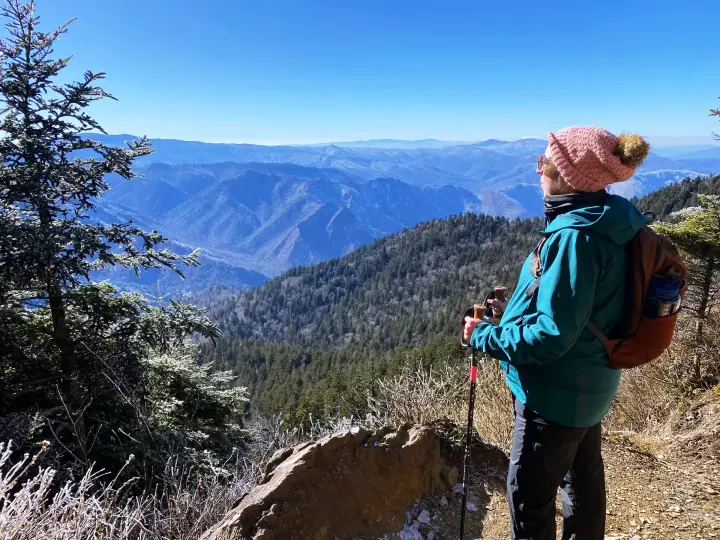
This three-day trip covers part of the Appalachian Trail through Great Smoky Mountains National Park. Daily mileage averages roughly 6 to 10 miles, making this a substantially more demanding experience than a roadside walk or half-day guided hike.
The guided format is useful for travelers who want to experience the Smokies backcountry without independently selecting a route, interpreting permit requirements, organizing trail meals, and managing group logistics.
Participants should expect mountain terrain, elevation changes, changing weather, and consecutive days of hiking while carrying personal equipment. Physical and mental preparation matter more here than they do on a typical sightseeing tour.
This is best suited to fit travelers who already enjoy hiking and want to progress toward backpacking. It is less appropriate for anyone who is uncertain about walking 6 to 10 mountain miles on consecutive days.
Before booking, review the latest equipment list, sleeping arrangements, included group gear, food provisions, cancellation policy, and participant requirements. Dietary needs should be communicated to the operator in advance.
Check available dates and review the complete three-day hiking itinerary.
2. From Hartford: Upper Pigeon River Whitewater Rafting Tour
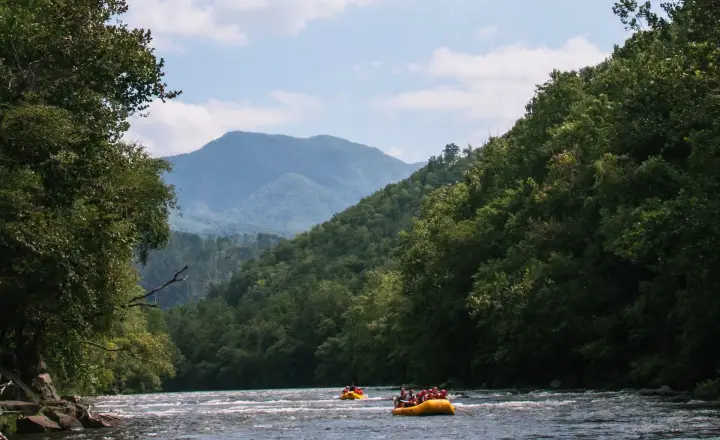
Best for: First-time rafters, active families, and travelers seeking a higher-energy activity
Duration: Approximately 2.5 hours
Starting area: Hartford, Tennessee
Activity type: Guided whitewater rafting
Location: Outside Great Smoky Mountains National Park
This guided trip runs the Upper Pigeon River near Hartford, northeast of the park’s Gatlinburg entrance. It is a regional Smokies activity rather than a rafting trip inside the national park.
The current experience is listed at approximately 2.5 hours and features Class II to III+ rapids. A guide accompanies each small group, and the necessary rafting safety equipment is provided.
The river trip works well for travelers who want a structured outdoor activity without committing most of the day. It can also add variety to an itinerary built primarily around hiking and scenic driving.
Expect to paddle, follow guide instructions, and get wet. The Upper Pigeon is not a calm scenic float, although conditions and the intensity of individual rapids vary.
Minimum ages, participant restrictions, water releases, operating dates, and river conditions can change. Families should confirm the current requirements for every child before booking.
Hartford is separate from Gatlinburg and Pigeon Forge, so include driving time in the day’s schedule. Avoid placing the rafting departure immediately after a long Cades Cove or Newfound Gap itinerary.
Check current prices, participant requirements, and available rafting times.
3. Maggie Valley: Guided Safari Jeep Eco-Waterfall Adventure
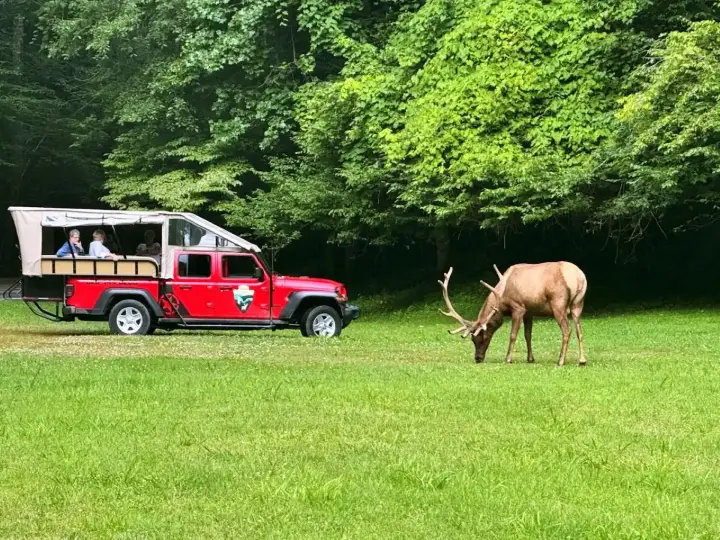
Best for: Families and travelers interested in regional scenery, Cherokee history, and a guided vehicle experience
Duration: Approximately 3.5 to 4 hours
Starting area: Maggie Valley, North Carolina
Activity type: Guided open-air Jeep tour
Location: In and around the eastern Smokies region
This Jeep experience begins in Maggie Valley on the North Carolina side of the Smokies. The current itinerary focuses on mountain scenery, plant and wildlife interpretation, Cherokee and Appalachian history, and travel through areas connected with Great Smoky Mountains National Park and the Eastern Band of Cherokee Indians.
It is a more appropriate choice for travelers staying in Maggie Valley, Cherokee, or other North Carolina communities than for visitors based exclusively in Pigeon Forge.
The guided vehicle format reduces the need to navigate unfamiliar mountain roads and gives travelers more regional context than a standard scenic drive. However, this should not be presented as a substitute for independently visiting major park destinations such as Cades Cove or Kuwohi.
Expect an open-air ride with bumps, wind, changing temperatures, and periods outside the vehicle. The activity is not suitable for every traveler with mobility, respiratory, or back-related limitations, and the current listing excludes children under seven.
Food, drinks, gratuities, and child safety seats are not included, so families should review the full requirements before reserving.
Compare current departure times and review the complete Jeep tour details.
4. Gatlinburg: Half-Day Guided Smoky Mountains Fly-Fishing Tour
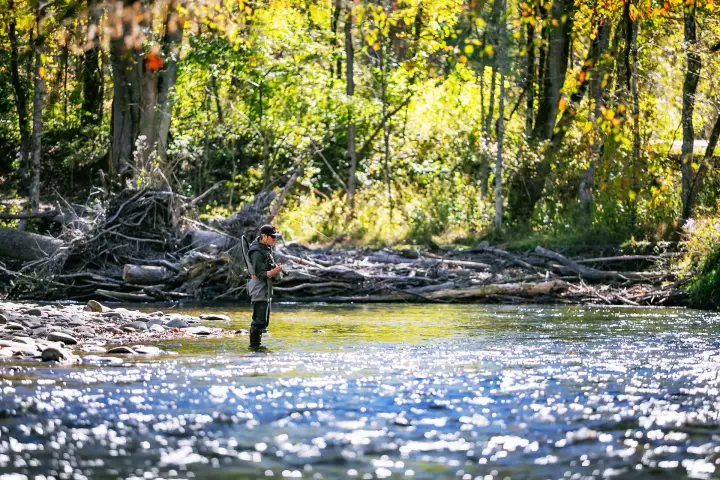
Best for: Beginners, occasional anglers, and experienced fishers unfamiliar with Smokies streams
Duration: Four hours
Starting area: Gatlinburg area
Activity type: Private guided fly fishing
Location: Great Smoky Mountains National Park streams or stocked Gatlinburg streams, depending on the selected plan
This private four-hour experience provides guided fly fishing with the option of targeting wild trout in Great Smoky Mountains National Park or fishing stocked streams around Gatlinburg.
The experience includes fishing equipment such as rods, flies, line, waders, and boots. The guide also helps participants understand license requirements and choose appropriate clothing.
Beginners can focus on casting, reading water, presentation, and safe movement around streams. More experienced anglers benefit from local knowledge about water selection and techniques suited to smaller mountain streams.
The exact fishing location matters. Travelers who specifically want to fish inside the national park should confirm that preference before the trip rather than assuming every departure uses park water.
A valid fishing license is required. The appropriate state license depends on the fishing location, and regulations can change. Review the current requirements with the operator and official state or park resources before the activity.
Stream banks can be slippery and uneven. Participants should be comfortable walking over rocks, standing in moving water, and following instructions about water safety.
Review the fishing options, included equipment, and available departure times.
5. Gatlinburg: Street-Legal UTV Rental
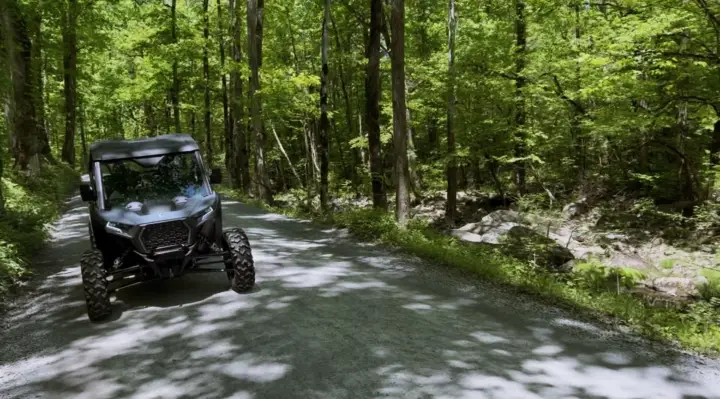
Best for: Couples and small groups seeking flexible, self-guided driving
Duration: Rental periods from approximately 2 to 8 hours
Starting area: Gatlinburg, Tennessee
Activity type: Self-guided vehicle rental
Location: Public paved roads in and around Gatlinburg and the Smokies region
This is a street-legal UTV rental rather than a guided tour. After a safety orientation, travelers receive a vehicle and suggested routes to explore at their own pace.
The current experience offers rental periods ranging from two to eight hours. Vehicles are intended for legal public-road use, and the operator provides route recommendations.
The open-air vehicle creates a different experience from driving a standard rental car, particularly on scenic roads around Gatlinburg. It also allows travelers to choose their own stops and pace.
A street-legal designation does not provide permission to drive off-road or enter closed areas. Off-road vehicle use is not allowed on park trails, unpaved restricted routes, or areas closed to public motor traffic.
Drivers remain responsible for obeying road restrictions, parking legally, checking weather, understanding the rental agreement, and obtaining a park parking tag when required.
Before booking, confirm driver age rules, insurance terms, deposits, fuel policies, passenger limits, helmet requirements, pet policies, and which park roads the rental company currently permits customers to use.
Check rental durations, driver requirements, and availability for your travel dates.
How to Choose the Right Experience
Choose the three-day Appalachian Trail trip for a physically demanding backcountry experience rather than general sightseeing. It requires the largest time commitment and the strongest fitness level.
Choose the Upper Pigeon River rafting trip for a shorter, high-energy activity. It works particularly well during warm-weather trips and for groups that want a break from driving and hiking.
Choose the Maggie Valley Jeep tour when staying on the North Carolina side or when regional history and guided scenic touring matter more than completing a traditional park itinerary.
Choose the half-day fly-fishing tour to learn a specialized outdoor skill without purchasing equipment. Confirm whether the planned fishing location is inside the park or in Gatlinburg before booking.
Choose the street-legal UTV rental for independence and flexible sightseeing. It is not a guided national park tour and does not authorize off-road driving.
Frequently Asked Questions
What is the best month to visit Great Smoky Mountains National Park?
October is the classic choice for fall foliage, but it is also one of the most congested periods.
May may be a better choice for travelers who prefer wildflowers, waterfalls, greener scenery, and somewhat lighter crowds. September can provide warm conditions and fewer visitors than peak October, although widespread fall color may not yet have reached the lower elevations.
How many days do you need in the Smokies?
Three to four days is ideal for a first visit. That provides time for Cades Cove, Newfound Gap Road, Kuwohi, one substantial hike, and at least one destination on the North Carolina side.
One or two days can still be rewarding when the itinerary focuses on one section of the park per day.
Is Great Smoky Mountains National Park open year-round?
The park is generally open year-round, but that does not mean all roads, campgrounds, visitor services, and facilities operate every day of the year.
Several roads close seasonally, and weather can temporarily close normally open routes. Check current conditions rather than relying only on scheduled opening dates.
Do you need a reservation to enter Great Smoky Mountains National Park?
A general timed-entry reservation is not normally required.
Reservations or permits may still be necessary for campgrounds, backcountry camping, certain group activities, and special events. A physical parking tag is generally required when leaving a vehicle parked inside park boundaries.
Does Great Smoky Mountains National Park charge an entrance fee?
The park does not charge a traditional entrance fee, but its parking-tag program requires most vehicles parked within park boundaries to display a valid physical tag.
Review the current fee page for prices, exemptions, purchasing methods, and display requirements.
Are guided tours worth booking in the Smokies?
They are most useful for activities that require equipment, technical knowledge, permits, route planning, or local interpretation.
Rafting is impractical without a professional operator. A fishing guide can shorten the learning curve for unfamiliar mountain streams. A backpacking guide can simplify planning for travelers new to overnight hiking.
Visitors primarily interested in scenic roads and short walks can explore much of the park independently.
Can you see black bears in Great Smoky Mountains National Park?
Black bears live throughout the park, but sightings are never guaranteed.
Cades Cove and Roaring Fork are commonly associated with bear sightings because wildlife is often visible from the road. Never stop in a way that blocks traffic, approach a bear, surround an animal, or leave a vehicle to get closer.
Follow current NPS distance requirements and food-storage regulations.
What is the closest airport?
McGhee Tyson Airport near Knoxville is the most convenient commercial airport for many visitors staying in Gatlinburg, Pigeon Forge, or Townsend.
Travelers staying on the North Carolina side may also compare flights through Asheville Regional Airport. Actual driving time depends heavily on the chosen gateway, mountain roads, traffic, and weather.
Final Thoughts
Fall is the best time to visit Great Smoky Mountains National Park for classic foliage and comfortable mountain weather, but it comes with the park’s most difficult traffic and parking conditions.
Spring offers a better balance for many travelers, especially those interested in wildflowers, waterfalls, and hiking. Summer provides long days and broad seasonal access, while winter rewards flexible visitors with quieter roads and trails.
A successful Smokies trip does not depend on seeing every famous location. Choose one main park area each day, leave room for traffic and weather changes, and check official conditions before setting out.
The five featured experiences serve different purposes. Backpacking and fly fishing provide deeper interaction with the park, rafting adds a high-energy regional activity, the Maggie Valley Jeep tour introduces the eastern Smokies, and a street-legal UTV rental provides self-guided flexibility around Gatlinburg.
Disclaimer: This post is for informational purposes only. Always check official park regulations, permits, road conditions, closures, and weather before planning or booking any activity.
Affiliate Disclosure: ChaseTheBigDream.com participates in affiliate programs, including GetYourGuide and other trusted partners. When you book or purchase through qualifying links, the site may earn a small commission at no extra cost to you. These partnerships help support the creation and maintenance of independent travel guides.