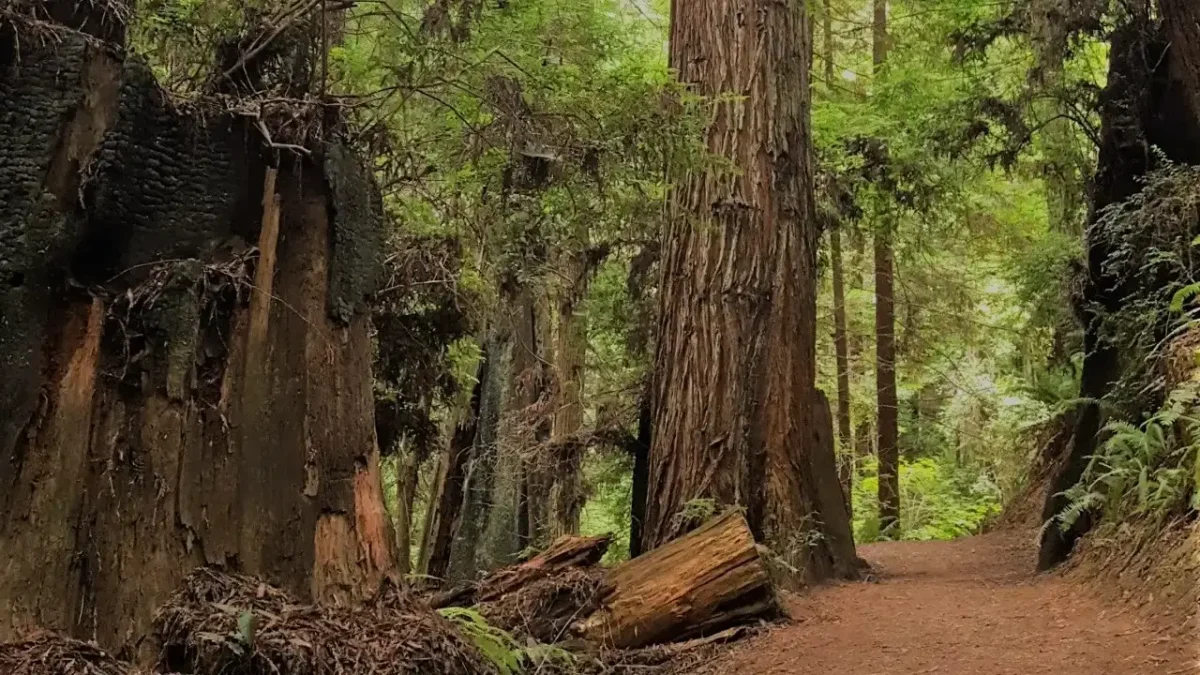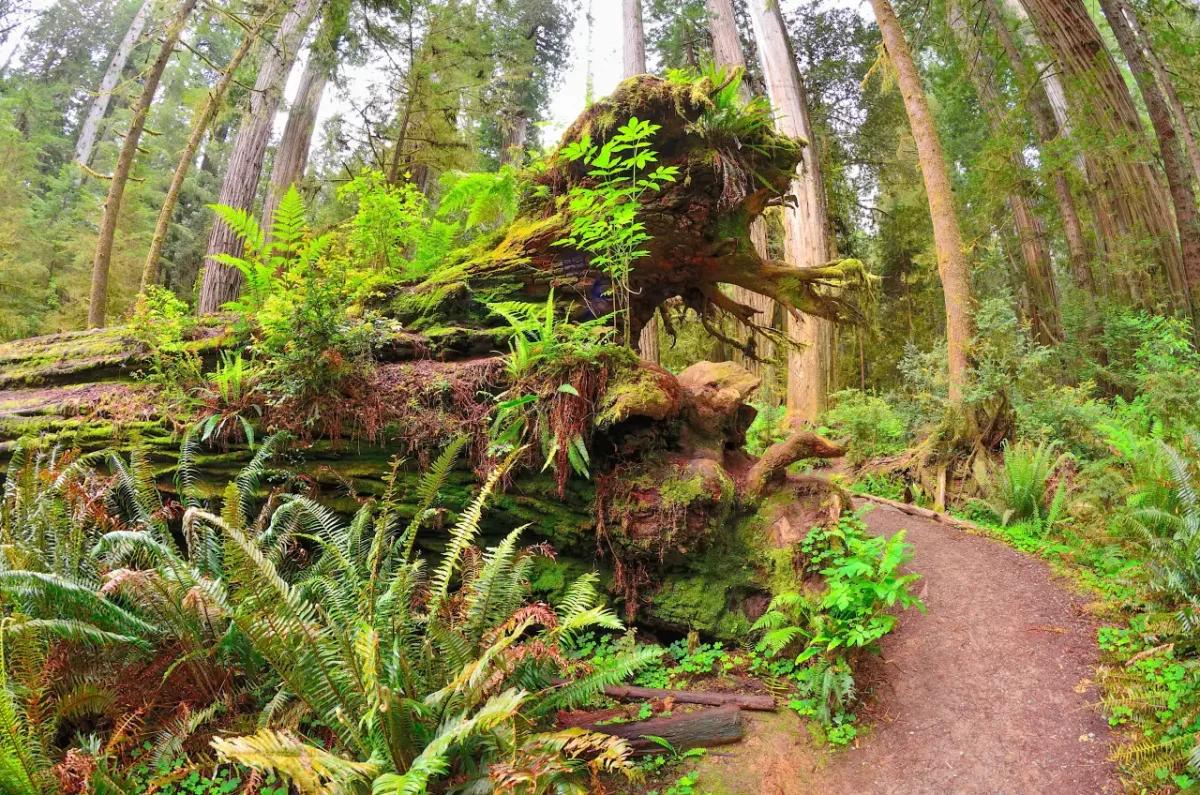
Redwood National and State Parks are best known for protecting some of the tallest trees on Earth, but a trip here is about much more than walking beneath giant redwoods. This stretch of Northern California combines old-growth forests, fern-covered canyons, open prairies, wild Pacific coastline, scenic drives, and some of the best Roosevelt elk habitat in the region.
For most travelers, the best time to visit Redwood National Park is from late May through September, when hiking conditions are generally easier and the region receives less rain. September is especially appealing because summer conditions often linger while peak-season crowds begin to ease.
Summer offers the most dependable access but also brings more visitors. Spring is greener and quieter but wetter. Fall can be excellent for hiking and wildlife watching, while winter delivers dramatic, saturated forests along with the greatest chance of storms and changing trail conditions.
This guide covers the best time to visit Redwood National Park, what each season is really like, how many days to spend here, the most worthwhile things to do independently, current reservation considerations, and four tours and experiences that can add something different to a Redwood trip.
Redwood National Park at a Glance
| Best Overall Time to Visit | Late May–September |
| Best Balance of Weather + Crowds | September |
| Best Time for Hiking | June–September |
| Best Time for Fewer Crowds | Late fall through spring |
| Suggested Trip Length | 2–4 days |
| Main Gateway Towns | Crescent City, Klamath, Orick, Trinidad, Arcata, Eureka |
| Closest Practical Airports | Del Norte County Airport (CEC) and Arcata-Eureka Airport (ACV) |
| Main Highway | U.S. Highway 101 |
| General Park Entrance Fee | None, although some California State Park areas charge day-use fees |
| Official Website | Redwood National and State Parks |
One of the most important things to understand before planning a trip is that Redwood National and State Parks are not concentrated around a single entrance.
The protected area stretches along the Northern California coast and combines Redwood National Park with Prairie Creek Redwoods, Del Norte Coast Redwoods, and Jedediah Smith Redwoods State Parks.
That means driving time matters.
Trying to see Fern Canyon, Tall Trees Grove, Prairie Creek, Jedediah Smith, and the coast in one rushed day usually creates more windshield time than forest time.
Best Time to Visit Redwood National Park
The best time to visit Redwood National Park is generally between late May and September, particularly for travelers who want to hike, explore scenic roads, and reach different sections of the parks with fewer weather-related complications.
Summer is the driest part of the year, but Northern California’s redwood coast rarely behaves like a classic hot summer destination.
Temperatures stay relatively mild, coastal fog is common, and a sunny afternoon can follow a cool, damp morning. Layers belong in the daypack even in July and August.
For a first visit, September is hard to beat.
The busiest summer vacation period begins to fade, yet conditions are often still favorable for hiking and road trips. September also overlaps with the Roosevelt elk rut, making wildlife encounters more likely around the park’s prairies.
Travelers who prefer fewer people should also consider May and early October. Conditions are less predictable than midsummer, but the tradeoff can be quieter trails and a more relaxed pace.
Winter is the wettest period. It can be beautiful, but flexibility becomes essential because heavy rain, fallen trees, stream levels, and road conditions can affect plans.
Redwood National Park by Season
Spring: March–May
Spring brings some of the greenest forest conditions of the year.
Rain is still common, particularly in March and April, but days gradually become longer and drier as the season moves toward May. Ferns, moss, sorrel, and the forest understory benefit from months of winter moisture, giving many trails an especially lush appearance.
Late spring can also bring blooming rhododendrons to portions of the forest.
The advantage is noticeably lighter visitation compared with summer.
The disadvantage is uncertainty.
Trails can be muddy, stream crossings may be higher, and seasonal footbridges may not yet be installed. A waterproof shell, hiking shoes with good traction, and an extra insulating layer are more useful than relying entirely on the forecast.
Best for: quieter trails, lush forest scenery, spring vegetation, and travelers who do not mind occasional rain.
Summer: June–August
Summer is the easiest season for most first-time visitors.
Rainfall is lower, daylight hours are long, and traveling between different sections of the park tends to be more straightforward.
It is also the busiest season.
Popular places such as Fern Canyon, Prairie Creek, and accessible redwood groves can feel noticeably busier in the middle of the day. Starting early is one of the simplest ways to improve the experience.
Summer does not necessarily mean warm weather. Morning fog and cool coastal air are part of the Redwood environment, so dressing in layers remains important.
Another consideration is reservations.
Vehicles entering the Gold Bluffs Beach Day-Use Area, including the Fern Canyon trailhead, require a free reservation from May 15 through September 15. Tall Trees Trailhead has its own year-round reservation system.
Best for: first-time visitors, families, longer hiking days, and travelers looking for the easiest overall conditions.
Fall: September–October
Early fall combines many of summer’s advantages with fewer visitors.
September often remains relatively dry, and most trails are still straightforward to access. October gradually brings a higher likelihood of rain, but it can still be an excellent month for travelers comfortable adjusting plans around weather.
Fall is also an interesting season for Roosevelt elk.
The rut generally occurs around late summer and fall, when bulls become more active and potentially aggressive. Elk should always be viewed from a generous distance rather than approached for photographs.
September is particularly useful for travelers who want to hike extensively without visiting during the busiest part of summer.
Best for: hiking, fewer crowds, wildlife viewing, photography, and flexible travelers.
Winter: November–February
Winter creates a very different Redwood experience.
Rain darkens the trunks, brightens the ferns, fills creeks, and can leave normally busy areas surprisingly quiet.
For travelers who enjoy rainy forests and solitude, that can be a feature rather than a drawback.
The challenge is flexibility.
Winter storms can cause fallen trees, temporary road restrictions, damaged trails, higher water levels, and removal of seasonal footbridges.
Instead of building the entire trip around one critical hike, create several options and check current conditions before heading out each morning.
Best for: solitude, moody forest photography, travelers comfortable with rain, and flexible itineraries.
How Many Days Do You Need in Redwood National Park?
For most first-time visitors, two to three full days provides the best balance.
The distances between different park areas are large enough that trying to squeeze everything into one day usually means skipping worthwhile stops.
One Day
With one day, resist the temptation to tour the entire park system.
Focus on one geographical area.
Prairie Creek Redwoods State Park makes a strong choice because it combines redwood groves, scenic driving, wildlife habitat, and access to several trails.
Drive the Newton B. Drury Scenic Parkway, stop at Big Tree, take a short forest walk, and watch for Roosevelt elk in the surrounding prairies.
Another option is to make Fern Canyon the day’s main destination if reservations and road conditions allow.
Two Days
Two days makes it possible to experience noticeably different sections of the park.
Spend one day around Prairie Creek, Newton B. Drury Scenic Parkway, and Orick.
Use the second to explore the northern section around Jedediah Smith Redwoods State Park, including Stout Memorial Grove and, when conditions are suitable, Howland Hill Road.
This already provides a strong overview of what makes Redwood National and State Parks special.
Three Days
Three days is the sweet spot for many visitors.
The additional day makes room for Fern Canyon, Tall Trees Grove, a longer hike, or more time along the coast without turning every day into a race between trailheads.
It also creates valuable weather flexibility.
If rain or road conditions interfere with one activity, the itinerary can simply be rearranged.
Four Days or More
Four days works particularly well for hikers, photographers, wildlife watchers, and travelers who enjoy slower trips.
Instead of using the extra day to cover more mileage, spend longer in individual areas.
A quiet morning forest walk, an afternoon along the coast, and an evening watching elk can be more rewarding than another long drive.
Before You Visit: Official NPS Planning Information
Conditions in Redwood National and State Parks can change because of storms, downed trees, wildfire activity, road maintenance, stream crossings, and restoration work.
Check official information close to the travel date rather than assuming conditions from an older itinerary still apply.
- Check current Redwood National and State Parks conditions and alerts.
- Review current fees and passes.
- Review Redwood National and State Parks reservations and permits.
- Review directions and transportation information.
- Download official park maps.
- Review official park safety guidance.
There is no general entrance fee to visit Redwood National Park, although some California State Park day-use areas charge fees.
Two reservation systems deserve particular attention.
Tall Trees Trailhead
A free reservation is required year-round to access the small Tall Trees Trailhead parking area.
Tall Trees is not simply a roadside redwood stop. Plan enough time for both the access road and the hike.
Reservations are limited, particularly during popular travel periods, so this is one activity worth planning before arrival.
Fern Canyon and Gold Bluffs Beach
A free vehicle reservation is required from May 15 through September 15 to enter the Gold Bluffs Beach Day-Use Area, including the Fern Canyon trailhead.
Davison Road, which provides access to the area, is narrow and unpaved in places and includes stream crossings. Conditions can become more challenging after rain.
A day-use fee also applies at Gold Bluffs Beach.
Visitors who cannot secure a vehicle reservation may still have hiking alternatives depending on current trail conditions, but distances are substantially longer.
Best Things to Do in Redwood National Park
The strongest Redwood itineraries mix different environments rather than visiting one grove after another.
Walk Through Lady Bird Johnson Grove
Lady Bird Johnson Grove is one of the easiest introductions to the redwood forest.
The loop passes beneath mature trees, Douglas firs, ferns, and dense understory without requiring an all-day hike.
Because it is relatively short, it pairs well with Prairie Creek, the coast, or other stops around Orick.
Arriving earlier in the day generally means easier parking and a quieter forest.
Drive Newton B. Drury Scenic Parkway
Newton B. Drury Scenic Parkway runs through Prairie Creek Redwoods State Park and is one of the best scenic drives in the region.
The redwoods begin almost immediately, while pullouts and trailheads make it easy to stop and explore.
Big Tree is one of the most convenient stops along the route.
Nearby prairies also provide opportunities to spot Roosevelt elk.
Do not treat the parkway simply as a faster route between destinations. Slow down and use it as part of the experience.
Explore Jedediah Smith Redwoods State Park
Northern Redwood country feels different from the busier Highway 101 corridor.
Stout Memorial Grove offers a relatively short walk beneath impressive old-growth trees near the Smith River.
Howland Hill Road provides another memorable perspective, winding slowly through dense forest where massive redwoods stand surprisingly close to the road.
The route is narrow and unpaved, so check current conditions and vehicle recommendations before driving it.
Walk Through Fern Canyon
Fern Canyon trades towering trees for walls of green.
Home Creek winds through a narrow canyon where ferns cover the steep walls from floor to rim.
The walk itself is not particularly long, but expect wet feet, slippery surfaces, and stream crossings. Seasonal footbridges are not always present.
The approach requires more planning than the trail.
During the seasonal reservation period, drivers need a reservation before entering the Gold Bluffs Beach/Fern Canyon area.
Look for Roosevelt Elk
Redwood National and State Parks protect important habitat for Roosevelt elk.
Prairie areas around Prairie Creek, Elk Meadow, Orick, and Gold Bluffs Beach are some of the most likely places to see them.
Wildlife viewing should always be done from a safe distance.
That becomes especially important during late-spring calving season and the fall rut, when elk can become defensive or aggressive.
A telephoto lens is far better than walking closer.
Hike Tall Trees Grove
Tall Trees Grove works best for travelers who want a more involved forest outing.
The trailhead requires a reservation throughout the year, helping keep the relatively small parking area from becoming overwhelmed.
The hike includes meaningful elevation change, so do not choose it simply because the name suggests it is the only place to see impressive trees.
There are easier old-growth experiences throughout Redwood National and State Parks.
Choose Tall Trees because the quieter hike and remote setting appeal to you—not because you feel obligated to check it off.
Spend Time on the Coast
A Redwood trip does not need to stay beneath the canopy.
Northern California’s Pacific coastline adds sea stacks, beaches, bluff-top viewpoints, tide pools, and opportunities to watch marine wildlife.
Pairing forest and coast in the same day also provides useful variety, particularly on a longer trip.
If tide pooling is part of the plan, check tide tables and remain aware of sneaker waves, slippery rocks, and moving driftwood.
4 Best Tours and Experiences in and Around Redwood National Park
Redwood National and State Parks are easy to enjoy independently, so a tour should add something meaningful rather than simply transport you through scenery you could see on your own.
The four experiences below serve very different travelers.
Some add naturalist interpretation. One offers an active e-bike route through the park. Another makes sense only for travelers building Redwood into a much larger Pacific Northwest road trip.
| Experience | Best For | Duration | Area | Experience Type |
|---|---|---|---|---|
| Redwood National and State Parks: Guided Walking Tour | First-time visitors and families wanting naturalist interpretation | About 3 hours | Redwood National and State Parks | Guided walking tour |
| Arcata’s Redwood Forest: Hike Through the Emerald Canopy | Travelers staying around Arcata or Eureka | 2 hours | Arcata Community Forest | Guided hike |
| Redwood National & State Park: 4-Hr Redwood E-Bike Adventure | Active travelers wanting to cover more ground | 4 hours | Lost Man Creek / Prairie Creek area | Guided e-bike tour |
| California-Oregon Coast Highlights Adventure | Travelers combining Redwood with a larger Pacific Coast trip | Multi-day | Seattle to San Francisco | Guided road trip |
1. Redwood National and State Parks: Guided Walking Tour
Best for: First-time visitors, families, and travelers who want naturalist interpretation
Duration: Approximately 3 hours
Activity type: Guided walking tour
Location: Redwood National and State Parks
Seeing giant redwoods is easy.
Understanding the forest around them takes more time.
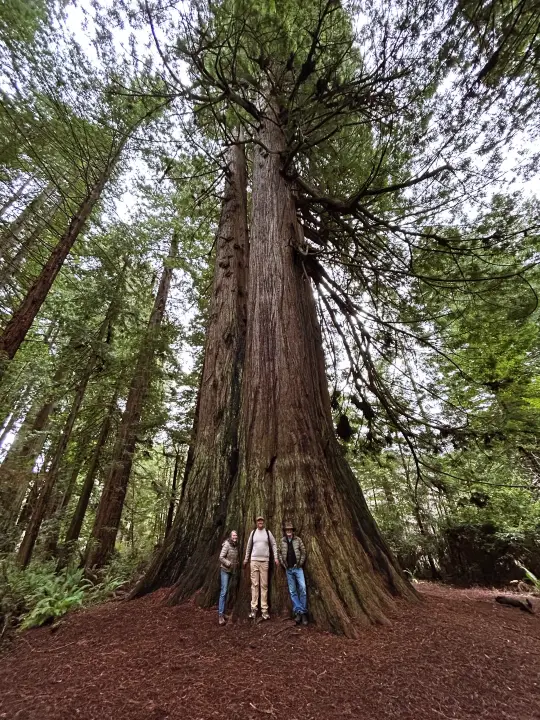
This guided walking experience is designed around exactly that distinction. Rather than trying to cover maximum mileage, the tour uses a slower pace to explore the redwoods, understory, wildlife, and coastal ecosystem with a knowledgeable naturalist guide.
Routes are selected to accommodate different interests and activity levels, making the experience useful for travelers who want more than a standard hike but do not necessarily want a strenuous outing.
The guide can add context to details that are easy to walk past independently: how redwoods survive for centuries, how moisture moves through the forest, why fallen trees remain important to the ecosystem, and how wildlife uses different layers of the landscape.
The personalized format also means the emphasis can shift depending on the group.
Families may appreciate the slower pace and accessible approach, while curious adults can spend more time asking about ecology, conservation, wildlife, and forest history.
Why it may be worth booking: A naturalist-guided experience early in the trip can make every later forest walk more interesting because you begin noticing details that would otherwise disappear into the scenery.
Who should consider it: First-time Redwood visitors, families, nature-focused travelers, and anyone who values interpretation over simply logging trail miles.
What to know before booking: Meeting arrangements and the exact route can depend on conditions and the needs of the group, so review the current booking information before finalizing the rest of the day’s itinerary.
Check current prices, available dates, and tour details.
2. Arcata’s Redwood Forest: Hike Through the Emerald Canopy
Best for: Travelers staying in Arcata or Eureka who want a convenient guided forest experience
Duration: 2 hours
Starting area: Arcata Community Forest
Activity type: Guided hike
Location: Arcata, outside Redwood National and State Parks
This tour fills a very different role.
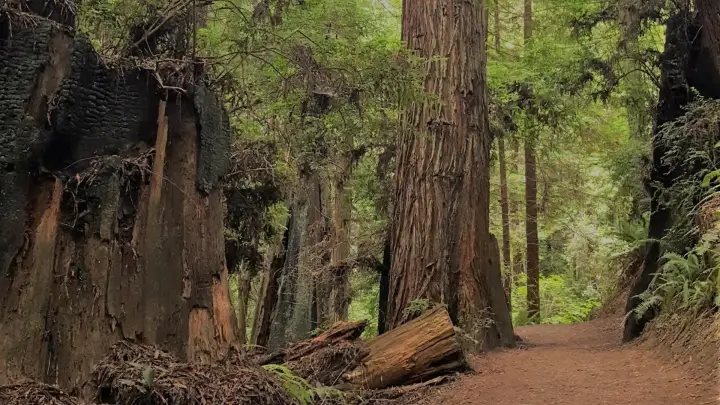
Rather than requiring a drive north into the central sections of Redwood National and State Parks, the experience takes place in Arcata Community Forest, less than two miles from Arcata.
That makes it especially useful on an arrival day, departure day, or for travelers using Arcata or Eureka as their base.
During the two-hour guided walk, the focus extends beyond the trees themselves.
The experience explores local ecology, forest history, wildlife, and community stewardship. Depending on the season, the tour can also include learning about mushrooms and sampling edible berries.
The setting is important to understand.
Arcata Community Forest is not inside Redwood National and State Parks. It should therefore be treated as a complementary experience rather than a replacement for visiting Prairie Creek, Jedediah Smith, or the other major old-growth sections of the parks.
That distinction actually makes the tour more interesting for some travelers. It adds another perspective on Northern California’s redwood landscape while remaining extremely convenient to Arcata.
Why it may be worth booking: It delivers guided ecological interpretation without requiring a long drive into the park and fits easily into a shorter travel day.
Who should consider it: Travelers staying around Arcata or Eureka, families, visitors interested in ecology and forest stewardship, and anyone looking for a compact two-hour activity.
What to know before booking: The tour is listed as suitable for a broad range of fitness levels, but the current activity information says it is not suitable for people with mobility impairments or wheelchair users. Comfortable shoes, water, and weather-appropriate clothing are recommended.
See available dates and review the current Arcata forest hike details.
3. Redwood National & State Park: 4-Hr Redwood E-Bike Adventure
Best for: Active travelers who want to explore substantially more ground than they could on a standard guided walk
Duration: 4 hours
Starting area: Lost Man Creek Road near Orick
Activity type: Guided e-bike tour
Location: Redwood National and State Parks / Prairie Creek area
Of the four experiences, this one offers the biggest change from normal Redwood hiking.
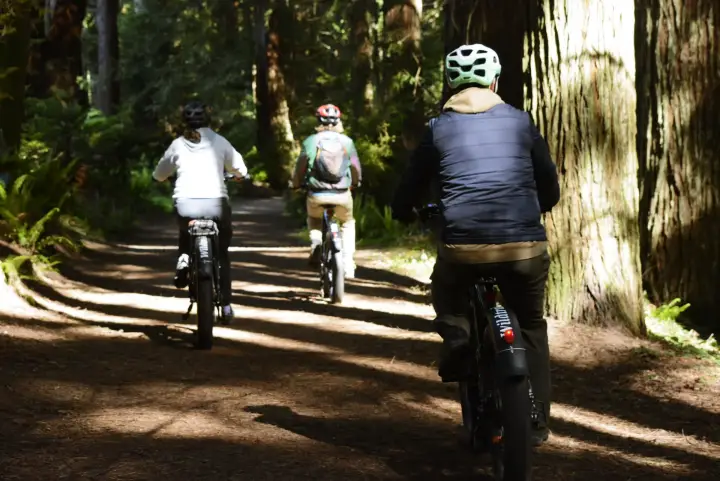
The guided ride begins near Lost Man Creek Road and travels through a mix of forest, prairie, and meadow toward Prairie Creek Redwoods State Park.
The route is mostly packed gravel with relatively gentle climbs and descents, and electric assistance keeps the ride accessible to people who are comfortable cycling but do not necessarily want a demanding mountain-bike workout.
The tour covers roughly 17 miles over four hours, leaving time for photo stops, wildlife watching, and a closer look at the forest.
One of the major stops is Big Tree, an enormous old-growth redwood in Prairie Creek.
Riders get off the bikes here and can explore a short approximately half-mile forest walk before continuing the return journey.
That combination is what makes the experience appealing.
Instead of seeing the forest only from a saddle, the tour mixes cycling with short periods on foot, creating more variety than either a standard bike rental or a normal guided hike.
E-bike rental, helmet, riding instruction, and a guide are included.
Why it may be worth booking: Electric bikes make it possible to cover significantly more landscape in half a day while still experiencing the forest at a slower, more personal pace than driving.
Who should consider it: Active couples, cyclists, families with older teenagers, and travelers who want something different after several traditional hikes.
What to know before booking: Participants need to be able to ride a bicycle, and the experience is not listed as suitable for children under 14. The meeting point is reached by turning from Highway 101 onto Lost Man Creek Road and continuing approximately 1.5 miles to the end.
Bring water, comfortable closed-toe shoes, and layers suitable for cool forest conditions.
Check current availability for the 4-Hr Redwood E-Bike Adventure.
4. California-Oregon Coast Highlights Adventure
Best for: Travelers who want Redwood National Park to be one part of a larger Pacific Northwest road trip
Route: Seattle to San Francisco
Activity type: Small-group guided road trip
Location: Washington, Oregon, and Northern California, including Redwood National Park
This experience is fundamentally different from the other three.
It is not a Redwood day tour.
It is a multi-day guided Pacific Coast road trip from Seattle to San Francisco, with Redwood National Park included as one of several major stops.
The route also includes destinations such as Portland, Cannon Beach, the Oregon Dunes, Coos Bay, Northern California coastal areas, and San Francisco.
A small group format—currently limited to 10 participants—keeps it closer to a guided road trip than a large coach tour.
Hotels or bed-and-breakfast accommodations are part of the package, while lunch, dinner, and gratuities are not included.
There is one important detail to check carefully before booking.
The current GetYourGuide page calls the experience “California-Oregon Coast Highlights, 5 day adventure,” while the booking information lists a 6-day duration and states that the trip finishes in San Francisco six days after leaving Seattle.
Because those details conflict on the current listing, confirm the exact number of days and itinerary for your selected departure before making surrounding travel arrangements.
For a traveler planning a dedicated Redwood vacation, this is probably more tour than needed.
For someone already considering a Seattle-to-San Francisco journey, however, the value proposition is completely different: transportation, lodging, route planning, major stops, and much of the logistical work are handled as part of one trip.
Why it may be worth booking: It removes much of the planning involved in a long Pacific Northwest coastal road trip while including Redwood National Park along the way.
Who should consider it: International travelers, visitors who do not want to organize their own rental-car road trip, and anyone whose priority is the broader Washington-Oregon-Northern California journey rather than several full days inside Redwood.
What to know before booking: Redwood National Park is one stop within a much larger itinerary. Travelers who want two or three full days exploring Redwood independently will have considerably more flexibility with a dedicated Redwood trip.
Review the complete itinerary, current duration, and available departure dates.
How to Choose the Right Redwood Experience
The best experience depends less on which tour sounds most exciting and more on what is missing from the rest of your trip.
If this is your first Redwood visit and you already have a rental car, the Redwood National and State Parks Guided Walking Tour is the easiest addition to recommend. It adds naturalist interpretation without taking over an entire day.
If you are staying in Arcata or Eureka, the Arcata Emerald Canopy hike is far more convenient. It works especially well on a partial travel day and provides a guided forest experience without a major detour.
If the itinerary already contains several hikes and you want something genuinely different, choose the 4-Hour Redwood E-Bike Adventure. Covering roughly 17 miles by e-bike offers a perspective that would be difficult to reproduce on foot.
The California-Oregon Coast Highlights Adventure serves an entirely different traveler. Consider it when Redwood is one part of a Seattle-to-San Francisco journey and you would rather have transportation, lodging, and route logistics organized for you.
None of these tours is necessary to enjoy Redwood National and State Parks.
With a vehicle, official maps, and a few days available, the parks work exceptionally well independently.
A paid experience is most valuable when it adds interpretation, convenience, a new activity, or logistics that you would not otherwise have.
Frequently Asked Questions
What is the best month to visit Redwood National Park?
September is one of the best overall months to visit Redwood National Park.
Conditions are often still favorable for hiking, summer travel begins to taper off, and visitors can usually explore most major areas without the peak July and August crowds.
Weather is never guaranteed on the North Coast, so rain protection and layers are still worth carrying.
How many days do you need in Redwood National Park?
Plan for two to three full days on a first trip.
Two days can cover major highlights around Prairie Creek and Jedediah Smith.
Three days provides enough breathing room for Fern Canyon, Tall Trees, the coast, or a longer hike without spending the entire trip driving between trailheads.
Is Redwood National Park open year-round?
Yes, Redwood National and State Parks can be visited throughout the year.
Individual trails, roads, bridges, visitor facilities, and campgrounds can change status because of weather, maintenance, restoration work, or fallen trees.
Always check current Redwood National and State Parks conditions shortly before traveling.
Do you need reservations to enter Redwood National Park?
There is no general reservation required simply to enter Redwood National and State Parks.
Reservations apply to specific areas.
A free reservation is required year-round for the Tall Trees Trailhead parking area.
A free vehicle reservation is required to enter the Gold Bluffs Beach Day-Use Area, including Fern Canyon, from May 15 through September 15.
Requirements can change, so confirm them on the official reservations and permits page before the trip.
Is Fern Canyon difficult?
The hike through Fern Canyon is relatively short, but conditions can make it more challenging than the mileage suggests.
Expect uneven ground, slippery rocks, water, and stream crossings. Water depth varies with recent rainfall and seasonal conditions.
The access road is also part of the adventure. Davison Road is narrow, includes unpaved sections and stream crossings, and can become more challenging after rain.
Is Tall Trees Grove worth visiting?
Tall Trees Grove can be worthwhile for travelers looking for a quieter, longer forest experience.
It should not be treated as mandatory.
Redwood National and State Parks contain many impressive old-growth groves that are easier to reach and do not require a Tall Trees reservation.
Choose Tall Trees if the hike and more remote setting appeal to you rather than simply because the name sounds essential.
Can you see redwoods without hiking?
Absolutely.
Newton B. Drury Scenic Parkway and other park roads make it possible to see extraordinary forests without completing long hikes.
Short walks such as Stout Memorial Grove also provide impressive redwood experiences with relatively little distance.
What is the closest airport to Redwood National Park?
The answer depends on which section of the park you plan to use as a base.
Del Norte County Airport (CEC) in Crescent City works well for northern areas such as Jedediah Smith.
Arcata-Eureka Airport (ACV) near McKinleyville is convenient for southern areas and gateway communities such as Arcata, Trinidad, and Eureka.
Many travelers also incorporate Redwood into longer road trips from Oregon or other parts of Northern California.
Are guided Redwood tours worth it?
They can be, but the parks do not require a guide.
A tour makes the most sense when it adds something specific to the trip.
A naturalist-guided walk can explain the ecosystem. An e-bike tour lets you cover much more terrain than walking. An Arcata tour provides convenience for travelers staying farther south.
If your only goal is to stand beneath giant redwoods, independent exploration already does that extremely well.
Can you visit Redwood National Park without a car?
It is possible, but considerably more difficult.
Public transportation serves some communities along the Redwood Coast, but many trailheads, groves, scenic roads, and coastal areas are spread far apart.
Travelers without a vehicle should build their itinerary around a smaller number of reachable locations instead of expecting to cover the entire park system.
Are pets allowed on Redwood trails?
Pets are restricted from most hiking trails within Redwood National and State Parks.
Some roads, campgrounds, picnic areas, and specifically designated locations allow pets under certain conditions.
Check current NPS pet regulations before traveling with a dog rather than assuming a short forest trail is pet-friendly.
Final Thoughts
Redwood National and State Parks reward travelers who leave enough room in the itinerary to slow down.
The memorable parts of the trip are rarely about checking off the highest number of groves.
They are often much simpler: walking through cool forest before other visitors arrive, watching fog drift through the canopy, stopping beside an enormous trunk long enough to appreciate its scale, spotting elk from across a prairie, or ending the day beside the Pacific.
For most visitors, late May through September provides the easiest overall conditions, with September offering an especially attractive combination of weather, trail access, and fewer peak-season crowds.
Give the parks at least two days if possible. Three is even better.
Explore independently first, then use a guided experience to add something the itinerary would otherwise lack.
Choose the guided walking tour for naturalist interpretation, the Arcata hike for convenience, the e-bike adventure for a more active way to explore, or the longer California-Oregon trip when Redwood is part of a much larger Pacific Coast journey.
And before leaving for any remote trailhead, check the official NPS conditions page.
Roads, stream crossings, trail closures, reservation systems, and seasonal bridges can change. A few minutes spent checking current conditions can save hours of unnecessary driving—and leave more time for what actually brought you here in the first place: the redwoods.
Disclaimer: This post is for informational purposes only. Always check official park regulations, permits, road conditions, closures, and weather before planning or booking any activity.
Affiliate Disclosure: ChaseTheBigDream.com participates in affiliate programs, including GetYourGuide and other trusted partners. When you book or purchase through qualifying links, the site may earn a small commission at no extra cost to you. These partnerships help support the creation and maintenance of independent travel guides.